Save Jeju Now

No War Base on the Island of Peace

  • Home
  • About
    • History
    • 4 Dances of Gangjeong
    • 100 Bows
    • Appeal
    • Partners
    • Board
  • Blog
    • All Posts
    • Petitions
    • Arrests & Imprisonmentuse for all things related to arrests and imprisonment
    • IUCN WCC 2012
      • Appeals & Statements
      • Gangjeong-Related Schedule
      • International Action Week, Sept. 2-9
      • Motion
      • Special Edition Newsletter for the WCC 2012
  • Gallery
    • #7 (no title)
    • #8 (no title)
    • #6 (no title)
  • Press
  • Support
    • Act
    • Donate
    • Visit
  • Downloads
    • Monthly Newsletter
    • Environmental Assessments
    • Reports
  • Language switcher

Category: English

For Posts in English


  • 抗議濟州島蓋軍港 和平運動家Song, KangHo博士遭暴力毆打

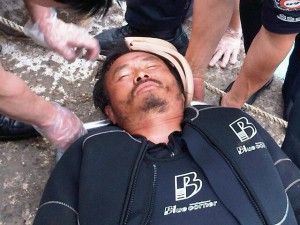
    2011年6月21日下午約四時左右,長期在濟州島江汀洞抗議軍港建設的和平運動人士Song, Kang Ho博士(國際組織The Frontiers工作人員),試圖登上海軍工程用駁船時,遭到包商三星建設公司員工及韓國海軍、包括韓國海軍少校Bang Young Gi用竹棒圍毆。據稱,Song, Kang Ho博士遭踢打、竹棒擊打甚至還被推落船隻,跌落到下方的另一船隻中。

    326199847
    Song, Kang Ho博士遭工程人員及軍方毆打致傷

    在警察到達現場之前,Song, Kang Ho已因此暴力攻擊,而失去意識,經緊急送醫治療後已恢復意識。江汀洞居民以及其他抗議團體群情激憤,昨日群體聚集於海軍基地辦公室前,舉行大規模示威遊行。Song, Kang Ho雖無法即刻返回現場,但他對所有關心的朋友表示感謝,並期望大家絕不要放棄抵抗。

    即便有人受傷,即便曾有人絕食抗議,即便有人仍在監獄中,當江汀洞村民要求韓國海軍移除工程用駁船時,三星建設員工卻回應:「這有什麼大不了?」。海軍上校Lee Eun Kuk則回應說:「他們是不會移除工程用駁船的。」

    韓國海軍基地陸上工程在大批抗議人潮阻止下多面受阻,韓國海軍在幾個星期前就已經開始進行海面上的工程,並開始填平海床。留守當地的和平抗議人士也因此開始進行海上抗議活動,保括下水阻止海上工程調查人員在完全未告知民眾,就開始進行工程調查作業,被當地民眾痛罵不民主的調查工作。據稱,當地部分出借潛水海上設備的店家,由於怕遭到霸凌,而猶豫或者不願出借潛水設備給抗議民眾。

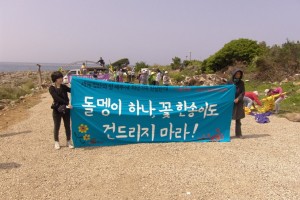
    另外,於本報稍早報導中,在4月6日被警方以相當暴力的手法逮捕的Yang Yoon Mo,日前已經釋放,並於絕食抗議整整72日後,恢復少量飲食,目前身體仍過份虛弱。另一位在5月19日被捕的崔成希(Choi Sung Hee),仍在獄中,崔成希被捕當時,不過是手持抗議旗幟,旗上寫著「即使是一顆石頭,即使只是一朵花,也不要碰!」。目前崔成希在獄中也暫時中斷絕食抗議。昨日,有一群韓國律師在濟州島聚會,商討備受爭議崔成希的被捕案例。

    June 21, 2011

  • Yang Yoon Mo、Choi Sung Hee為抗議不法軍港,獄中絕食

    5774915204_3b096c2360_o
    Yang Yoon Mo以身體阻擋建設工程用的卡車通過而被捕,並在獄中絕食抗議

    Yang Yoon Mo ,反濟州島海軍軍港建設的社會運動者之一,也是一位韓國電影影評人和教授,同時他本身也出身於濟州島,因為以身體阻擋建設機器,讓自己躺在工程卡車下方,在4月6日被警方以相當暴力的手法逮捕,甚至還遭到毆打。

    Yang Yoon Mo在紀錄片Island of Stone影片中提出他反對海軍軍港建設的三個觀點,其一他不滿南韓政府單向式的決策過程,他說南韓政府至少應該要在下決策前給江丁洞居民充分的解釋或是舉辦公聽會,足見過程缺乏與居民的溝通,接著政府就暴力地採取執行行動。因此他認為反對這個非民主、非正義的海軍基地,才是捍衛人民基本的權利。


    其二,他呼籲民眾不應被錢、資本和國防給殖民、控制,而投降於權力,活得像奴隸。他說:不要忽略更多元的世界、不要放棄活得更豐盛的人生的機會。

    最後,他說:自然很美,他像孩子似的抱著岸邊的石頭說:「當我這樣擁抱它時,像是一種人和自然間的親子關係」,他告訴我們這是難得的銀白色的玄武岩,說他有多愛這些石頭的美,但海軍就要打著國防的旗號來破壞這個石頭,他痛心地喊:「痛死了,我的心痛死了,當這個石頭被破壞,若石頭壞了,我心也碎了」。

    影片後還有警察暴力地將他從抗議現場帶離的畫面。從他被警方逮捕開始,他便展開絕食抗議行動,至今(2011年5月30日)已邁入54天,目前生命垂危,甚至已寫下遺書,表明他會絕食抗議直到海軍軍港停止建設,或者直到他死。

    5774356733_ec08bcbdc2_o
    崔成希拉著抗議布條,布條上寫著:不要碰這裡的一顆石頭,一朵花!

    Choi Sung Hee是另一位主要反濟州島海軍軍港建設的社會運動者之一,她也在5月19日被捕,並且也開始絕食抗議。當她被捕時,她只不過是拿著抗議牌站立抗議。其他的抗議者怒稱這根本是非法逮捕。

    5774377047_6665395e26_o
    崔成希遭監禁之照片,目前於獄中進行絕食抗議
    174981_234238069948039_100000855441277_610770_4003230_o
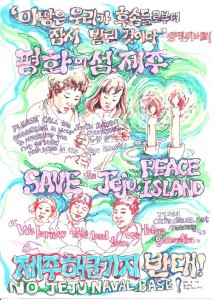
    崔成希於獄中所作的畫,期許濟州島成為和平之島


    目前其他國際的社運人士已透過網路連結,發起串連,希望各國民眾勇於致電當地韓國代表處,表達濟州島江汀洞居民的訴求:韓國政府用非正義的手段取得土地,不尊重撤離歷史性財產的既定時程,並毀壞無可替代的生態環境,江汀洞的人民要求立即停止濟州島海軍基地的建設。

    May 30, 2011

  • 軍港施工 濟州島唱起悲歌

    儘管欠缺民主的過程、公眾的支持,以及生態破壞的巨大代價,韓國和美國政府持續在濟州島的江汀洞進行共同海軍基地的建設。

    濟州島位在韓國西南外海,2002年由聯合國教科文組織(UNESCO)列為生物圈保留區,2007年為聯合國教科文組織列入「世界自然遺產名錄」而受到保護,也是韓國文化遺產局的國定保護區。

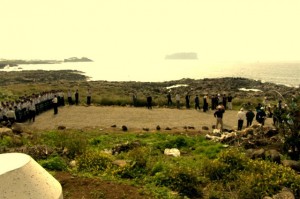
    海軍軍港建設現場
    海軍軍港建設現場

    而韓美共同海軍基地計畫建設地點則落在南部的海岸中心:西歸浦市江汀洞,長久以來,濟州島民眾認為此地是島上最美的部分之一。

    在江汀洞外海,包含幾個美麗的小島(虎島、 蚊島…),在毗連江丁洞的Joongduk海岸線與這些島的水域周圍之間,是許多稀有動物的家,包括軟紅珊瑚的群落。

    這裡也是許多海豚自阿拉斯加到太平洋間遷徙時的季節性棲所,此海域孕育有各種稀有的海洋藻類(韓國70%的海洋物種生長在此海域)。此外,江汀洞海岸還是政府列為第二級瀕臨絕種物種的中型相手蟹(Sesarma intermedium)的棲地。

    也難怪在2006年,韓國環境部會將江汀洞一帶列為國家保護地區,並將江汀洞選為「優良生態村」。

    2002年,首爾宣稱在濟州島建立軍港的計畫。在兩個村莊相繼抗爭後, 2007年,政府的算盤轉而打到了江汀洞。雖然當時江汀洞的居民也多投票反對(94%投反對票),但在投票後,據許多居民表示,政府給予當地的農夫和漁民相當大的壓力,在此壓迫下,有些居民,包括一些較年長的海女,賣了他們的農地。

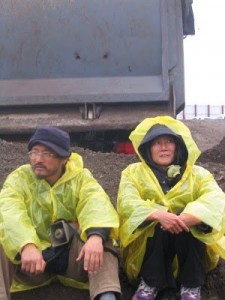
    Song, KangHo博士以及崔成希於工程現場靜坐
    Song, KangHo博士以及崔成希於工程現場靜
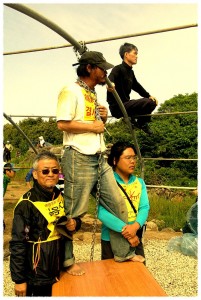
    和平運動人士Song, KangHo博士在海軍基地工程現場阻止軍港建設
    和平運動人士Song, KangHo博士在海軍基地工程現場阻止軍港建設

    這個務農、靠海以及觀光維生的村莊,在失去土地、美麗海岸和生態接踵受破壞後,居民手上還 剩下什麼?

    許多當時賣了土地的人現在也表示,當時他們並不真的了解他們實際上是在做些甚麼事,現在相當後悔此決定。其他人則持續對抗賣土地或搬遷的壓力,並採取所有可能的手段阻止海軍軍港建設。

    在2009年,南韓政府終於還是批准美韓海軍軍港於濟州島江汀洞的建設;同時,濟州道的議會也突然投票否決江汀洞為國家保護地的一部份之地位。居民抗爭的情勢大逆轉,居民由原本受國家法律保護的一方,突然失去一層既定的保護網,可見得政府竭力為此軍港建設案護航,不惜出賣再怎麼樣都不應被劃作海軍軍港建設地的自然保育地區。

    和平運動人士在場阻止軍港建設
    和平運動人士在場阻止軍港建設

    此外,濟州島海軍軍港建設時間表中,原定2010年11月直到2011年6月間是為緩衝時期,給予此區所有具歷史性、文化性意義的資產撤遷時間。但最後,在2011年2月,政府在違反多數江汀洞居民的意願下,無視此區的生態價值,甚至還在原訂歷史文化財產撤遷時程表之前,提前開始海軍基地的建設工程。

    三星建設和大林產業與韓國海軍合作,已經開始挖掘海岸線、摧毀海岸線的礁石並且在岸邊傾倒水泥。南韓政府努力為海軍軍艦建造停泊處,卻不顧此舉將摧毀江汀洞居民的居所以及生活文化。現在,曾經的「優良生態村」以及其附近海域,將逐步毀掉。

    三星建設(Samsung Engineering & Construction)是世界級知名企業三星物產(Samsung C&T)旗下公司,大林建設(Daelim Engineering & Construction)則是大林產業(Daelim Industrial)旗下公司。諷刺的是,兩個企業在網站均自稱為「綠色企業」、「道德企業」,卻進行著各界抨擊為不道德、不民主並嚴重破壞環境的工程。

    過去江汀洞的居民用盡所有民主手法,也嘗試採取了多次法律行動,希冀政府停止不公義的行為,但最終還是失敗。現在他們透過與許多韓國民間團體的合作,以直接的行動來試圖停止海軍基地建設。

    May 30, 2011

  • Language, Island, colonial culture and the Jeju naval base

    Re-post from the No base stories of Korea, Feb. 27, 2011


    * Image source: Headline Jeju, Feb. 25, 2011헤드라인 제주, 2011년 2월 25일(클릭)
    The sign reads: ‘Allow and actively promote the use of the Jeju dialect in schools!
    ‘Critically endangered Jeju dialect’ of the UNESCO-registered-and-promoted

    It is the responsibility of the Jeju Provincial Office of Education that has not allowed the use of the Jeju dialect for 40 years, who has alledged that it is a ‘rustic and impertinent’ dialect. ‘
    ____________________________________________________________
    Thanks to the activists who are making efforts to decolonize the cultures of their Islands, for example, Michael Lujan Bevacqua who runs the blog called ‘No Rest for the Awake: Minagahet Chamorro,’ it has become clearer to more people that no base movement cannot be separate with the decolonization movement.

    Here in the Jeju Island, the faced situation could be similar to a lesser degree if not the same with the examples in the other regions, especially in those Islands who have been suffering under the imperial eyes and tongues.

    The Headline Jeju on Feb. 25 reported an interesting article ( by Yoon Chul-Soo) which was about one man protest by Kim Young-Bo, a high school teacher teaching commerce, who demanded the free use of the Jeju dialect in schools in front of the Jeju Special Self-Governing Provincial Office of Education (The Jeju Provincial Office of Education, afterwards) in the afternoon of Feb. 25, 2011.

    According to the very article, the teacher protested against the Jeju Provincial Office of Education which he criticized because it had not allowed the free use of the Jeju dialect in schools by alleging that the Jeju language was a ‘rustic and impertinent dialect,’ and to which he demanded that it should allow students to freely speak the Jeju dialect in schools.

    Below is the translation of his words cited in the article:

    “The Jeju Provincial Office of Education who has not allowed the free use of the Jeju dialect is very responsible for the Jeju language being critically endangered. Even though the situation is very serious as to the degree that it is registered as a critically endangered language by the UNESCO, the Provincial Office of the Education is not trying to fix such wrong education policy.” 

    It was poignant to hear that the Jeju dialect is critically endangered itself while the UNESCO designated soft corals in the Gangjeong Sea is being threatened with the naval base construction in the Gangjeong village, as well. (* About the UNESCO registered Jeju language, see HERE and HERE)

    Here are further translations of his cited words, as well:

    “I am more infuriated by the fact that no one really seriously concerns about that, except for short time whenever there were media reports on the Jeju dialect being registered as a critically endangered language. Who would succeed the Jeju language if the current halmang(s)(old women) and harbang(s)(old men) die. The language might disappear.”

    “Our generation was not allowed to use the Jeju dialect for talks between teachers and students not to mention for class hours. We had to hear reproach that we were rustic and impertinent if we use the Jeju dialect and we even got a whip. Didn’t the students who had been getting punished get one more whip if they unconsciously used the Jeju dialect, did they? It is for the alleged reason that they look as rustic and impertinent from the point of view of teachers.”

    According to the article, he pointed out that the Jeju Provincial Office of Education was showing the duality by never allowing the Jeju dialect even among the students within schools while it is also making an effort to revitalize the Jeju language such as through hosting or sponsoring competition events such as those on speaking with the Jeju dialect; those on children song with the Jeju dialect, exhibitions on illustrated poems with the Jeju Dialect; and festivals with the Jeju Dialect. It is told that the authority of the Jeju Provincial Office of Education has issued that it has guided that there should be an education course on the Jeju dialect beside sponsoring such events. However, it is contradictorily prohibiting the very use of the Jeju dialect [within schools].

    According to the article, the duality is the very point that motivated him toward his own one man protest.

    What is interesting about the event and article is that those things very remind the current situation of the Jeju Island whose native cultures are being disappeared with corporate and militarism culture in South Korea, especially with the law on the Jeju Special Self-Governing Province, which was brought in 2006 with the concept of Jeju free international city and emphasis on the so-called’ ‘globalization.’

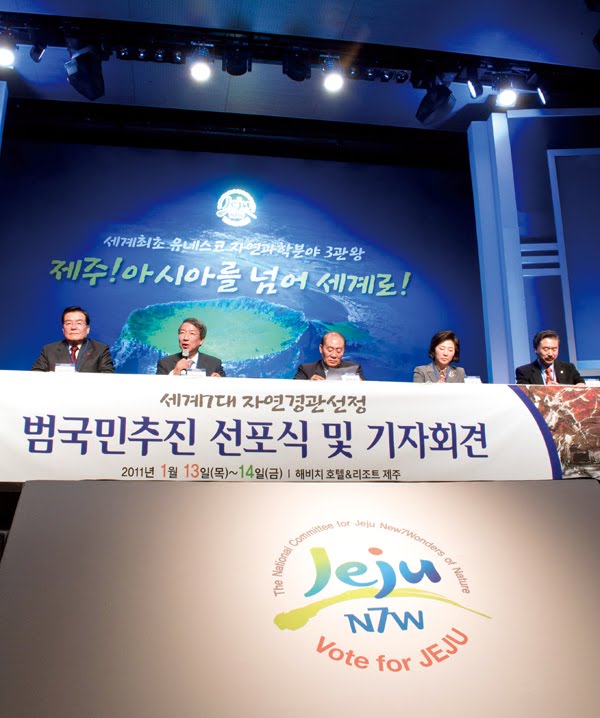
    Mr. Go Gwon-Il, a Gangjeong villager thinks the Central and Island governments’ current mobilizations for the Jeju to be one of the new seven wonders even being mobilized with many celebrities along with excessive international propaganda is part of such extended move.

    According to him, the Jeju Island should NOT be one of the new seven wonders because it would make worse the situation of the Jeju Island, the UNESCO triple-crowned site(Mount Halla’s Biosphere Reserve recognition in 2002; Natural Heritage Sites designation of Mount Halla, Seongsan Sunrise Peak and Manjanggul cave in 2007; and the geopark designation in 2010) with increasing capitalism and reckless tourism.

    Otherwise, according to the Wiki on the Jeju dialect:

    One large difference between the Jeju dialect and those of mainland Korea is the lack of formality and deference to elders. For example, while a speaker of the Seoul dialect might say 안녕하세요 annyeonghaseyo (“Hello”) to an older person, a speaker of the Jeju dialect would say 반갑수다 ban-gapsuda (lit., “Nice chatting” or “Nice talking”; roughly equivalent to “Howdy”). To many mainlanders, a child saying this to an adult would be appalling, but on the islands, a more “egalitarian” form of speech is used, perhaps a cultural idiosyncrasy that has hung on after the incorporation of Jeju itself (under the Tamna kingdom, which, though having subjugated itself to Korean states since the 7th century, was not brought under the full centralized control of a Korean state until 1404) into Korea.


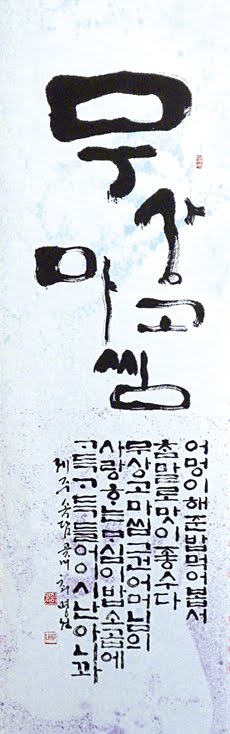
    * Image source: Jeju Weekly, Feb. 6, 2011 (Original source: ‘Art by Choi Myung Sun. Photo courtesy Jejudo Hangeul Calligraphy Society’) The calligraphy written with the Jeju dialect reads:
    ‘ Moosangomassim(Why is it?)
    Umung-ee haejoon bab muk-eo-bob-seo (Why don’t you have some rice mother has cooked?) Chommallo Masi Jotsooda(It is really delicious.) Moosangomassim (Why is it?) Geu-gun Umunim-eui Saranghaneun mosim-ee bab sogobe godeukgodeuk deul-eo-i-si-nan anikkwa (Isn’t it because mother’s loving heart wholly fills the rice bowl, is it?) –Jeju sokkdam gotnae (cited from one of the Jeju proverbs Gotnae)

    There was also an interesting article in the Jeju Weekly. See HERE. According to it:

    Looking at the wider linguistic picture, the Korean language is also losing ground on account of the dominance of English.


    But looking at the problem more closely, one sees that much of the Jeju dialect is disappearing fast, partly because the capitalistic logic of “efficiency” has been an excuse for our indifferent attitude. During the rapid economic development in Korea which started in the 1960’s, preservation of cultural diversity was considered “inefficient” since it could deter fast decision making. This has since put the Jeju dialect on the list of critically endangered languages.

    For reference, the 60’s developmentalism was promoted by the Park Jung-Hee military dictatorship who has eyed on the Jeju Island, a historically strategic point by the imperial countries and dominating class, with the turned-out-to-be a failed military base plan then.

    The concern about the possibility of disappearing vernacular terms in the Gangjeong village is being faced with the rapidly accelerated naval base construction: Who would remember the names of Goorumbee(cloud-shaped rocks stuck under the earth), Gaegurumbee (cloud-shaped rocks on the earth), Jinsokkak, (hem-look in the place of deep and and inwardly long water), Neobeunnyo (spacious rock protruded over water), Metboori( * Of which the meaning is not exactly known but according to Mr. Go Gwon-Il in the Gangjeong village, it could be ‘a ritual place offered with rice’) in the Joongduk coast and Natgakk(hem-look in the place of stream) in the downstream of the Gangjeong stream, once all the rocky Joongduk coast in the Gangjeong badang(sea) is reclaimed with concrete by the construction?

    The naval base construction would not only bury the heaven-blessed nature of the Gangjeong village but would also erase all the archaic history of it, violently making scars into the memories of the Gangjeong villagers who might not be able to say any more that their hometown Gangjeong used to be the most water-abundant and the most water-fresh village in the Jeju Island.

    February 27, 2011

  • Samsung workers, Samsung, and the Jeju naval base

    * Image source: Ku Do-Hee, Voice of People, Feb. 4, 2011 민중의 소리 구도희 기자, 2011년 2월 4일(클릭)
    ‘portrait of Kim Joo-Hyun, the deceased Samsung worker in mortuary
    ‘빈소에 있는 고 김주현 노동자의 초상’


    * Image source: Samsung General Labor Union, Jan. 26, 2011 삼성 일반 노조 웹사이트, 2011년 1월 26일(클릭)

    ‘ Workers and activists have been doing relay one-man protest in front of the Samsung factories in Suwon and Cheonan, every Wednesday, to demand the withdrawal of unjust lay-off of a worker who claimed for company’s acknowledgement on labor union.’

    ________________________________________
    Despite New Year holidays (Feb. 2 to 6) in lunar calendar in Korea, there are people who cannot enjoy them. The bereaved family members of the deceased Mr. Kim Joo-Hyun, a worker in the Samsung Electronics LCD, City of Cheonan are part of those.

    Even though, it was Jan. 11 when Mr. Kim Joo Hyun made suicide by jumping from the rooftop of the factory dormitory, his family members are still keeping mortuary where his portrait is still being placed on, demanding acknowledgement and apology from Samsung for the cause of Kim’s death. The investigations on the cause of his death, such as excessive working time and on company’s negligence on his suicide have been still going on as well, the Voice of People reports.

    The Stop Samsung blog has reported on Jan. 14:

    ‘He suffered from skin disease due to chemicals and depression because of severe job stress. This shocking news is even more disturbing since it follows a rash of similar suicides by young workers at the Foxconn factory in China and inspires us to increase our determination to bring justice for the Samsung workers and families. He is the second suicide at Samsung this month! See the article by Elizabeth Grossman HERE for more background and details. In memory of Kim Joo hyun, we ask that you join the Samsung Accountability Campaign on the Causes page HERE.’

    For Samsung workers’ occupational deaths and protests, see HERE and HERE as well.

    Samsung is not only infamous for its no-labor union policy but also for its omnipotent abuse of power throughout South Korea. The Republic of Korea is called as the Samsung Republic in satire.

    Samsung is also involving in Korea Aerospace industries along with Hyundae (The current president Lee Myung-Bak is originally from Hyundae) and Daewoo etc., producing and exporting many weapon systems, for example its branch, Samsung Tales, the South Korea’s leading maker and exporter of naval combat systems.

    It has been alarming when the Jeju media (Jeju Sori1, Jeju Sori 2, Media Jeju) reported that the Jeju Island government had made contract for partnership with Samsung C & T to achieve export of 1trillion won on Jan. 21, 2011.

    It reported that the Jeju Island and Samsung made contact to collaborate on scouting for bright export goods, supporting for foreign marketing and inheriting on export know-how for the Jeju Island government officers.

    The Samsung C & T is told to be the matrix of Samsung with its total sale price exceeding 10 trillion 876 billion won last year, which is near four times of the Jeju Island budget this year. It was also told that all the information and resources acquired during the process of execution on the agreement conclusion would be ‘absolute secrete.’

    Further, the Samsung C & T has made contract with the navy for the naval base construction along with Daerim who is involving the construction on space museum through its consortium. The Samsung C & T is also being involved in KEPCO (Korea Electric Power Corporation) consortium along with the KEPCO, Hyundae and Doosan Heavy Industry, which has made contract with the United Arab Emirates on nuclear power plant in Dec. , 2009.

    Jan. 21 was the next day when the Jeju media reported the contradictory decision by the members of the special committee on the settlement of the conflict on naval base, Island Council, who were told to have decided to urge the prime minister for earlier legislation on the revised bill on the Jeju special law which included the support basis on the Jeju naval base, while 40% of the members had voiced on the unjust process on the annulment of the absolute preservation areas in the Gangjeong village.

    The Samsung, supporting the drive by the central and Jeju Island government, Jeju Island Council for Jeju being one of the seven wonders of nature, is grasping the Jeju Island, as it has wielded power throughout South Korea. Please watch Samsung. Please boycott Samsung product in your countries and if you can, protest on its oppression of workers and involvement in the Jeju naval base construction.


    …………………………………………………………

    Original post

    http://nobasestorieskorea.blogspot.kr/2011/02/jeju-update-samsung-workers-samsung-and.html

    February 6, 2011

  • Walking from the Joongduk Coast to the Gangjeong Stream

    Re-post from the No base stories of Korea, Jan. 24, 2011


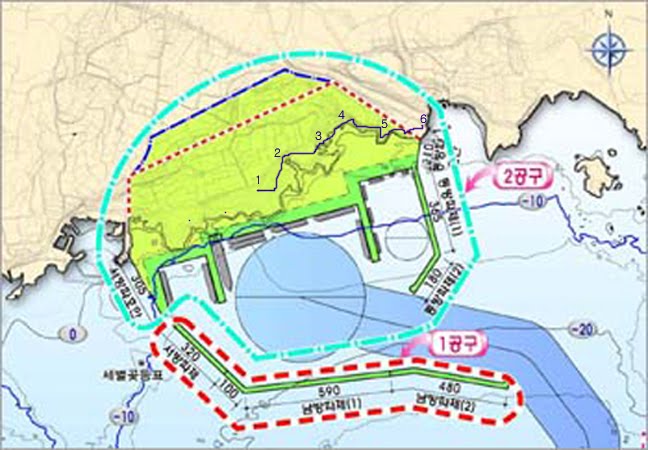
    1. Goorumbee (Gureombi) 구럼비 2. Jinsokkak 진소깍 3. Neobeunyeo 너븐여
    4. Gaegoorumbee 개구럼비 (Gaegureombi) 5. Metboori (Moetppuri) 멧부리

    6. Gangjeong Stream + Ackeun stream 강정천 + 악근천

    ………………………………………………………………………….

    One can see many Jeju vernacular terms in the names of the places from the Joongduk coast to the Gangjeong Stream. The below is the explanation by Mr. Go Gwon-Il, Gangjeong villager. Saying he could not assert all his explanations were right but based on his knowledge, in case with inference, he gave us some interesting explanations on the names of places.


    1. Goorumbee 구럼비

    Mr. Go inferred the meaning of the word, ‘bee’ in the ‘Goorumbee’ same with that of the word, ‘bille,’ which means ‘rocks stuck into earth,’ while that of the word, ‘Goorum,’ same that of the word, ‘Gooreum,’ which means ‘cloud,’ therefore the meaning of ‘Goorumbee’ as ‘the rocks of cloud shapes.’

    ………………………………………………………………………..

    2. Jinsokkak 진소깍

    The word, ‘So’ in the name of ‘Jinsokkak’ means ‘place of deep water.’ The word, ‘KKak’ means ‘hem of a cloth,’ which is expression of the shape of line that looks like the hem of a cloth on the surface of water into which the bottom parts of the rocks are submerged. Mr. Go said of a tale that has been told in the Gangjeong village for a long time. The story is that when the Seolmoondae Halmang ( ‘halmang’ means ‘old woman’) who is told to have created the Jeju Island in the folktale on the birth of the Jeju Island, lied her body taking the Beom Island (where the UNESCO designated soft corals inhibit underneath) as her pillow and putting her feet into the Baekrokdam ( the crater on the top of Mt. Halla), the Jinsokkak was her womb therefore women who could not have babies long time could have babies if they bath in the end point of the Jinsokkak, where fresh water and sea water meets each other.
    ……………………………………………………………………

    3. Neobeunyeo 너븐여

    The word, ‘neobeun’ in the name of the ‘Neobeunyo’ means ‘spacious,’ while ‘yeo’ meaning ‘rock protruded over water.’
    …………………………………………………………..

    4. Gaegoorumbee 개구럼비


    The word, ‘gae’ in the name of ‘Gaegoorumbee’ means ‘the rocks on the ground without being stuck into earth’, different from ‘bille.’

    ……………………………………………………………………………..
    5. Moetboori 멧부리
    * On the Metboori, see also HERE 멧부리에 대해서 또한 여기를 클릭하시길


    .


    Mr. Go inferred the meaning of the word, ‘Me’ in the name of ‘Metboori’ as ‘the rice on table for religious serves,’ therefore the meaning of ‘Metboori’ as the ‘(sacred) place where people offered rice.’ For reference, there is a low and big stone-made altar where people used to hold the religious service called ‘Byeolpoje,’ since long time ago in theMetboori. The altar is told to directly face toward the direction of rising Sun in March in lunar calendar (which is approximately April in the solar calendar)

    The Byeolpoje was an annual religious service held by many villagers for the purpose of good lucks to be prosper, while to prevent bad lucks, around March or April in lunar calendar, which is usually before Danoh (one of big festive days in Korea; the word, ‘Danoh’ means the first five days of May, in lunar calendar) and when the yang energy begins to prosper more than yin energy-it is told that if yang energy is much more than yin energy, the epidemic becomes to be rampant. The Byeolpoje was stopped in 1969 (during the Park Jung-Hee military dictatorship) but resumed in 2002 (the period when the ex-President, Kim Dae-Jung reigned). However as the Island government unilaterally decided over the Gangjeong village as the planned naval base area then the navy purchased the land in 2008, the service was also stopped as the villagers found it was hard to freely walk there.
    ………………………………………………………………………………
    6. Gangjeong Stream + Ackeun stream 강정천 + 악근천


    In the seawater of the end point of the Metboori, the fresh water of the Keunnae (means the ‘big stream’ and is also named as the Gangjeong stream) and Akkeunnae (named as the Akkeun Stream) meets with the sea water. One calls the place in the downstream of deep water as ‘Bongdoongiiso.’ There exist the stones called ‘Sokdol’ that has many holes as to drift over water.

    One calls the meeting point of the Gangjeong Stream and sea water as ‘Natkkak.’ Its geology is formed of sudden downfall so you can see sometimes water flow that is poured like fall. Because of its clean water, one can see sweet fishes and kind of moss called Polytrichum juniperinum (or pigeon wheat). It is told that there lives the kind of moss called ‘Marchantia polymorpha (called common liverwort or umbrella liverwort) in less clean water.

    January 24, 2011

  • Why the annulment on the cancellation of the absolute preservation area has to be done?


    Re-Post from the No base Stories of Korea


    __For the original Korean article including maps/images(click HERE) 
    * English subtitles were added by arbitrary to the original images.
    * The last 13 images were  added by arbitrary for readers’ easier understanding.

    ________________________________________________________

    The below is a rough translation of the original Korean document informed at the site of the Jeju Human Rights Center. Thanks to Mr. Hong Ki-Ryong, Chairman of the Pan Island Committee for the prevention of the Jeju Military Base [plan] and for the Realization of the Island of Peace, who informed the document. Currently the Gangjeong villagers are preparing for the final review of the 1st court in November and its final decision in December, regarding their lawsuit on the demanding of annulment on the cancellation of the absolute preservation area by the [former] Island authorities. The villagers and Pan Island committee have carried out a 10,000 Pan Island people’s petition movement to save Gangjeong from June 25 to July 25, 2010. The below document has originally been made for that cause. But with the lawsuit that is critically hanging in November, the below document would be some helpful for readers to understand what the lawsuit is about and how the lawsuit is important in the struggle.

    More pictures, fixes and compensations would come later.
    ________________________________________________________

    Click the images for larger view
    이미지를 확대하시면 크게 보입니다.

    The naval base [plan] does never fit to the Gangjeong village where a heaven-blessed ecosystem, a standing scenery in the Jeju, breathes!


    The Jeju Island government and Jeju Special Self-Governing Provincial Council should withdraw from the cancellation of
    the absolute preservation area, Gangjeong village.

    The cancellation of the absolute preservation area, which is legally and procedurally problematic has to be annulled.

    • The coastal area of the Gangjeong-dong, City of Seogwipo, has been designated as the absolute preservation area during the process of the enactment on the special law on the development of the Jeju Island in 1991 and its total area size of 1,087,878 square meters was re-designated as the absolute preservation area, last Oct. 2004.

    • Of that area, the absolute preservation area in the naval base planned site occupies 105.295 square meters, which is about 300,000 pyeong.

    Image: The Present status of the absolute and relative preservation areas
    around the Gangjeong village
    (source: Document on the Assessment on the Environmental Impact by the naval base [plan])
    (* English titles were added to an original image)

    • Gangjeong was designated as the absolute preservation area for the reason that a beautiful scenery had to be protected. Nevertheless the [former] Island government and navy, deciding to annul the absolute preservation area by getting the agreement with the [former] Island Provincial Council under the cause of the ‘high-power self-regulation right’ of the [former] Island governor, are driving for the sea reclamation according to it.

    • The [former] Jeju Island [government] has submitted its proposal to the [former] Island Provincial Council for agreement on the alteration of the absolute preservation area in the planned naval base area, Gangjeong, and the [former] Island Provincial Council, lead by the members of the Grand National Party [who were the majority then]passed it in a snatched way on Dec. 17, [2009]. Then, [the former] Jeju Island government issued the announcement on the decision of the alteration on the absolute preservation area (The Jeju Special Self-Governing Island Government announcement NO. 2009-157)

    • The Jeju Island authority had omitted the process [that was required] in the article of the related act that read that [the Island] should consult the villagers’ opinion during the process of the alteration on the absolute preservation area,reasoning that it did not need to consult the villagers’ opinion in the ‘negligible case’ such as the reduction of the area size. However, it is greatly questionable whether to annul the protection area of 300,000 pyeong (* 105.295 square meters) to fill up the sea of 100,000 pyeong is indeed a negligible case.

    • Related to that, the Jeju local lawyer’s council stating its position through its press interview on Nov. 12, last year that, “ Whereas the act on the management on the absolute preservation area of the Jeju Island government reads that [the Island] should name underwater resource, ecology system, and 1st class scenery – as the protected regions of the absolute preservation areas, it is but a question on what legal basis the [Island] is driving for the annulment of the absolute preservation area, while it is not doing the investigation on the matter of whether the planned naval base area belongs to such 1st class area or not,” has raised its question on the legal & procedural injustice of the Island’s measure on the annulment of the absolute preservation area, and been still pointing out the legal problems in it.

    • The issue on the annulment of the absolute preservation area in the naval base planned site in Gangjeong has been stained with the problems such as the [former] Jeju Island authority’s arbitrary submission of the proposal for the [Island Provincial Council’s] agreement on the alteration (annulment); its exclusion of collection of the villagers’ opinions; and the Island Provincial Council’s passing the bill in a snatched way, ignoring the meeting procedure of the Island Provincial Council.

    • Currently, the present status of the issue is that its administrative lawsuit is now being raised and being moored in the Jeju local court since the Gangjeong villagers made a decision to file an administrative lawsuit on it, through their temporary general meeting on last January 13, [2010].

    The Gangjeong village is a place of a blessed scenery and ecology system that needs protection.

    • The coastal area of the Gangjeong village is the place of the representing scenery in the Jeju and a ecology system site where the precious national creature resources are variously distributed.

    ※ The present status of the designated protection areas in the Gangjeong village.

    Biosphere protection area (UNESCO): designated on Dec. 2002

    Cultural treasure protection area (Natural memorial NO. 421, by the Cultural Heritage Administration of Korea): designated in July 2000

    Cultural treasure protection area (Natural memorial NO. 442, by the Cultural Heritage Administration of Korea): designated in December 2004

    Marine ecology system protection area (Ministry of Land, Transportation and Maritime Affairs): designated on Nov. 5, 2002

    Jeju Island provincial maritime park (Jeju Island): Designated in Oct. 2006

    Absolute preservation coastal area (Jeju Island): Issued in April, 2007

    Nature Park (Bomok~ Gangjeong, Ministry of Environment): Oct. 15, 2008

    ※ The present status of the designated protection area, Gangjeong village


    ※ The present status of the inhibiting court -protected species, Gangjeong village, Jeju Island

    * All the below images comes from the Korean sites by search. Please respect the sources. The source links are clicked.

    …………………………………………………………………………………………………
    Soft Coral (연산호):
    …………………………………………………………………………………………………


    * Image source: Environmental Doorebak (Original source: Ministry of Environment, ROK, 2005)Dendronephthya suensoni (검붉은수지맨드라미)
    _The 2nd class endangered wild animal/plant species-Ministry of Environment, ROK…………………………………………………………………………………………………* Image source: Environmental Doorebak (Original source: Ministry of Environment, ROK, 2005)Dendronephthya mollis (연수지맨드라미)
    _ The 2nd class endangered wild animal/plant species-Ministry of Environment, ROK
    …………………………………………………………………………………………………* Image source: Environmental Doorebak (Original source: Ministry of Environment, ROK, 2005)


    Dendronephthya putteri (자색수지맨드라미)
    _The 2nd class endangered wild animal/ plant species-Ministry of Environment, ROK
    …………………………………………………………………………………………………


    * Image source: Environmental Doorebak (Original source: Ministry of Environment, ROK, 2005)Dendronephthya castanea (밤수지맨드라미)
    _The 2nd class endangered wild animal/plant species-Ministry of Environment, ROK
    …………………………………………………………………………………………………


    * Image source: Environmental Doorebak (Original source: Ministry of Environment, ROK, 2005)
    Euplexaura crassa (둔한진총산호)
    _The 2nd class endangered wild animal/ plant species-Ministry of Environment, ROK
    …………………………………………………………………………………………………


    * Image source: Environmental Doorebak (Original source: Ministry of Environment, ROK, 2005)


    Verrucella stellata (별혹산호)
    _The 2nd class endangered wild animal/ plant species-Ministry of Environment, ROK
    ………………………………………………………………………………………………..


    * Image source: Jeju Sori
    Tubastraea coccinea (금빛나팔돌산호)
    _The 2nd class endangered wild animal/plant species-Ministry of Environment, ROK
    ; and internationally 2nd class endangered
    …………………………………………………………………………………………………* Image source: Scuba Diving school blog
    Antipathes japonica (해송)
    _The 2nd class endangered wild animal/ plant species-Ministry of Environment, ROK
    : Natural treasure NO. 456- Cultural Heritage Administration of Korea
    …………………………………………………………………………………………………


    * Image source: Life and Peace, Gangjeong blog
    Antipathes lata (긴가지해송)
    _Natural treasure NO. 457- Cultural Heritage Administration of Korea
    ; and internationally 2nd class endangered species
    …………………………………………………………………………………………………
    Animal / plant (동.식물)
    …………………………………………………………………………………………………


    * Image source: BRIC Bio species
    Clithon retropietus V. Martens (기수갈고둥)
    _The 2nd class endangered species-Ministry of Environment, ROK
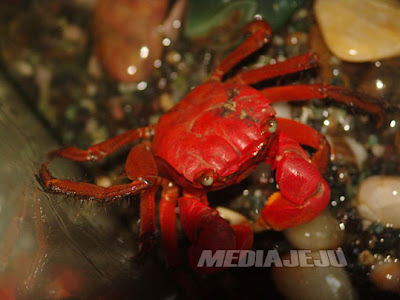
    …………………………………………………………………………………………………* Image source: Media Jeju


    Sesarma intermedium (붉은발말똥게)
    _The 2nd class endangered species-Ministry of Environment, ROK
    …………………………………………………………………………………………………
    * Image source: Newsis
    Cladium chinense Nees (층층고랭이)
    _A rarity, but non- court-protected
    ……………………………………………………………………………….
    * Image source: Animal photo album
    Eriocheir Japonicus (동남참게)_ A rarity, but non- court-protected
    November 6, 2010

  • Memorandum of Understanding Related to the Construction of the Civilian-Military Complex Port for Tour Beauty

    * The below is the arbitrary translation of the ROK government Memorandum of Understanding(MOU) regarding the Jeju naval base project on April 27, 2009. The original Korean can be seen HERE. (Translated on June 24, 2010)
    ________________________________________________________

    Jeju Press, April 27, 2009

    해군 기지 기 본 협 약 서(MOU)내용
    Contents of the Memorandum of Understanding (MOU)
    on [the Jeju] Naval base


    민․군복합형 관광미항 건설과 관련한
    기 본 협 약 서Memorandum of Understanding
    Related to the Construction of the Civilian-Military Complex Tour
    Beauty Harbor

    정부와 제주특별자치도는 민․군복합형 관광미항 건설과 지역발전사업을 추진함에 있어 신뢰와 협력을 바탕으로 아래의 사항을 성실히 이행할 것을 협약한다.

    In driving forward the construction of the civilian-military complex tour beauty harbor, the [ROK] government and the Jeju Special Self-Governing Island agree with each other to faithfully carry out the below items based on trust and cooperation.

    아 래

    The below


    제1조(목적) 본 기본협약은 제주특별자치도(이하 ‘제주자치도’라 한다)에 추진중인 제주해군기지를 최대 15만톤 규모의 크루즈 선박 2척이 동시에 접안할 수 있는 민ㆍ군복합형 관광미항(이하 ‘민ㆍ군 복합항’이라 한다)으로 건설하고, 이와 관련된 지역발전사업을 추진함에 있어 국방부장관, 국토해양부장관 그리고 제주특별자치도지사간에 상호 이행해 나갈 사항들을 협약하여 정하는 것을 목적으로 한다.

    Article 1(Purpose) This MOU is purposed to construct the Jeju naval base being driven in the Jeju Special Self-Governing Island (called ‘the Jeju Self-Governing Island’ from the following) as the civilian-military complex tour beauty harbor’ (called the ‘civilian-military complex harbor’ from the following) in which the two cruise ships of which each of them would be the 150,000 ton at biggest, can come alongside the pier at the same time; and to define the items to be carried out with the mutual agreement by the Minister of National Defense, Minister of the Land, Transportation and Maritime affairs and the Governor of the Jeju Special Self-Governing Island, in driving the regional development business related to the [Jeju naval base].

    제2조(지역발전사업 지원) 정부는 민․군복합항 건설사업이 제주자치도의 지역발전에 기여할 수 있도록 「민․군복합항 지역종합발전계획 수립 용역」 결과 및 제주자치도의 의견을 바탕으로 제안된 지역발전사업이 효과적으로 추진될 수 있도록 적극 지원한다.

    Article 2 (Support for the regional development business) The government positively support the regional development business suggested based on the result of the ‘service for the establishment of the synthesized development plan on the civilian-military complex region’ and on the opinion of the Jeju Self-Governing Island so that the civilian-military construction business can contribute to the regional development of the Jeju Self-Governing Island.

    제3조(지원협의체 구성ㆍ운영) ① 국무총리실은 민․군복합항 건설사업과 부대사업 및 제2조의 지역발전사업을 원활히 추진하기 위하여 국방부, 국토해양부 등 관계부처와 제주자치도가 참여하는「민․군복합항 건설지원협의회(이하 ‘협의회’라 한다)」를 구성하여 운영한다. ② 제1항의 협의회를 지원하기 위하여 국무총리실에서 주재하고 관계자가 참여하는 「실무지원협의회」를 둔다.

    Article 3 (Composition & Operation of the Support body) (1) The Office of the Prime Minister composes and operates the ‘consultation committee for the support on the construction of the civilian-military complex harbor’ (‘consultation committee’ from the following) joined by the related Ministries such as the Ministry of national Defense and Ministry of Land, Transport and Maritime Affairs, so that [the committee] can smoothly drive the construction business of the civilian-military complex harbor, its attached businesses and the regional development business [mentioned] in the article 2. (2) The ‘consultation committee for the practical support,’ superintended by the Office of the Prime Minister and joined by the related personnel will be formed to support the consulation committee in the article 1.

    제4조(크루즈항 시설) 국방부장관과 국토해양부장관은 민․군복합항 건설을 추진함에 있어 15만톤 규모의 크루즈 선박 2척이 동시에 접안할 수 있는 항만시설과 부대시설을 함께 설치할 수 있도록 지원함으로써 지역경제 활성화에 기여하도록 노력한다.

    Article 4. (Cruise Harbor facility) In driving for the construction of the civilian-military complex harbor, the Ministers of the National Defense and Land, Transport and Maritime Affairs make an effort to contribute to revitalize the regional economy by supporting to install both of the harbor & bay facility and the attached facilities so that the two cruise ships of which the each is 150,000 ton size can come alongside the pier at the same time.

    제5조 (알뜨르 비행장 부지의 사용 등) ① 국방부장 관은 국방부 소관의 서귀포시 대정읍 소재 속칭 알뜨르 비행장 부지를 제주자치도 지역발전을 위하여 법적절차에 따라 제주자치도와의 협의를 거쳐 제주자치도가 사용할 수 있도록 한다. ② 국방부장 관은 공군 남부탐색구조부대에 전투기 배치계획이 없음을 확인한다.

    Article 5 (Use of the Alddreu Airfield etc.) (1) Through consultation with the Jeju Self-Governing Island, the Minister of National Defense (MND) allows it to use the area popularly known as the Alddreu airfield which is located in the Daejung-eup, City of Seogwipo , and belongs to the jurisdiction of the MND, which is for the purpose of regional development and via legal procedures.

     (2) The Minister of MND confirms that he has no plan to deploy fighter airplanes in the Namboo (* meaning ‘southern’) Search & Rescue troops of the air force

    제6조(보상) 국방부장관은 민․군복합항 건설에 따른 토지매입, 지장물 및 어업권 보상 등 손실보상을 추진함에 있어 관계법령에 따라 현실성 있는 평가를 실시하고 정당한 보상을 하여야 한다.

    Article 6 (Compensation) In driving for the loss compensation such as in the purchase of land and in the ground facilities & fishing industry right, following the construction of the civilian-military complex beauty harbor, the Ministry of National Defense should execute the realistic evaluation and righteous compensation, according to the related laws and ordinances.

    제7조(지역건설업체 참여) 국방부장관 은 민․군복합항 건설 및 부대사업을 추진함에 있어 제주 지역건설업체가 최대한 참여할 수 있도록 한다.

    Article 7(Participation by the local construction companies) The Minister of National Defense let the Local construction companies in the Jeju region join at most in driving for the construction of the civilian-military complex harbor and its affiliated business.

    제8조(권리행사의 제한 배제) 국방부장 관은 민․군복합항을 건설함에 있어 군사기지 및 군사시설보호법 제4조에도 불구하고 육상의 민․군복합항 울타리 경계와 해상의 군항방파제 밖의 지역에 대하여 군사기지 및 군사시설보호구역으로 지정하지 아니하며, 통행․고도․영농․어로․건축 등 주민의 생존권과 재산권 행사를 제약하는 행위를 하지 아니한다.

    Article 8 ( Limitation/ exclusion in the exercise of rights) In constructing the civilian-military complex harbor, the Minister of National Defense, despite the article 4 in the law on the protection of  military base and facility, shall not designate the outside areas of the fence border in the civilian-military complex harbor on the ground and of the seawall in the military harbor on the sea, as the restriction areas for the military base and military facilities; and shall not do the conducts that condition the exercises of the villagers’ survival rights such as passage, altitude, farming, fishing & architecture and their property rights.

    제9조(편의시설의 사용․운영 및 주민 우선고용 등) ① 국방부장관은 민․군복합항 건설과 관련하여 설치예정인 각종 복합 휴양시설 및 편의시설을 지역주민이 함께 사용할 수 있도록 한다.
    ② 국방부장관은 제1항의 휴양시설 및 편의시설에 직원을 고용하는 경우 지역주민을 우선적으로 고려하고, 편의시설의 운영을 민간에 위탁할시 지역주민에게 운영권을 우선적으로 부여한다.

    Article 9 (Use & management of the convenient facilities and employment of the villagers in priority) (1) The Minister of National Defense makes the various kinds of the installation-planned complex resort facilities and convenient facilities, related to the construction of the civilian-military complex harbor, can be used by the villagers, also. (2) In case of the employment of the workers in resort and convenience facility, as mentioned in the clause 1, the Ministry of National Defense considers priority to the local residents; and in case of commission to the civilian for the management of the convenience facility, the minister gives priority to the local residents regarding the management right of them

    제10조 (협약서 내용 변경 및 세부협약의 체결) ① 본 기본협약에 명시된 사항은 협약 당사자간의 합의에 의하지 아니하고는 어느 일방이 임의로 변경할 수 없다. ② 본 기본협약에 명시된 사항은 사업의 원활한 추진을 위하여 사안별로 협약 당사자간의 세부협약을 체결한다.

    Article 10 (Amendment on the content of the MOU and conclusion of the detailed MOU) (1)The items that was elucidated in this MOU cannot be freely amended by any side except for by all persons’ mutual agreement. (2) For the items stated in this MOU, the persons of the agreement conclude the detailed agreement for the smooth driving forward the business.

    본 기본협약서는 원본 3부를 작성하여 당사자가 날인하고 각 1부씩 보관한다. 끝.

    This MOU is written in the 3 copies of original, with each person’s seal, and each person keeps 1 copy of them.

    2009년 4월 27일
    April 27, 2009

    국방부장관 이 상 희
    Lee Sang-Hee,
    Minister of National Defense

    국토해양부장관 정 종 환
    Chung Jong-Hwan
    , Minister of Land, Transport and Maritime Affairs

    제주특별자치도지사 김태 환
    Kim Tae-Hwan, Jeju Special Self-Governing Island Governor

    June 24, 2010

  • Exposing the Navy, NIS, Island Government’s Psychology Warfare

    Re-post from No Base Stories of Korea, May 14, 2010

    The below videos are the editions by Mr. Go Gwon-Il  (Gangjeong village, Jeju Island) of the original 812th ‘PD Note’ program (about 14 min.), ‘Why the Gangjeong Villagers, Jeju Island, Are Furious?’ broadcast by MBC on May 5, 2009.

    The 1st part is about 10 min and the 2nd is about  3 min.

    One can glance the navy, NIS, Island government’s psychology warfare against the villagers: how the naval base project has been brought up to the Gangjeong village in an undemocratic way, how it brought the conflicts among the villagers and how it caused the fury and frustration of the villagers.

    The Jeju Sori has reported on the program on May 6, 2019.

    The villagers use to say it was like a kind of military operation (meaning psychology and information warfare) when the navy has brought the project in the village. It was not only in Gangjeong, but in the 1st and 2nd naval base candidate areas of Hwasoon and Weemee as well).

    This video will provide some clues on how the military utilizes  division strategy to install bases in  places.

    The most striking evidence of the navy’s psychology operation against the villagers is shown around 8 min.

    Here is the rough translation from that part.


    Transcript ( 7 min. 53 to 9 min. to 10 min. 18 sec. )

    7 min. 53  sec. 7분 53초

    이것은 취재중 PD 수첩이 입수한 문건입니다. 해군 기지와 관련해서 유관 기관이 회의한 내용이 담겨 있읍니다. 과연 어떤 말들이 오갔을 까요? 그 내용은 충격적입니다.

    This is the document that the ‘PD Note’ has gotten during the coverage. It contains the meeting contents by institutes, related to the naval base plan. What content was possibly discussed? The [exposed] content is shocking.

    8min.10 sec. 8분 10초

    There was the meeting on the naval base construction issue by the related institutes last September.

    8min.15 sec. 8분 15초

    제주 환경부 지사
    Governor of the Environment Department, Jeju Island

    ‘이제는 추진 단계, 걸림돌은 제거하고 가야…
    Now is the stage to drive [the plan]. An obstacle should be removed…

    해군이 주도해서 공세적으로 해야 한다.
    With the navy’s lead, one has to be aggressive.

    분열은 좋은 상황. 공세적 법집행 필요함.
    Division brings a good situation. Aggressive law-execution is needed.’

    8min. 27 sec.

    경찰 Police

    ‘도에서 조그마한 것이라도 공세적으로 고소 고발해야 경찰도 조치 가능

    The Island has to accuse and prosecute even if it is a small thing. Only then the police can work with measure…

    인신 구속 있어야 수위 낮아져…

    Only by imprisonment of personnel, the level of [resistance] will be low.’

    8min. 40 sec. 8분 40초

    국정원:
    National Intelligence Service

    제주 지검 차장 만나 해군 기지 관련 불법 행위에 대해 엄격히 법 집행 요구…
    The National Intelligence Service met the vice-director of the Jeju Public Prosecutors’ Office and has demanded the strict law execution against the illegal activities related to naval base…

    “외부 세력 개입에 대해 서는 강정 찬성 측에서 문제 제기하면 국정원, 경찰이 측면 지원”
    “Regarding the outside supporters, if the Gangjeong group who is in favor of the plan raises the issue, the NIS and police will side-support to them.”

    […] […]

    10min. 18sec. 10분 18초

    Reporter 보도자:

    “이상하게도 회의록에서 논의된 내용은 마을 내에서 실제 벌어지고 있었읍니다.
    Strangely, The content that has been discussed in the meeting report was actually happening in the village.

    특히 고소 고발 건은 이미 이 마을에서 낯선 일이 아닙니다.
    Specially, accusations and prosecutions are not unacquainted things any more.

    주민들에 따르면 (공무 집행 방해등) 해군 기지 관련해 접수된 것이 총 32건입니다.
    According to the villagers, the cases registered, related to the naval base issues (such as the ‘interruption of the government business execution’) are total 32.”

    May 14, 2010

  • 反濟州軍港抗爭告急 江汀村村長姜東均遭拘留

    在韓國號稱「世界和平之島」的著名觀光勝地濟州島卻於前日(2010年1月18日)爆發警民衝突,衝突導火線起於飽涵國家機器雄心壯志的海軍軍港建設計畫。

    韓政府對此海軍基地建設之倡議始於2007年,反對運動也就訖而不捨地至彼時延燒至此刻。自去(2009)年11月韓政府做出「建設軍港」最終決議後,當地情況告急,反對居民當時即明言必將相抗到底。

    該基地計劃提供美國和韓國的宙斯盾驅逐艦配備的導彈防禦系統使用。示威人士表示,導彈將用於環繞中國沿海地區,這將使濟州島這過去平靜島嶼,在衝突爆發時成為攻擊目標。

    當人人尚自歡慶著2010年的到來時,濟州島抗議民眾已在軍港建設預定地上,循著海岸礁岩,無懼於寒冬,搭起帳棚,懷著長期抗戰的決心。18日警察於軍港建設動工儀式中驅散示威者 據稱手段頗為激烈,抗議民眾共47人遭逮捕,雖然時至今日被捕的46名抗議民眾均已陸續獲釋,然軍港建設座落地江汀洞村長姜東均(Kang Dong-Kyun)仍遭扣留。

    不願具名的目擊者指稱,「據了解,警方今天對多是老年的抗議民眾採取嚴厲手段。村民躺在地上,哭喊著不如殺死他們。警方推擠老人家,甚至不介意在肢體衝突時發生女性內衣被扯落的狀況。」

    江汀村村長姜東均長期為反軍港建設議題奔波不遺餘力。致力於反對美國軍事基地擴張的加拿大籍社會運動者Bruce Gagnon表示,警方扣留村長姜東均極可能是為防止他再度於示威群眾中發揮領導功能。

    居民自1月6號起使用人陣、車陣圍堵工程用起重機進入工程預定地的屏障在一波波逮捕浪中仍是失守,而今取而代之的鋼絲柵欄,防的卻反是當地居民了。基礎建設過程序幕已揭,眼前此刻實是分秒皆關鍵。

    反對人士指出,水泥一旦填下,奇美的礁岩就此沒了,更遑論礁下千萬的海底生物。要知道水泥一旦填下,村民希冀的明日就扭曲了,縱使將來有人還願聽你話從前,也僅有遙想的份了。能看的還有什麼?配備有飛彈防禦系統的驅逐艦,真能戰無不克攻無不勝嗎?即便所向匹靡,又保證了多少和平?

    即便政府還承諾,此建設不僅是建一個保家衛國的現代海軍,還將開放作商用碼頭。即便政府還應許,應許的不只是富裕,還懂得講環保,在天然礁岸被水泥填覆後,承諾這將會成為一處對環境友善的觀光熱點。韓國當局圖謀以此化解環保與發展相對的難題竟然迎刃而解,卻也顯得滑稽。

    此地抗議村民泰半已是白髮蒼蒼的年歲,活了大半輩子,心理兀自雪亮,明白有些事物是一去不回頭。

    濟州道是韓國唯一的特別自治省,也是全韓國最大的島嶼。 計劃興建的基地區域靠近江汀洞河,該地區水質為濟州島最優良的地區,但水資源匱乏。在2007年該地區列名世界遺產名錄時,教科文組織在名錄中寫道:「濟州火山島和熔岩洞窟共同構成18,846公頃的三個特色部分。拒文岳熔岩洞群(Geomunoreum),被視為全世界最精緻的熔岩管系統,它帶有五彩斑爛的碳酸鹽屋頂和地板,及深色熔岩牆。堡壘般的城山日出(Seongsan Ilchulbong)凝灰岩錐,從海中聳立,形成戲劇性的景觀。韓國最高的漢拿山,有著瀑布、多形岩層及隕石坑湖泊。」

    January 20, 2010

←Previous Page
1 … 42 43 44 45 46 47 48
Next Page→

© 2025

Save Jeju Now