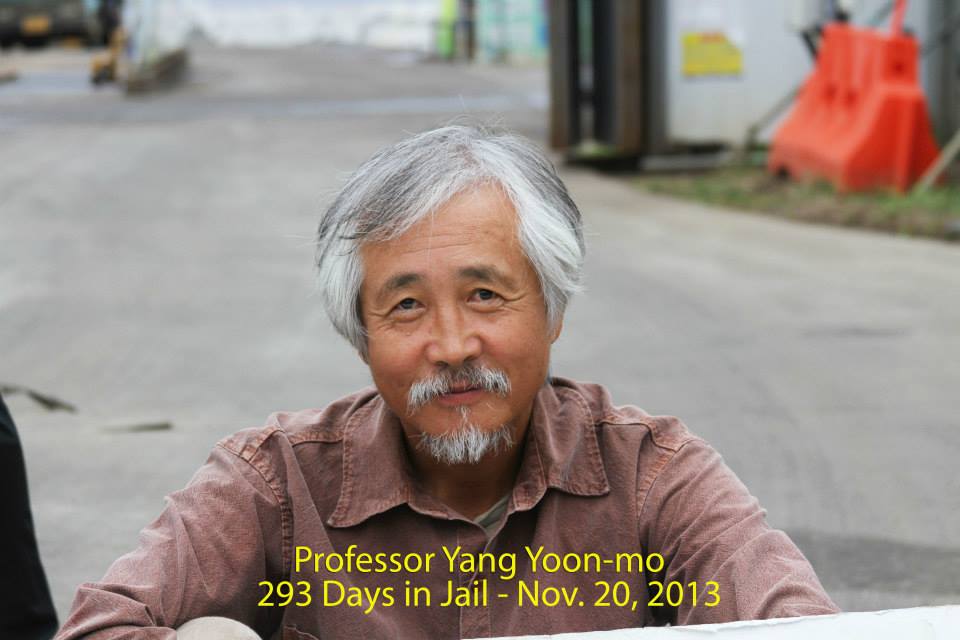
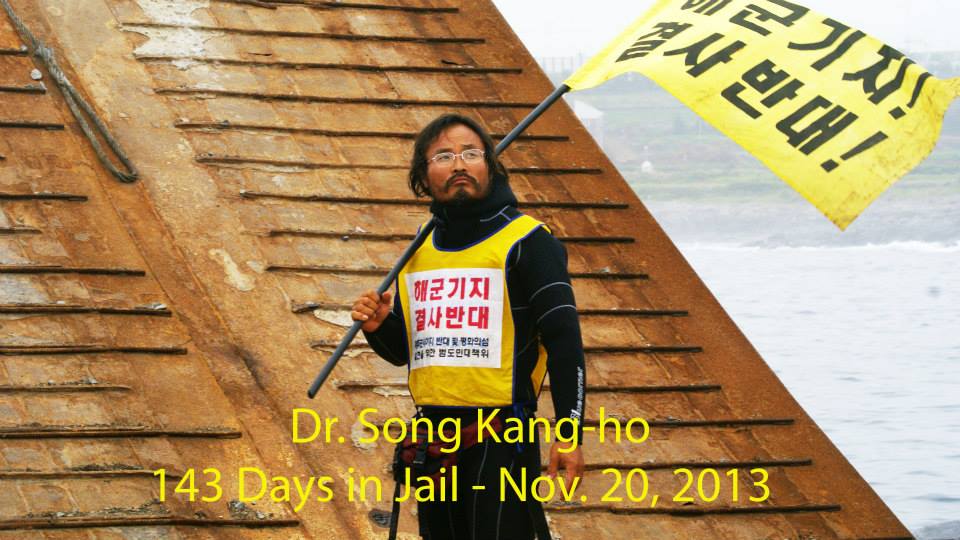
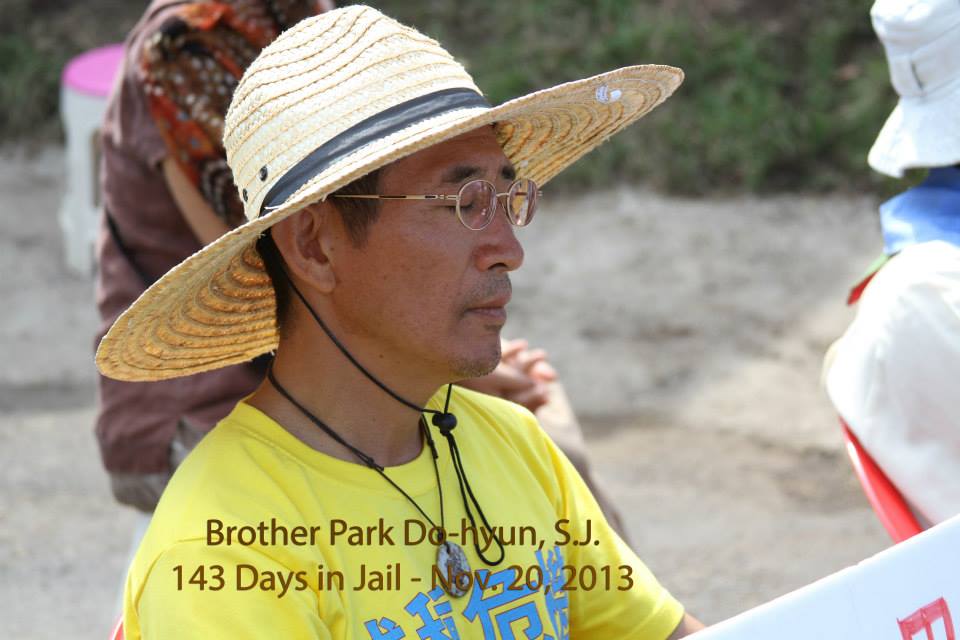
‘An air force general in the reserve saying that “A FIGHTER HEAVILY EQUIPPED WITH ARMS cannot load many arms for long distance (* here, to the Ieodo in the south of Jeju) because its operation radius cannot but be narrowed, “ stated that, ‘however, with air oil feeder, the problems can be solved[..].”
He also proposed as an alternative to BUILD AN AIR FORCE BASE in the vicinity of the naval base currently being constructed in the Jeju region.”
(Financial News, Nov. 26, 2013, excerpt translation, article fwd by Go Yu Gi)
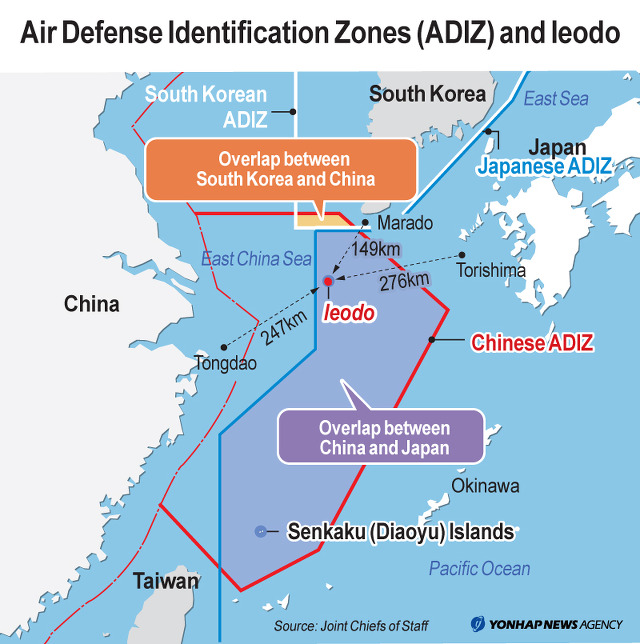
His remarks follow the citations of the military personnel and experts who say that the current ROK air fighters are short of numbers and operation radius to fly to the Ieodo. The only available kinds of F-15 or KF-16 can saty on the sky of the Iedo only for 20 minutes, they say. The article is above all on the need of strengthening ROK air force; additional purchase of advanced fighters, introduction of air oil feeders, and base-building. The whole argument occurs with the need of including the Ieodo in the Korean Air Defense Identification Zone, since the China declaration on her ADIZ (Air Defense Identification Zone) on Nov. 23 in which she put the Ieodo, as well as the Senkaku(Dayou) Islands. Recently on Nov. 27, the South Korea Ministry of National Defense decided to purchase four air oil feeders from 2017 to 2019. The operation time would be extended to one hour then. Boeing KC-767 is one of the candidates. See the article here.
As well known, the key issue of the recently declared China Air Defense Identification zone lies in the Senkaku(Dayou) Islands that is claimed both by Japan and China (and possibly in the Yonaguni Islands between Taiwan and Japan). However, for the Koreans, the hot issue lies in the matter of the Ieodo. The Ieodo, the word originally comes from the word, ‘Ieodo’ which meant by the Jeju natives an imaginary Island, a ‘paradise.’ However, in reality, it is not an Island but a submerged ‘rock’ 149 km distant from the Korea-southern tip of the Marado (Island) located southward from the Jeju Island. It is known that the underwater of the Ieodo area is rich in resource: about 100 billion barrel crude oil and 7.2 billion ton natural gas at maximum. The Ieodo, though Koreans emotionally consider it as their own, has not been included in the Korean Air Defense Identification Zone which was drawn by the US military in 1951– but under the Japanese Air Defense Identification Zone, despite the Korean government’s demand on it. For more details, please refer to the reference links here
Korea has set up a maritime science research center on the rock, considering it as her own district sea area, despite the fact that a rock cannot be regarded as an element for territorial waters. The issue has lied on not territory but on the EEZ (Exclusive economic Zone).Anyway, because the Ieodo is put in the JDAIZ, Korea has made requests to Japan whenever she needed to fly to the Ieodo. Now with the China’s claim on her ADIZ on Nov. 23, the Ieodo is fated to be put between the overlapped ADIZs of Japan and China. The South Korean government is currently attempting to put the Ieodo in her ADIZ, though late. See theYonhap News article on Nov. 29.
To consider together of the currently disputed air defense identification zone and the Jeju naval base, one may remember the remarks on Oct. 18, 2012 by Kim Jae-Yoon, a member of the National defense Committee of the National Assembly and a member of the Jeju-based Democratic Party. He claimed in the National Assembly inspection on the ROK navy headquarter at the time, that “the cause that the Jeju naval base is necessary for the protection of south sea area is suspected to be merely a show.” He said the reason, “it is because the navy’s operation in the south sea area would be limited by the JADIZ (Japanese Air Defense Identification Zone), even though the navy has stated that the purpose to build the Jeju naval base lies in effective supervision and protection on the south sea area and sea lane.’ Kim pointed out that:‘While the Korea Air Defense Identification Zone( KADIZ) is set close to the Jeju island, the Japanese Air Defense Identification Zone (JADIZ) is set below the south sea of the Jeju and the Ieodo also belongs to the JADIZ.’ For more on this, see here.
His remark was, in fact, very likely to be much helped by the resource collected by the Gangjeong Village Association who prepared in September, 2011, for the national Assembly inquiry.
The current dispute on the air defense identification zone refreshingly reminds also that Korean military is subordinating to the United States and Japan military under the name of the ROK-US-Japan trilateral alliance. It also stresses not only that Korea, especially Jeju has to wisely maintain its balance sense amidt the conflict between the United States/ Japan and China but also in the critical role to contribute to the peace of the north east Asia. The weakest has the key, you might say.
Though it might be a casual proposal, the idea of building an air force base in the Peace Island is dangerous, adding to our concern about the possibility of militarization of Jeju.
To see the map, the overlapped area of ADIZs among China, Japan, and Korea could be an interesting area. It depends on the people keenly related to the area whether the overlapped zone, known to be resource-rich area would be the field ofconflictor co-existing peace. You can see more maps here.
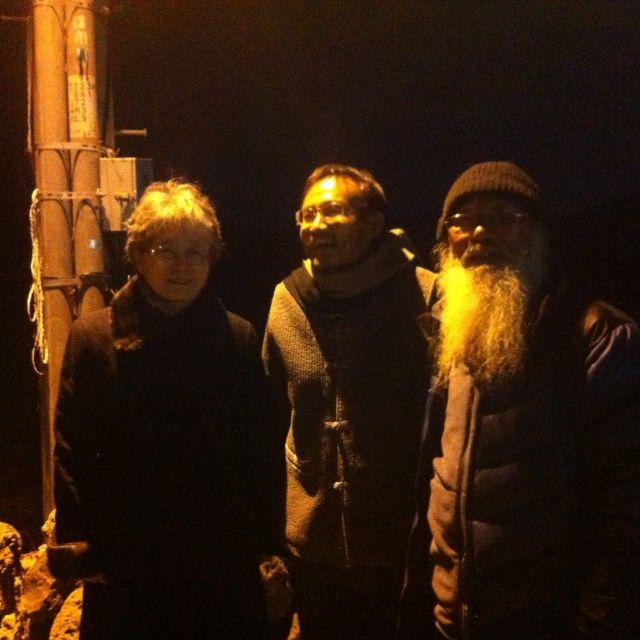
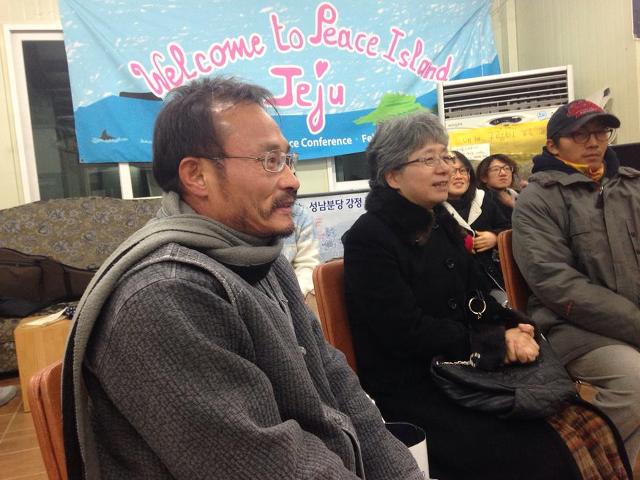
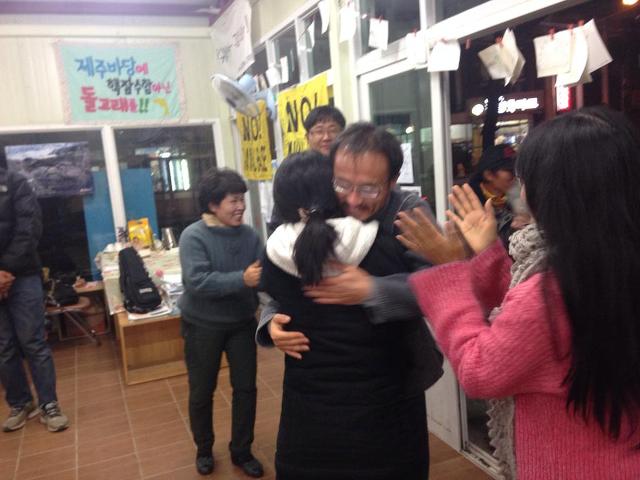
Dr. Song Kang-Ho who has been imprisoned for his opposing activities against the Jeju naval base project for the 3rd time was released on bail on Nov. 29, after 151 prison days. On Nov. 27, the court made a decision of bail on Br. Park Do-Hyun and Dr. Song Kang-Ho. Both had been illegally and unjustly arrested together on July 1, this year. Both refused to be bailed out as the court decision was seemingly too intentionally late and it would not stop them their opposing activities. However, as people strongly urged Dr. Song to be released from jail and paid bailing fee on be half of him without his knowledge, he was eventually released.
Dr. Song Kang-Ho was briefly imprisoned for two weeks in 2011 and jailed again in 2012. In his second imprisonment last year, he lived in jail for 181 days. He leads the Save Our Sea Team, a citizens’ monitoring team opposing the naval base project.
Photo fwd by Save Jeju Now/ Dr. Song Kang-Ho who was released on Nov. 29 was welcomed by his wife, Ms. Cho Jeong-Rae and Fr. Mun Jeong-Hyeon.Photo by Choi Hye-Young/ Dr. Song Kang-Ho welcomed in the people’s daily candle vigil in the village Peace Center on Nov. 29Photo by Choi Hye-YoungPhoto by Choi Hye-Young
Update: Dr. Song Kang-Ho was released on Nov. 29. Please see here. And Mr. Kang Bu-Eon was released on Dec. 3.
Regis Tremblay, a movie director of ‘The Ghosts of Jeju,’ thankfully made these images for the English speakers. Bruce Gagnon writes in his blog:
“These good people are right now languishing inside the jail house on Jeju Island, South Korea. And there are more on the way.
Their crime? Trying to non-violently block the construction vehicles from entering the Navy base “destruction” site in Gangjeong village. In the case of Yang Yoon-Mo he got an 18 month sentence. And many people are being given severe fines to pay.
One activist from Hawaii, who spent considerable time in Gangjeong village in solidarity with the villagers, has reported: “There is no heat for male prisoners (I do not know about the women’s section of the jail) during the frigid months of winter. The conditions are inhumane.”
We can’t ever forget these good people who are fighting for peace, the environment, and human rights. See more at the official Jeju web site Save Jeju Now.‘
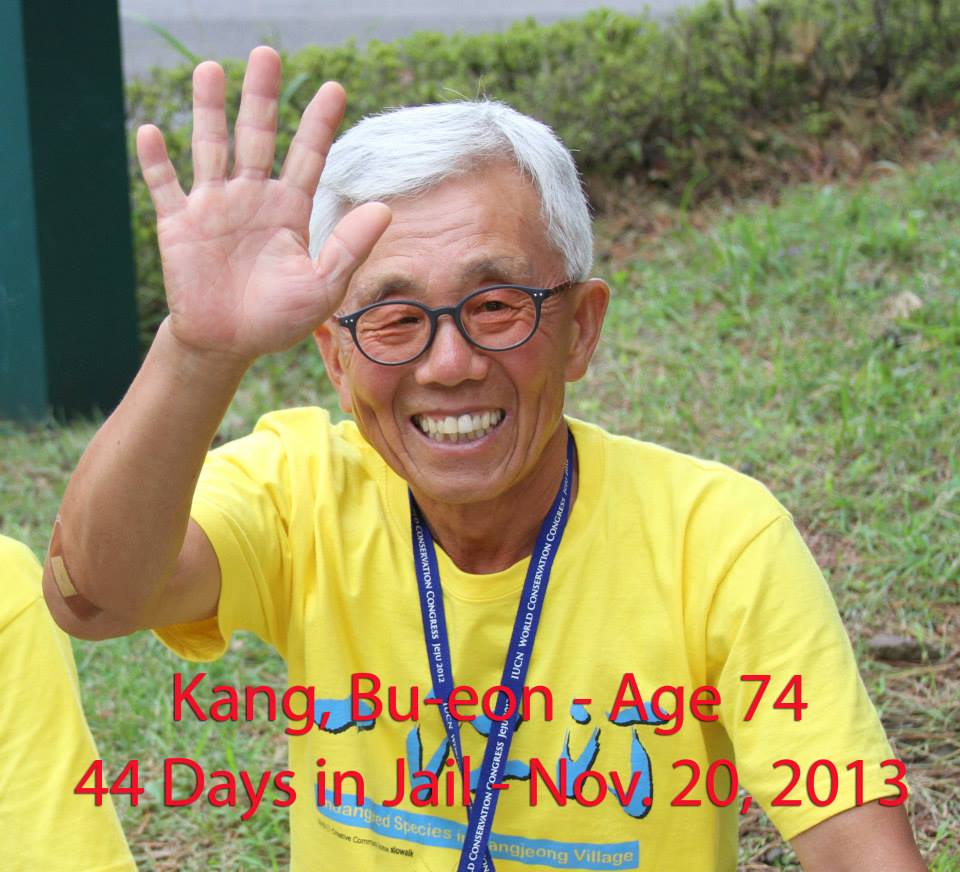
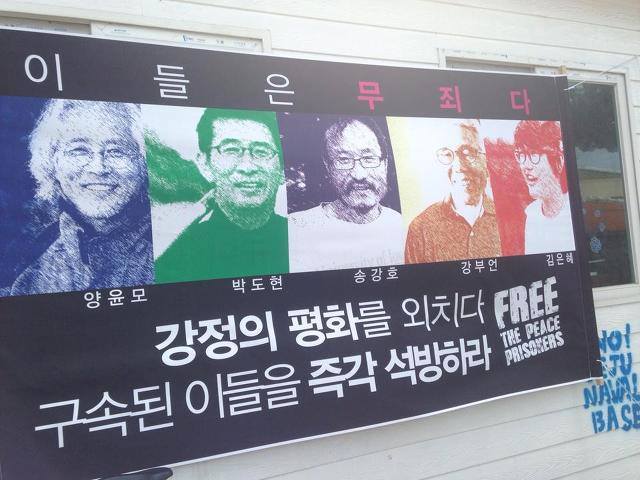
# Among the five, Mr. Kang Bu-Eon is a village elder, who has spent lots of time in his childhood on the Gureombi Rock. He had taken care of his sick wife who fell down for a stroke eight years ago. He himself takes four medicines for illness.
Banner image by Haku Kim/ photo by Choi Hye-Young. The banner reads, “these are no-guilty. Immediately release all the prisoners imprisoned for their crying for the peace of Gangjeong~”
On Oct. 22, some people in Gangjeong had the chance to talk with Afghanistan peace volunteers through skype interview. See the link here. The talk was thanks to the bridge efforts by Regis Tremblay, Kathy Kelly, and Hakim Young. Many of the Afghanistan Peace Volunteers are youths and they are eager to have peace talk with the youths in Gangjeong as well.
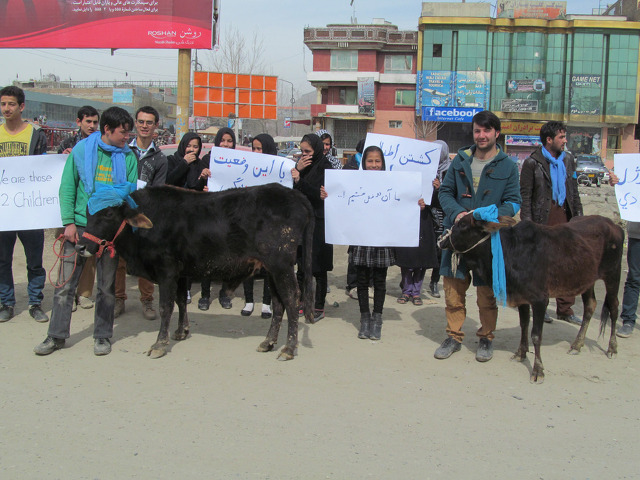
‘The Afghan Peace Volunteers protesting in the streets of Kabul against the killing of two Afghan cattle-herding children by U.S./NATO forces’ (source)
Recently, they sent a short moving solidarity message for Sr. Soh Stella who stood in the court despite her ill health on Nov. 14, for her opposing activities against the Jeju naval base project. It is for the 1st time in the 200 years of Korean Catholic history that a Catholic nun stands in the court. Here are their message sent:
سلام
تشکر از شجاعت شما ما خبر شدیم که شما ازخا طر اعتراض به پا یګاه نظامی همرای
دولت دعوه دارد.
ما جوانان رضاکار صلح همرای شما هستیم.
محبت
همرای
شما
Dear Sister Stella,
Salam!
Thank you for your courage. We know you have a court trial as a result of your protests against the U.S. military base, [in content].
We, the youth of the Afghan Peace Volunteers are with you!
Love, with you,
The Afghan Peace Volunteers
(* The Jeju naval base project is officially called the South Korean base. However, as many critics have pointed out, the base would serve in fact, for the US purpose of ‘Asia Pivot.’)
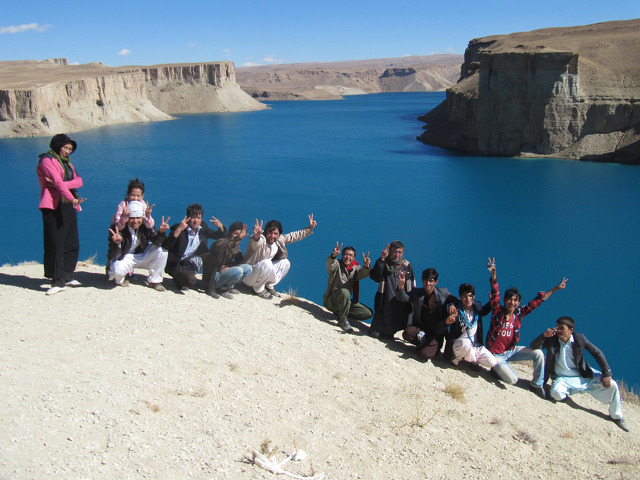
‘The Afghan Peace Volunteers at Band-i-Amir, ‘Afghanistan’s first National Parkand also on UNESCO’s world heritage list.’ (source)
An Afghan peace volunteer, Faiz, said in the skype interview as the below: (See the link)
‘We understand that the South Korean soldiers have no choice. Likewise, U.S. soldiers need their jobs to earn a living. How difficult it is for them psychologically, doing something they’re not willing to do; 22 U.S. veterans commit suicide every day!‘
Afghanistan has suffered from the attack by the United States and NATO forces since Oct. 7, 2001. We hope our peace talks would be a part of hope and dream a peaceful world without war. The youths in Afghanistan also want to have talks with many people in the world through the Global Listening program.
End Afghanistan Occupation
No Syria Attack
Stop the Drones Surveillance & Killing
No Missile Defense
No to NATO Expansion
No Nuclear Power in Space or on Earth
End Corporate Domination of Foreign/Military Policy
From October 30 until November 8, The World Council of Churches (WCC) will hold its every 7-years global assembly in Busan on the southern tip of the mainland of Korea.
According to the WCC website:
“The WCC brings together churches, denominations and church fellowships in more than 110 countries and territories throughout the world, representing over 500 million Christians and including most of the world’s Orthodox churches, scores of Anglican, Baptist, Lutheran, Methodist and Reformed churches, as well as many United and Independent churches. At the end of 2012, there were 345 member churches.”
And regarding the assembly:
“The assembly is the highest governing body of the World Council of Churches (WCC), and meets every seven years. It is a moment when the fellowship of member churches comes together as a whole in prayer and celebration.
The assembly has the mandate to review programmes, to issue public statements and determine the overall policies of the WCC, as well as to elect presidents and a Central Committee that oversees the council’s work until the next assembly.
Along with the WCC member churches, partner organizations and other churches have a strong presence at the event. This makes an assembly of the WCC the most diverse Christian gathering of its size in the world. It is a unique opportunity for the churches to deepen their commitment to visible unity and common witness so that world may believe.
The WCC was established at its 1st Assembly in Amsterdam, Netherlands (1948). Since then assemblies have been in held in Evanston, United States (1954); New Delhi, India (1961); Uppsala, Sweden (1968); Nairobi, Kenya (1975); Vancouver, Canada (1983); Canberra, Australia (1991); Harare, Zimbabwe (1998); and Porto Alegre, Brazil (2006).
The theme of the 10th Assembly is: “God of Life, lead us to Justice and Peace” . Which as you can see is a very good theme for a village like Gangjeong, known as the Life and Peace Village, which is struggling for Justice. With this in mind. Gangjeong Village and its supporters will have a presence at this years WCC.
As you can see in the above graphic. There will be both a Madang Workshop and an Exhibition Booth.
Madang Workshop:
The Workshop will take place on Wednesday, November 6 from 2:15-3:45 p.m. It is called, Inter-Island Solidarity for Peace: Establishing Peace Against maritime Militarization.
This is workshop will be a discussion about strategies, failures and successes of anti-militarism and anti-base movements. The main focus is on building a better and stronger network between islands who are suffering similar injustices. Guest speakers will be joining from Jeju, Okinawa, the Philippines, Hawaii, and Lanyu (in Taiwan). We are hoping that many other islanders and people struggling against unwanted military bases and land seizures will join as for the discussion as well.
Exhibition Booth:
We will also have a booth for the duration of the WCC assembly from morning until evening. It is Booth #50. It is in the blue section under the name “Gangjeong Village Association”. There will be pictures, displays, videos, brochures, newsletters, postcards, books, handicrafts, and friendly people.
If you are at the WCC Assembly in Busan, please come by our booth and also think about joining our workshop!
Open Letter to the WCC:
Finally and perhaps most importantly, the Gangjeong Village Association, The Jeju Pan-Island Committee for Stop of Military Base and for Realization of Peace Island, and The National Network of Korean Civil Society for Opposing to the Naval Base in Jeju Island have issued an open letter calling for the World Council of Churches to issue a public statement for peace against Asia-Pacific maritime militarisation. The letter is reproduced below and also can be found at this link. Please spread this to anyone you know who might have connections with the WCC or is attending this assembly:
Calling for the Issue of a Public Statement for Peace against Asia-Pacific Maritime Militarization:
“Guide our feet into the way of peace” (Luke 1:79)
We are writing to urge the delegates of Member Churches of the World Council of Churches (WCC) to seriously consider issuing a public statement on building peace in the Asia-Pacific against maritime militarization. Today, we are witnessing a rise of militarism under the name of peace and prosperity in the Asia-Pacific. Tension between the economic and military expansion of China and the corresponding the U.S. “Asian Pivot” strategy has sparked an escalation in the war-profit industry and an arms race for global military dominance. This has left in its wake conflict and suffering, and the destruction of land, cultures, and traditions across the Asia-Pacific. These false idols of security and economic expansion runs counter to the justice, peace, and life that are the core values of the World Council of Churches and Christians everywhere.
A key example of the impact of this militarization can be seen in Gangjeong Village, Jeju Island, Republic of Korea. One of the oldest and most naturally beautiful villages of Jeju, the unique eco-systems of Gangjeong are a showcase of God’s creative spirit, home to numerous endangered species and the world’s largest temperate soft coral forest. Since 2007, without the villagers’ consent, it has become the site of massive naval base construction. If built, the Jeju naval base will be a critical outpost of the ROK-Japan-U.S. maritime military alliance targeting China. As a result, Jeju, ironically known as “the Island of Peace”, will become a primary target, leading to devastating loss of life and destruction.
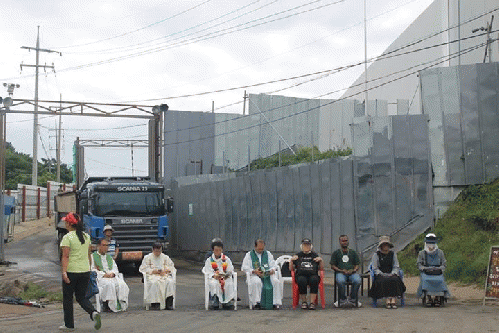
Dedicated to the care of creation and the spread of life, the struggle against the base in Gangjeong is an open and truly ecumenical/inter-faith resistance for justice. Catholics, Protestants, Quakers, Anabaptists, Buddhists, and Shamanists have come together to create a vital community, marked by vibrant practice of faith and respect for different traditions without dilution or conflict. Despite police crackdowns on religious expression and assembly, Catholic priests hold daily mass in front of the construction site, Protestants have prayer services, and Shamans perform traditional rituals. The ingredients that hold it all together are a steadfast desire for God’s justice, a dream of life together, and a commitment to nonviolent peacemaking. We hope that the struggle against the Jeju naval base construction, which is a microcosm of the maritime militarization of the Asia-Pacific, can be a call to Christians and all people of God to return to the path of peace.
It is now urgent for churches to respond to the escalating maritime militarization and violence in the Asia-Pacific region that runs counter to the call of the people of God to peacemaking. As mentioned in an “Ecumenical Call for Just Peace,” churches should become builders of a culture of peace while recognizing the promise of peace is a core value of all religions. The farmers of Gangjeong Village on Jeju Island are at the forefront of such a faithful realization of the Kingdom of God. Let’s not turn their plowshares into swords.
Therefore, we call upon the World Council of Churches to:
• Issue a public statement at the 10th Assembly of World Council of Churches, formally expressing its grave concern regarding maritime militarization in the Asia-Pacific which is a threat to regional and global just peace;
• Urge the government of the Republic of Korea to stop the Jeju naval base construction and focus on peaceful approaches to cooperation;
• Call upon the government of the Republic of Korea to protect and promote all human rights including the right to peace and environment of the people of Gangjeong Village;
• Appeal to the churches and national ecumenical councils in the region to take serious measures to stop the arms race and make the Pacific the Sea of Peace.
Yours Sincerely,
Mr. Dong-Kyun Kang / Ms. Young-hee Jeong
Village Mayor / Chairwoman
Gangjeong Village Association / Village Women’s Committee
Mr. Gi-Ryong Hong / Ms. Ri-ri Hong
Co-convenor / Co-convenor
Jeju Pan-Island Committee for Stop of Military Base and for Realization of Peace Island
Mr. Taeho Lee / Ms. Hye-ran Oh
Co-convenor / Co-convenor
National Network of Korean Civil Society for Opposing to the Naval Base in Jeju Island
* Contact Details: Ms. Gayoon Baek, National Network of Korean Civil Society for Opposing to the Naval Base in Jeju Island, gayoon@pspd.org Mr. Paco Michelson, Gangjeong International Team, gangjeongintl@gmail.com
Please spread the word, come join us at the WCC Assembly in Busan, and thanks for your support!
In this month’s issue:
100,000 Books arrive in Gangjeong for the creative transformation to a “book village”, National Assembly inspections on the base, Solidarity from Italy and Western Europe, Gangjeong at the Busan WCC Assembly 2013, Trial updates, outrageous imprisonments, police disrupt prohibit catholic Eucharist and more!
Two years ago when I visited Gangjeong village on Jeju Island, South Korea, the one-half mile ancient, solid volcanic slab of a spiritual and cultural rock known as Gureombi was still intact. The marine environment that had made Jeju Island one of the World Heritage Sites was still thriving with sea life. The government of South Korea had moved some equipment to be used for construction of a controversial naval base for Aegis missile destroyers and the US missile defense system. This would be a new military port in a country filled with US and South Korean military installations, but one that would be just a little bit closer to China–a new naval base that would symbolize the US pivot toward Asia and the Pacific.
Plane loads of protesters from the mainland of South Korea were flying to Jeju to join villagers to prevent the construction of the naval base. Hundreds of internationals came to add their words of solidarity and to take back the story of a tiny village challenging the might of the governments of the United States and South Korea in their quest for greater militarization of both societies.
Two years ago, trucks carrying materials for the new naval base to be built on the rocks were delayed or stopped by protesters. NO BASE supporters climbed on top of high cranes and chained themselves to heavy pieces of equipment to stop construction of the base.
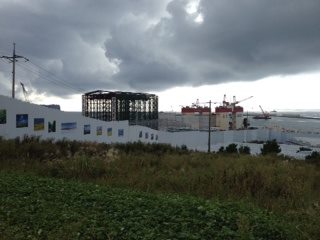
I returned this week to Jeju Island in solidarity with the people of the village of Gangjeong who did not want their home turned into a military encampment that would destroy their way of life. Yet, despite seven years of opposition and struggle, the naval base and its harbor have been substantially constructed. Hundreds of thousands of tons of stone have been dumped on corals to make the breakwaters for the harbor. Thousands of massive concrete structures are on the shore. Two giant structures have been erected in the water that produce cassions for the massive breakwater that might protect the military harbor from typhoons. The beautiful rocks of Gureombi have been broken apart and the area filled with concrete. It is an environmental disaster.
This week, the edge of a typhoon hit Jeju Island. Many here in the village of Gangjeong were praying for a strong storm that would severely damage the naval base as happened last year that caused over $35 million in damage to the project. Perhaps Mother Nature would intervene to stop the construction when humans were unable to do so.
Many activists who opposed the base have gone to jail in the past two years. 5 are currently in jail. Earlier this week, two more were sentenced to lengthy terms in prison- a young 22 year old woman received a sentence of 8 months and a 72 year old was sentenced to 6 months. A filmmaker has been in prison for 253 days and two others for 103 days each. A trial for two more is scheduled for this week. The South Korean government crackdown on protest of the naval base has been strong.
Yet every day, a group of activists continue their challenges to the base–some challenges are spiritual and others are physical. On the spiritual side, at 7amthey gather outside the gate of the base and do 100 deep bows, each with a phrase set to music to remind participants of the importance of their mission. At11am, Catholic priests, nuns and lay persons lead a Mass at the gates. Masses have been conducted thee each day for over 740 days.
Following the Mass, for the next hour the group blockades the main gate of the naval base stopping trucks filled with concrete and other materials from entering the base and preventing empty trucks from leaving the base. The activists believe a disruption of an hour’s work in the building of the base is useful and important.
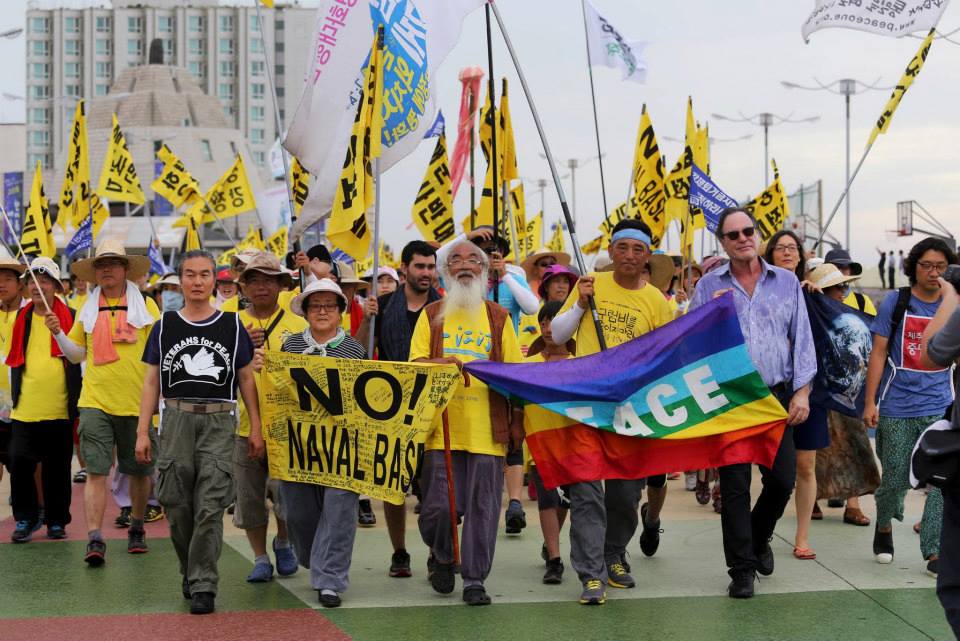
Special events are marked with larger mobilizations. In August, 2013, many walked for six days around Jeju Island and one thousand people participated in the Grand March for Life and Peace and the Human Chain to encircle the base. Noted film maker Oliver Stone joined in the march. When asked about his opposition to the base Stone said, “This base will host US Aegis missile destroyers, aircraft carriers, nuclear submarines. It’s part of Obama’s Pacific pivot…put in place to threaten China…We have to stop this. All this is leading up to a war, and I’ve seen war in Asia. I do not want another war.”[1]
Tension in Gangjeong village is high. Families have split on support or opposition to the base. Those in the village and in the provincial government who were paid off by the South Korean Navy not to oppose the base, as two other communities on Jeju Island had done, are in disfavor with many in the village. Having been defeated twice, the Navy decided to have a major campaign to influence the decision makers in the province and Gangjeong village. Decision makers succumbed to the temptations of fully paid trips to Hawaii, Australia and Singapore and other special benefits. Farmers in the village were pressured into selling their lands with the threat that if they didn’t accept the price offered by the Navy, the lands would be taken anyway and much lower compensation given in that case.
The lessons of Jeju Island are stark. The US military pivot to Asia and the Pacific will be disastrous for many areas—bases in Okinawa where the US wants to build a runway into the South China Sea over pristine corals, home to the dugong manatee; in Pagan, an island in the Northern Marianas where the US wants to use as a bombing range as it did for decades on the Hawaiian island of Kahoolawe and the Puerto Rican Island of Viequez; and in Guam where the Marines want to have an artillery range in an environmentally protected area.
With the pivot, the United States has increased its military exercises in the area. Current American military exercises with South Korea and Japan have triggered the North Korean government to put its military on alert and warned that these exercises could have “disastrous consequences.”
China is upset about US-Philippines military exercises in the South China Sea.
The Japanese people are angry that the US is urging the government of Japan to renounce the “No War” article of their constitution so the US will have another financial ally in wars of choice.
So far, just as the US pivot to the Middle East twelve years ago destabilized the region, the US pivot to Asia seems to already be having the same dangerous effect.
About the Author: Ann Wright served 29 years in the US Army/Army Reserves and retired as a Colonel. She was a US diplomat for 16 years and served in Nicaragua, Grenada, Somalia, Uzbekistan, Kyrgyzstan, Sierra Leone, Micronesia, Afghanistan and Mongolia. She resigned in March, 2003 in opposition to the war on Iraq.
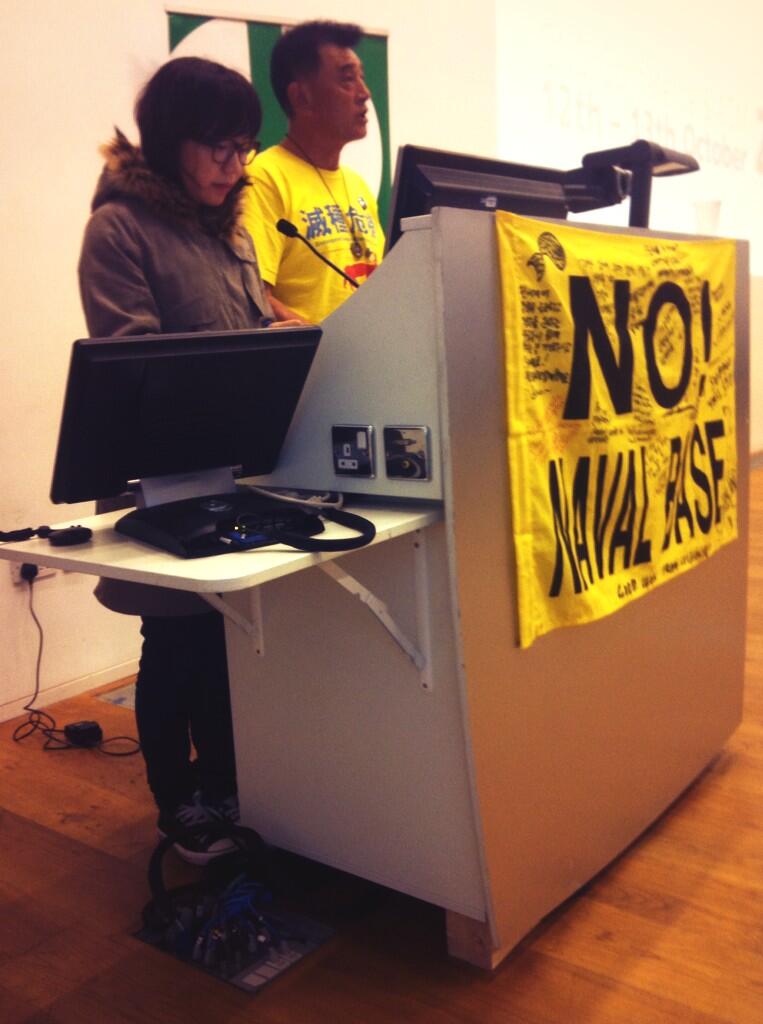
From Oct. 8 to 17, 2013, Gangjeong village mayor has joined the Human Rights defenders’ forum in Dublin, Ireland, as well as traveled London, Leeds and Paris etc. Thanks so much to the organizers of his speech trip in Ireland, UK, and France.
I am Dong-Kyun Kang, the Mayor of a small village called Gangjeong in Jeju. I am so grateful for this opportunity to speak to you. It’s very meaningful. So far, I’ve heard many stories from around the world which make me very scared and worried for our descendants.
Given that fresh spring water is such a precious and scarce resource on Jeju island, the 450 year old village of Gangjeong situated in the southern part of the island was always the envy of other villages as its possession of an abundant spring water supply which always flowed freely ensured it was always ranked first among Jeju’s villages. During the construction of the naval base, many international activists have visited Gangjeong and others in the process have been denied entry and deported. Other peace activists have been prevented from leaving the country. I’m keenly aware and saddened that many have suffered from many forms of repression and for their sacrifice I feel so grateful and promise to stand with you in solidarity.
You’ve now seen that in recent history there have been two major events in Korea – in 1948 and 1950. As you are aware there was the major upheaval of the 1950 Korean War which broke out in June 25 – a tumultuous national tragedy. One could be forgiven for thinking that this was a family feud that led to the country being divided but the reality was that the war was the result of an ideological battle between the major powers at the time and Korea was its victim. This continues until the present time.
The April 3, 1948 Jeju uprising led to the brutal suppression of the population by state security forces which resulted in the massacre of the islanders of Jeju and behind the slaughter was the US government, the self-proclaimed keeper of the peace! A conservative estimate puts the number who died from the mass killings at over 30,000 out of a population of 280,000 people at that time.
Fortunately, in 2005 President Roh apologized on behalf of the state to the people of Jeju and acknowledged for the very first time the states brutal suppression and massacre of the people of Jeju. He went on to declare Jeju as an ‘island of world peace’. Peace can only be sustained through peaceful means. Peace obtained through force and violent means is not sustainable and in time will be forced to surrender to a larger force or power. However, I believe that dialogue and mutual understanding between people who work together in mutual respect to build a sustainable future is the key to a sustainable peace.
The location of Korea positioned in the middle of the Pacific Ocean and particularly the strategic location of Jeju Island is key to understanding its strategic importance to the world’s major powers. However, behind the construction of the naval base in Jeju is the US government. Will Jeju genuinely remain an island of peace or an island of military bases heightening tensions between the world’s major powers? This is a central question that needs addressing.
The naval base project is a national security project. I think one defines genuine national policy as seeking to put the interests of its citizens and their happiness and genuine well-being first and foremost. Likewise national security is not only about the state’s administration and its military but should seek to ensure genuine human security for all its citizens. Genuine national policy and national security should seek to secure the confidence and trust of all its citizens which in turn forms the true pillar and foundation for its policies. Working together hand in hand with the people should be the central tenet of its policies.
Aside from the naval base construction creating the strong possibility of a situation of crisis for Korea and Jeju into the future, the village community of Gangjeong is being destroyed with its people being evicted. With the construction of the naval base the navy claims that the national security of the state is its primary objective followed by the economic development of the region and its third objective – the navy and residents coexisting in mutual cooperation and to the benefit of all. However, the construction of the naval base rather than enhancing and bolstering national security will have the opposite effect of increasing already existing tensions between global powers in the region resulting in Jeju being caught in the crosshairs of conflict in the future. How therefore can the building of a naval base bolster regional economic development in such a tense and dangerous environment?
The state in implementing its policies should first consult the people who will likely be impacted the most and endeavour to seek the consent of its citizens through due process which is the most important consideration and an important building block of any democratic society. Even with the project underway listening courteously to and reflecting on the opinions of the other is surely important in trying to achieve real cooperation. The need for transparency in implementing state projects is paramount. However, the naval base has been enforced from the beginning without any consultation on the decision making process and devoid of any semblance of transparency leaving the Gangjeong villagers in the dark about what was going on. Those villagers opposed to the base are in the process of having their lands expropriated without any dialogue or due process of consultation. The villagers are completely perplexed and dismayed by the conflict that has arisen in their village with the naval base decision having separated families and divided parents with siblings becoming enemies and yesterday’s friends becoming today’s enemies resulting in the collapse of the community.
Fully aware of the stark implications of proceeding with plans to build the base the central government and navy planned and designed the base together with the backing of the US government. As a means of promoting the base and quashing any form of dissent, protestors have been treated with great hostility and denounced as leftists and North Korean sympathizers by the military. The brutal enforcement of the base with complete disrespect and arrogance has resulted in the military losing whatever respect it may once have had.
Together with the mobilization of the police and state power is the major issue of the lack of due legal process and the arrests of over 700 activists, charges having been filed against 400 activists with 25 cases of activists having been imprisoned to date. There has to be a fair way to resolve such conflicts but the legal system and court process has failed to provide this. With the full power of the police state brought to bear on villagers and activists alike it is undeniable that people will get hurt as they are literally being dragged away like animals battered and bruised. However the courageous and brave efforts of so many over the course of a 7 year long struggle are not in vain but are the source of a precious groundwork that is the basis for a bright future for Gangjeong and Korea alike. These continuing efforts will continue to bear fruit long into the future. The majestic natural environment of Jeju is commonly referred to as beauty inherited from the gods and is home to the UNESCO Biosphere Reserve and three UNESCO World Natural Heritage sites. In 2012 The New Wonders Foundation voted Jeju Island as one of the 7 Natural Wonders of the World. In September 2012 the World Conservation Congress opened in Jeju where it was hoped that it would promote the international consensus of Jeju as a ‘World Environmental Capital City’. However, this ideal is being undermined by the destruction of the environment caused by the building of the naval base which is a grave threat to genuine national security.
Some concluding remarks.
The 7 year long struggle has left many exhausted and bruised after enduring much pain and suffering along the way. There have been moments of despair but the determination to struggle and defend our village and home and pass it on to future generations has been the enduring legacy and mainstay of the struggle and has been a sacred calling. A new hope springs from the end of despair. This new hope comes from people seeking their true human fulfilment as beings living in harmony with nature, living together in peace.
Instead of Jeju being designated an island of military installations we will work to ensure that it will be known as an island of peace, an island of natural beauty and conservation. Also, together with all the villagers of Gangjeong and the people of Jeju we truly desire that global citizens and true lovers of nature and world peace will have the freedom to gather in this beautiful place without the impediment of a ghastly and ugly military base which aggravates existing tensions between global powers. Therefore, what I truly wish is for everyone around the world to sing the peace song of Gangjeong and to keep it in their hearts. Ladies and Gentlemen, Please join together in solidarity and help us.
Please help us! No Naval Base! Thanks so much for your attention.
*Reblogged posts do not necessarily reflect the opinions or views of Save Jeju Now
K. J. Noh, Oliver Stone and Bruce Gagnon were on KPFA radio in Berkeley, California on Aug. 22 talking about Jeju Island and the horrors of the Navy base. See here.
Oliver Stone marches with the leaders of the struggle on Aug. 3, 2013 (Photo by Lee Wooki)
Oliver Stone Visits Jeju Island
By K. J. Noh
In 1986, a young American director, burst out on the screens with a raw, charged, kinetic film. Depicting a country on the verge of popular revolution, it documents the rightwing terror and massacres that are instigated, aided and abetted by the US government. Beginning as the chronicle of a gonzo journalist on his last moral legs, the film starts out disjointed, chaotic, hyper-kinetic; the unmoored, fragmented consciousness of a hedonic drifter. As the events unfurl towards greater and greater violence, the clarity and steadiness of the camera increase, its moral vision clearer and fiercer, carrying the viewer through a journey of political awakening even as the story hurtles inexorably towards heartbreak, tragedy, and loss.
The name of the director was Oliver Stone. The film was “Salvador”. Opened to dismissal, derision and poor distribution, it nonetheless garnered two Oscar nominations , and is now lauded as one of the most important films of the period, acknowledged to have influenced the political debate, if not the policy, around Central America at the time.
27 years later, Oliver Stone is discussing this film with the renowned Korean Film Critic Yang Yoon Mo. Professor Yang mentions Salvador, and the powerful effect it had on his generation during the violent, brutal military dictatorships of his era. “We loved it. It was a big inspiration to people all over the world. We obtained bootleg copies of it and watched it. It inspired a whole generation of young Korean film makers—for the courage and clarity of its vision. It was a model for us of what ethical and political cinema could be.” Stone smiles gently, and then reciprocates with his appreciation of current Korean Cinema—cinema that he himself may have had a hand in shaping—as he mentions “The President’s Last Bang”—a wry, understated morality tale about the assassination of the Dictator Park Chung Hee, during a dinner party-cum-orgy procured by his own intelligence services.
The rapport between two is warm and genuine and they talk as if they are old friends, old film buffs. It’s almost possible to forget for a moment that this is taking place inside a Korean Prison on Jeju Island, where Professor Yang has been sentenced to 18 months as a political prisoner, that he has been 70 days on a hunger strike, and that there are 6 of us crammed into a closet-sized visiting room: Oliver Stone, Father Moon, several activists, and an violent-looking police officer, whose every gesture and look intimates a furious desire to pound us into submission. On the other side, behind dual paned Plexiglas, the gentle Professor Yang is with another police officer, who is furiously transcribing every word that is exchanged.
It’s almost possible to forget that minutes before, we had been stripped of all cameras and recording equipment, had our ID’s confiscated and recorded, and had been escorted by half a dozen policemen to “have tea” with the chief of police, so he could “chat” with us. The police chief is warm and congenial, as only someone with absolute mastery of the rhetoric and machinery of power can be: Pontius Pilate, surrounded by his centurions, speaking softly to send the just the right mixture of benevolence and imminent threat. Out the window, to the left, we are surrounded by a panorama of verdant trees and hills. To the right, inches away, a squadron of blue suited, glaring police. It’s clear that there is more than one director in the room.
Professor Yang is being held in this jail for 18 months, along with dozens of other protestors, for the non-violent protest of a deep water Naval Base that is being constructed in Gang Jeong village on the Island of Jeju. He has been imprisoned 4 times.
Jeju Island is a stunning subtropical island, 60 miles south of the Korean Peninsula, an ecological jewel that is home to UNESCO World Heritage sites, and biosphere reserves. World heritage sites are global treasures such as the Grand Canyon, Yellowstone Park, the Pyramids of Giza. Jeju has three of them. The shoreline of Gangjeong village, where the base is being built, is an absolute conservation area, made of soft coral, harboring many rare endangered species, and home to two thousand subsistence farmers and divers. The area called Gureombi is a site that is considered sacred to the villagers, a living, breathing landscape of tide pools, lava rock formations and stunning volcanic coastline irrigated with crystal clear springs:, the precious mineral kidneys of the island. Unfortunately, the Jeju base is also one of the centerpieces of Obama’s militaristic Pivot to Asia. Within easy striking distance—45 minutes by jet bomber, or 120 seconds as the missile flies–of Shanghai, Beijing, Tokyo, Taiwan, Vladivostok, it menaces all the major cities of East Asia. If we imagine the pacific table as a large family banquet, the military base is a loaded hair-trigger shotgun, and Jeju island is the rotating lazy susan platter in middle.
94% of the villagers are adamantly opposed to the construction. 140 National organizations, and 110 international organizations have called for its cessation. The Korean Parliament has demanded an investigation. The leaders of all the major religions in Korea have called for dialogue. The 5 opposition parties have challenged the legality of the construction. Yet construction has gone ahead, violating, subverting or ignoring every democratic process, every local, regional, national, international statute, charter and law. And so for 7 years, every single day, in one of the most disciplined non-violent struggles ever seen in the country, the villagers have been protesting the construction of this base with marches, prayers, petitions, art, masses, non-violent resistance . To date, 700 protestors have been arrested—including the largest mass arrest of Catholic Nuns in Korean History. Yang, along with other prominent intellectuals, civic and religious leaders, members of parliament, Buddhist nun, the Mayor of the village have all been “dragged like animals and beaten unconscious”, arrested, fined, sued, harassed by police, marines, and hired thugs; and received death threats. They have also been branded as Communists, opening them up to potential prosecution for Sedition under the draconian national security laws. It’s widely suspected Yang was singled out by the Korean National Intelligence Agency (the rebranded Korean CIA) in retaliation for drawing international attention to the issue. He is the longest serving prisoner to date.
Salvador is also an apt point of reference for Jeju: at the end of the war, Jeju itself experienced its own history akin to El Salvador, but on a scale—if such comparisons of human suffering are ever possible– that dwarfed the bloodbath in El Salvador: In El Salvador an estimated 75,000 were killed over 12 years, roughly 1-2% of the population, making it one of the bloodiest of the bloody, dirty wars in Central America. On the small island of Jeju, that number, or more, were killed in less than a year (10-30% of the population), making it the first, and bloodiest genocide of the post-war era, and the savage template for subsequent US interventions across the world.
The historical background is as follows: Korea had been a colony of Japan since 1910, suffering hideously under a brutal occupation. After the surrender of Japan in WWII, the US Military Government occupying South Korea was astonished to discover that there were thousands of functioning people’s collectives (worker’s committees)-forged from anti-colonial resistance– in the south, constituting a Defacto popular government, with strong nationalist and socialist leanings. In order to suppress this grassroots socialist government, the Korean People’s Republic,—American surveys show 80% of the population supported a socialist system—worker’s councils were outlawed, leaders imprisoned, a puppet dictator was rapidly installed, and the brutal apparatus of Japanese colonial rule was reconstituted in its entirety.
Jeju Island with its strong tradition of anti-colonial struggle was one of the strongholds of these indigenous collectives, leading it to be branded as a “red island” by the US Military Government. When popular protest against the division of the country, capitalist recolonization and the wholesale re-institution of the collaborator class and its police force became vocal, a scorched earth policy of genocidal proportions was unleashed. Using paramilitary death squads, strategic hamlets, free fire zones, mass rape, mass execution, torture, napalm, defoliation, entire villages were wiped out, 70-90% of all dwellings burned to the ground, and up to 80,000 massacred; these tactics were to foreshadow US policy across the rest of Korea, in South East Asia, Central and Latin America, Indonesia, Africa, and of course, El Salvador.
Members of Yang’s family were among the first killed in these massacres. For half a century in South Korea, it was a crime against National Security, punishable by imprisonment and torture, to breathe a word of this history. The island, a lush, beautiful subtropical paradise, with rich, volcanic soil, is strewn with unmarked mass graves, and haunted with unspeakable trauma. Those who survived these killing fields, fled in terror, some 40,000 or so. Those who remained were marked as subversives by family association, banned from civil employment, and driven into exile, poverty, suicide, madness. Even the massacres themselves were erased from history, leaving the survivors unable to mourn, grieve, or seek redress. After the slaughtered bodies were dumped into mass graves or caves, the facts vanished into an event horizon; even the memory of their obliteration was obliterated. Jeju Island, for all its beauty, is filled with ghosts—the unmourned dead, and the hushed, inconsolable pain of the survivors. In this context, a large portion of the population see the remilitarization of their Island—belatedly designated as an Island of Peace—as yet another desecration, the nightmarish continuation of an atrocity that has yet to end.
****************************
Oliver asks the Police Chief, about the conditions that prisoners like Yang are kept in: He asks whether they are able to exercise, read, receive and write letters. The Police chief, ever the congenial diplomat, answers, that he is extremely attentive to the health and well-being of his inmates, and that they are allowed all manner of comfort and recreation. He adds a comment about his concern about the hunger strike, and states with a worldly flourish, that “Esteemed Director Stone will find that the conditions of prisons in Korea are not that different from conditions in American prisons.” “Esteemed Director Stone”, does not seem assured, and without missing a beat, points out that “the conditions of US prisons are, according to the United Nations Rapporteur on Human Rights, some of the worst in the world. The systematic and routine use of prolonged isolation has been found tantamount to torture.” The police chief accedes than that perhaps there are differences, and with the hair-splitting skills of a trained bureaucrat, mentions that Korean inmates sleep on traditionally heated floors, whereas American prisoners must sleep on beds. There’s no easy conversion scale to weigh the tradition of intimidation, bastinado and torture of a Korean prison against the isolation, violence, racism of the American penal system. A beautiful police woman, impeccably coiffed, and immaculately made up,–a police geisha, if you will– passes around spring water in exquisite cut crystal glasses, with the terrifying precision of an assassin, moving, as if on cut-steel grooves. There is no need for ice. We gulp our water, thank the police chief, and Officer smash-your-face-in-if-you-so-much-as-blink-wrong then escorts us, with 5 other officers, down to the visiting rooms to meet with Professor Yang.
*************************
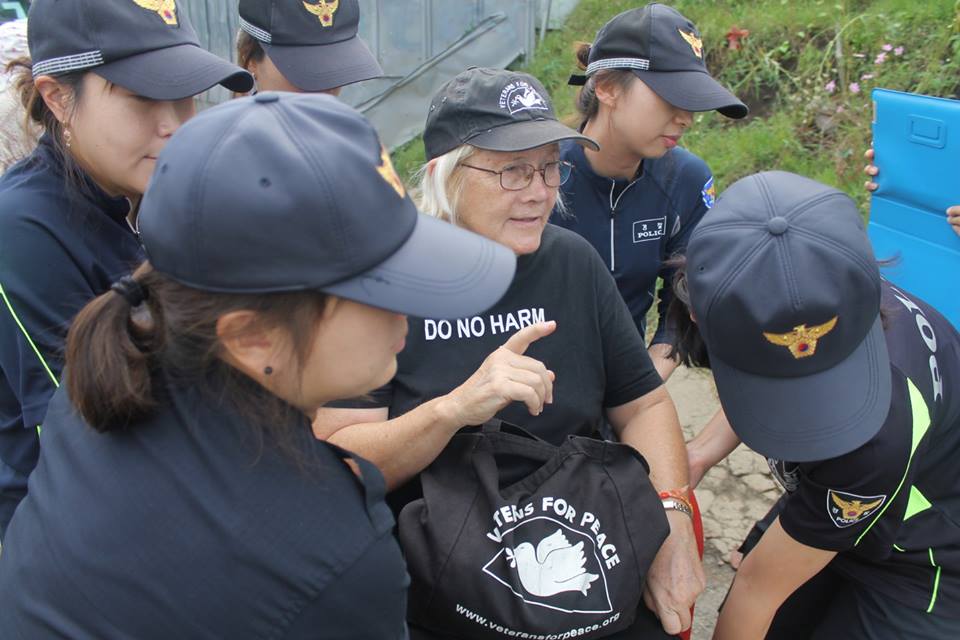
90 minutes earlier, Oliver had flown directly in from Barcelona, after 7 days non-stop night shooting of a commercial, and had landed in Jeju, exhausted and bleary eyed. “I don’t usually do commercials”, he says, “but this was soccer—it encourages people to exercise, get healthy, so I’m okay with this”. Oliver looks to be needing a bit of exercise himself: 10 time zones and 20 hours of non-stop flying and transit have left him exhausted and drained. He has wiped clear his schedule, and made a huge sacrifice to travel to Jeju, but as his exit from customs is delayed, the greeting team of local activists at the airport has become anxious that he will simply be denied entry into the country. The Korean government has already denied entry to several international peace activists at the airport—most notably Elliot Adams, Tarak Kauff and Mike Hastie from Veterans for Peace, and it is not inconceivable that they would do the same for any perceived rabble-rouser. Alternatively, they are not above a little “rough play”, and for the Korean Authorities, for whom a beatdown is just a friendly way of getting acquainted, a sound drubbing could be spun as just an over eager welcome or a misunderstood expression of solicitude. The burly men in suits and earpieces tailing the greeting team make this not an unlikely possibility. Finally, when Oliver is released from transit purgatory, all of us breathe a sigh of relief, although for some reason his luggage has gone AWOL. Over the next 48 hours, the luggage will be repeatedly located but yet somehow unrecoverable, claim documents will not be filed, others improvised, leading activists to wonder if this is part of the harassment: :disrupt morale by disrupting logistics, separate the “enemy” from their materiel—in this case, Oliver’s clothes, toiletries, medicines, and his colorfully subversive collection of bandannas.
After a frantic, truncated 30 minute lunch at a local restaurant—there are no power lunches in rural Korea, only hurried ones—the team belatedly shuttles to the prison, where Professor Yang is waiting. We submit to the mandarin ceremonies of power which permit us the short visit to professor Yang. Then, as Oliver and the professor are talking shop, Oliver mentions his new series, “The Untold History of the US”. As a director, he is known for his prolific output, sometimes making two or more films in a single year. “The Untold History”, however, is a 5 year labor of love, a meticulously researched ten hour documentary (and 700 page companion volume), unmasking and chronicling of the rise of US Imperialism. Howard Zinn’s “A People’s History of the United States” is most often mentioned in the same breath, but the other great chronicle of imperialism and its excess–Thucydides’ Peloponnesian War, is also an apt comparison: “The cause of all these evils was the lust for power, arising from greed and ambition, and from these passions, proceeded the violence”. Professor Yang seems intrigued, and although he has been incarcerated too long to have heard of it, he promises that he will try to find a way to see it. Oliver expresses his concerns for his well being, and inquires as to the depth of his support among other artists. Then all too quickly, visiting time is over, and we are reduced to silent gestures of good will and hope across the plexiglass. Professor Yang touches his palm to the glass, Oliver touches it, and then he slowly bows to each of the visiting team, hands together in traditional blessing. Professor Yang seems to have been deeply moved by the visit, but for us, it’s hard to avoid the sense of abandoning a comrade in prison. We stop as we are exiting the prison to do a quick interview with a wire agency, and Oliver fiercely denounces the detention of Professor Yang. “The courage of Professor Yang inspires me” he states, with fire in his voice. “I believe without a doubt that he is a prisoner of conscience and I call for him to bereleased immediately. I deplore the militarization of Jeju Island. I deplore the building of the base”. There is passion and heart in his voice. He will reprise this theme many times over the next few days, but like the other stories about Jeju, these statements will pass largely unreported in the mainstream press.
********************************************
Nothing in Korea happens in half measures, and the heat is no exception. The Jeju heat is swelteringly close to 100 F, the humidity is in the 80’s and although there is a march for peace against the military base that is happening—an epic two day march that will circle all the way around the island, then meet up in the north and come together for a mass rally at a civic plaza, followed on the next day, by a human chain around the base–we wonder if after the harassment, delays, power plays, exhaustion, the blast furnace of summer heat is too much. We ask Oliver if he is up to joining the march, as planned.
Oliver is still resolute. “Let’s do it” he says.
The following day, Koh Gil-Jun, a key protest organizer and artist–one of the key visionaries of the museum on the Jeju Massacre–will fall to the ground during the march, vomiting, paralyzed; done in from heat, stress, exhaustion, harassment, pain. He will be taken to emergency and diagnosed with a hemorrhaged vessel in his brain. But no one seems to be measuring risk against commitment.
“Haegun giji, gyolsa bandae!”
We arrive at the march—an ocean of yellow shirts and banners, youth, children, men and women, internationals—and a huge roar goes up, the tide of people surges and vibrates with energy. If, as it has been said, the true spiritual quest is not upward, or even inward, but forward, to march forward, surely this is one of its greater manifestations.
“Haegun giji, gyolsa bandae!”
A thousand banners flutter in the wind, and the crowd is abuzz with excitement and passion. Chants thunder through the streets, like an unstoppable heartbeat. Like the huge people’s marches that toppled the previous dictatorship, the winds of history, the breath of solidarity, the tide of inevitability, seem to propel the marchers upwards, onwards, forwards.
“Haegun giji, gyolsa bandae!”
Every dimension of human aspiration is present and alive.
Drenched in sweat, Oliver puts on a yellow T-shirt on top of his sweat-soaked shirt, and is invited to join the march at the front. He modestly declines to walk “point”, and falls into the ranks. Fabled director, Hollywood icon, decorated war veteran, becomes just another marcher in a sea of protestors, a forest of banners, marching, this time, against the Imperium.
“Haegun giji, gyolsa bandae!”
“Oppose to the Death, this Naval Base”
*******************************
.
“How do we stop this thing? How do we stop it? We have to stop this thing.” He asks, as we return later to his lodgings. We tell him that it already has stopped, –temporarily—construction that has been ongoing nonstop, 24 hour a day, Christmas, New Years, holidays, has suddenly tapered off, and the site is eerily silent, except for the occasional pile driver. “It’s gone silent in your honor”, we joke. “You should move here permanently”.
Oliver looks out at the coast line from the balcony of his modest B & B. From there, what was one of the most stunning vistas on the coast, you can see a shoreline littered with rubble, construction cranes, bull dozers and concrete jacks.
Earlier in the day, passing the lego-block apartment complexes that were sprouting near the main city, he had jokingly inquired if they were Soviet-inspired. “This is as cheesy as anything Donald Trump would build. Donald Trump would love it here. How does a country with such good film makers have such bad architects?” He had quipped.
But looking out over the construction, no one feels like joking.
It’s not just narcissistic bad taste.
It looks evil.
**************************
Afterwards, we head out to the docks, to take a boat tour of the coastline. Mindful of his reputation and activism, Korean news media has largely honored his visit by coordinated and conspicuous neglect, but Oliver has had the foresight to pull in a Japanese news crew. A camera crew from NHK meets us at the docks, and we get onto the boats, and start our own tour of the coast line. Out in the water, with the cool breezes, the heat abates, and it’s hard not to get a sense of the enormity of it all, the power, the endless beauty, the endless generosity and abundance of this area. The pacific Islanders have a term, Moana Nui, which sees all the pacific peoples living in a harmonious web of mutual co-existence and nourishment, connected by the benevolent ocean. Connect all, so we may all live. There’s enough for all of us: ocean, space, energy, love.
It’s hard to reconcile this with the realpolitik that is gridding off this area as a deadly chess game: control the center of the game board–Jeju Island–the king pawn/queen pawn squares, dominate the vectors and channels of lethal force, subjugate all enemies: Occupy so we may dominate and kill.
The gentle swaying and cool breezes allow us to wash off some of the day’s earlier struggles, and we find the tour both relaxing and exhilarating. The ocean is a deep, sparkling cobalt, and with its gentle billows and power, we feel again the enchanting power and beauty of the water and the island.
On the boat as our tour guide, is a Jeju local, a shaman, meditation teacher, and also, incidentally, the founder of the first and only battered woman’s shelter on the island. “Domestic violence is inseparable from State violence” she tells me. “Militarism and military violence filter down into the smallest recesses of family life. We can’t struggle against domestic violence without challenging this base.”
She tells us about the origin myths of the island, the goddess resting her head at the peak of Mt. Halla, the volcanic peak of the Island, with her feet pointing up to become the island. The creation myths of Jeju island are all goddess myths, what powers lie within and around this island are nourished and channelled from the energies of the feminine.
The feminine is most clearly represented by the Haenyo, the legendary women divers of Jeju Island. The shaman’s mother was such a Haenyo. Fable has it that some travelled to the Japanese Isles, millennia ago, taught the Ama diver women of Japan and then spread the skill spread across the pacific; whether this is true, is unconfirmable, but what’s clear is that this is one of the few places on the world where breath-holding subsistence divers still exist. If the Haenyo have survived to this day, it is clearly because these women are a force of nature: they start diving in childhood, and continue diving into their 80’s and 90’s. They have the courage, endurance, and diving skills to make sissy boys of the Navy Seals’ Underwater Demolition Teams, and during the 1930’s, they spearheaded the resistance to the Japanese Military Occupation on the island. They spend hours in the water, three minutes with each dive, through all seasons, surrendering their lives to the ocean. Their hemp or twilled cotton shirts have been replaced by modern wetsuits, but that is the only concession that they have made to technology. They steadfastly refuse to use scuba gear, or even snorkels, relying on traditional practices of breath control, prayer, and meditation, both as part of tradition, but also with the understanding that stripping the sea bed with technology is pointless stupidity. Their lifestyle is profoundly spiritual and ecological, and it is dying out in the area. The base construction will be the death blow.
Centered around the economy of the Haenyo, Jeju island has, for centuries, been a traditional matriarchal society. “No thieves, no beggars, no gates”, was a phrase commonly used to describe the society of Jeju island, cooperative, communal, matrifocal, an indigenous form of socialism that led itself naturally to the grassroots workers’ councils that flourished after the liberation from the Japanese. These worker’s councils were the basis of the “red island” designation by the US Military Government, and were the trigger for the genocide. Bases will finish off what death squads, napalm, free-fire zones, and killing fields could not. If and when the base is completed, the traditions of generations of powerful women will be replaced with bar girls, prostitutes and housemaids. A young girl who would have learned from her grandmother to read the tides, dive to a hundred feet with only the air in her lungs, and talk to the spirits of the ocean to face down death, will be servicing GI’s on her knees in back alleys. Cultural Genocide, if the term has any meaning, seems appropriate here.
Basalt Columns appear on the Island that we are passing. This is Beom Seom, “Tiger Island”, a Unesco Reserve, and at close range, you can see the entire island is formed from hexagonal basalt columns, like a dark, chiseled, striated jewel in the ocean. The top of the high cliffs is covered with pine trees, and there are wave-carved tunnels and archways around the island, an exalted, mystical architecture. Whether you believe the myth of the goddess’s feet poking out of the dark sea or some other supernatural explanation, you know that you are at the conjunction of extraordinary forces of nature. Underneath the billowing ocean, there is soft coral, and in front of us, the volcanic peak of Mt Halla, and all around us, the breeze and endless ocean.
Turning the corner of the island, we witness full on the devastation of the base construction.
We stop the boat.
From the ocean, we can see the entire scale of the violation. It is monstrous.
“F***” Stone blurts out. .
Do not touch a single pebble, a twig, a flower. All of it is sacred, the protestors have been shouting for years.
7 story, 10,000 ton, steel-bladed caissons, have been sunk into the soft coral below, exposing themselves above the waterline like the bared fangs of a mad predator. Construction has blasted, pulverized, and befouled the sacred Gureombi, the living kidneys of the island, paved it over with concrete, leaving it looking like a massive latrine. Pile drivers, bull dozers, cranes, high explosives have gashed the womb of the Goddess of Mt. Halla, leaving concrete and steel maggots writhing out of its innards, and bleeding dark silt and slurry into the pristine ocean.
Around the crime scene, a sanitary cordon of buoys and construction curtains.
It is the scene of a heinous rape-murder.
Oliver gets up on the edge of the boat. Part lecture, part possession, part jeremiad, he points to the shoreline and launches into a full blown soliloquy.
“This base will host US destroyers, aircraft carriers, Aegis missile batteries, nuclear submarines. It’s part of Obama’s pacific pivot, a chain of offensive bases from Myamar, Phillipines, Thailand, Korea, Okinawa, a necklace of bases to choke off the pacific. It’s being put in place to threaten China. Even as we speak, war materiel is being shifted from Iraq, Afghanistan to the pacific”.
“We have to stop this. All this is leading up to a war, and I’ve seen war in Asia.” His voice trembles. “I do not want another war here. I’ve seen war in Asia, and we cannot have another war here. We have to stop this thing”.
He turns to the Shaman, invites her to put a hex on the base, to invoke Gods higher than those of empire, profit and militarism. .
Oliver then gestures himself, hurling passion, heart, grief, onto the shoreline.
We all scatter our prayers, curses, tears, to the waves and the setting sun.
Everyone is silent, as we head back to the shore.
“It is a given that those who would struggle for peace, must first know the meaning of devastation”.
– By K. J. Noh who is a long-time activist and member of Veterans For Peace
Tomorrow, August 15, 2013, the 3rd meeting of the movement to demilitarize Jeju “Jeju, the Demilitarized Peace Island” will meet. This meeting open to everyone will take place from 10 a.m. to 3 p.m. in Moseulpo, on the southwest cost of Jeju.
Moseulpo is an important place in the history of military and anti-militarist struggles on Jeju. During the Japanese colonization, the residents were forced to large caves out of the coastal cliffs of Mt. Songak to store torpedos to be used for attacks on allied forces in WW2, a part of Japans broader massive military build up of Jeju in anticipation of a stand off that fortunately never happened. Nearby is the abandoned Alddreu Airfield, also set up by the Japanese military for bombing China.
Caves along the cliff face of Mt. Songak.
Later during 4.3 and Korean War, Moseulpo, like most of Jeju was also the site to several massacres including the Massacre at Seotal Oreum. In 1950, The Moseulpo Police had arbitrarily detained 344 people in the police station, a fishing storage, and a potato storage. 211 of the detained were eventually slaughtered without any legal process and secretly buried. 20 people were killed on July 16 and 193 on August 20. 41 other people went missing.
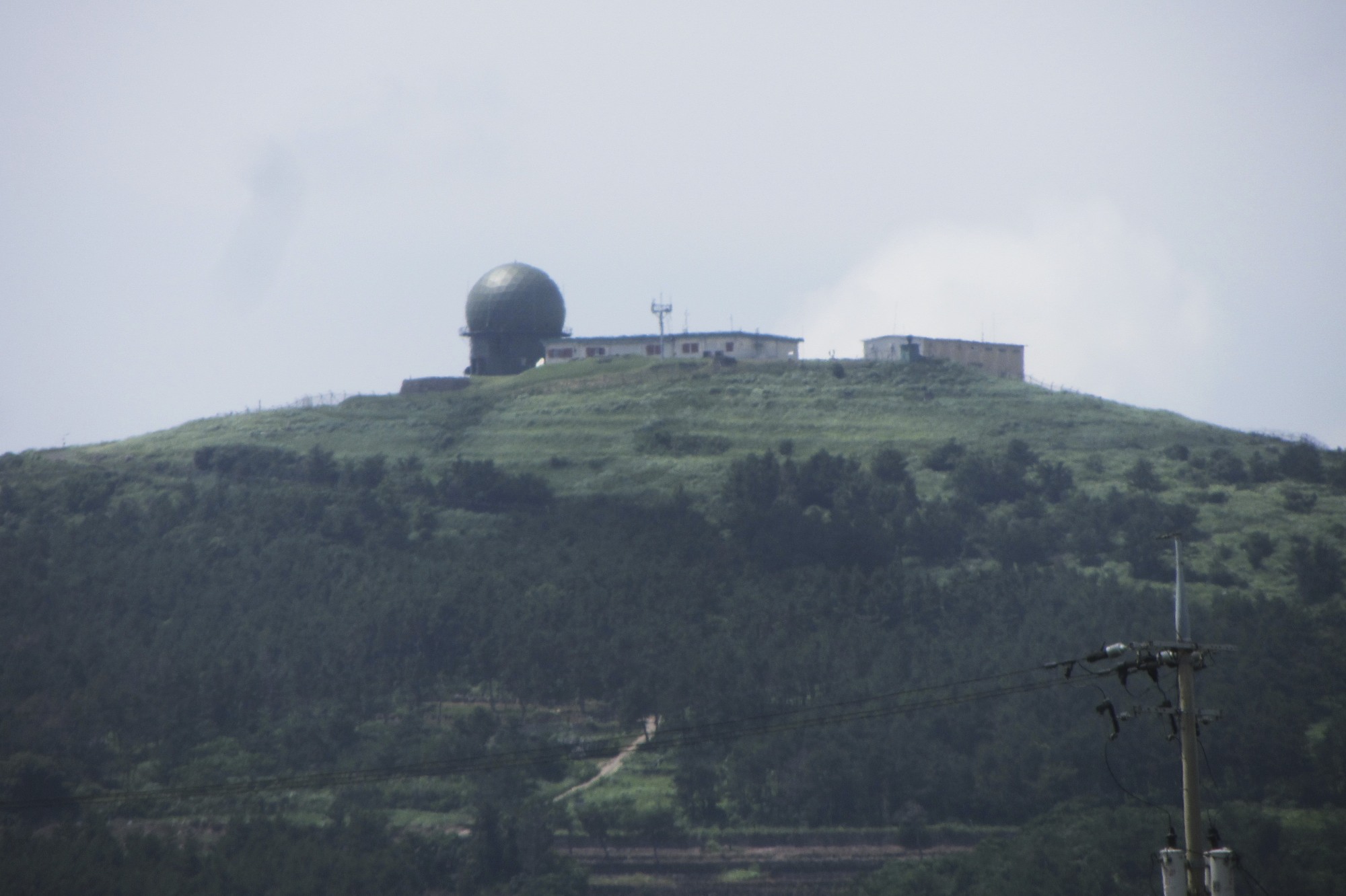
Later from 1987-1989, the Korean government attempted to build an air-force base on Mt. Songak, but strong local resistance won after a two year struggle and the plans were scrapped. However, the Korean Ministry of National Defense still owns land in the area and recently there was has been rumors that they again plan to build an airfare base there, perhaps on part of the old Alddreu Airfield (part of which has been declared a national heritage site). Meanwhile, the ROK MND has a small radar base in Moseulpo, formerly the U.S. owned Camp McNabb (for 53 years until it was taken over by Korean in 2005.
Moseulpo Radar Base, formerly U.S. Camp McNabb.
In light of this history of oppression and resistance, Moseulpo is a key location for the movement to demilitarize Jeju.
Peace loving people from across Jeju and Korea will come together to tour the historical sites, hear about the successful struggle against the air-force base and discuss and plan the demilitarization of Jeju. Join us!