Save Jeju Now

No War Base on the Island of Peace

  • Home
  • About
    • History
    • 4 Dances of Gangjeong
    • 100 Bows
    • Appeal
    • Partners
    • Board
  • Blog
    • All Posts
    • Petitions
    • Arrests & Imprisonmentuse for all things related to arrests and imprisonment
    • IUCN WCC 2012
      • Appeals & Statements
      • Gangjeong-Related Schedule
      • International Action Week, Sept. 2-9
      • Motion
      • Special Edition Newsletter for the WCC 2012
  • Gallery
    • #7 (no title)
    • #8 (no title)
    • #6 (no title)
  • Press
  • Support
    • Act
    • Visit
  • Downloads
    • Monthly Newsletter
    • Environmental Assessments
    • Reports
  • Language switcher

Category: solidarity


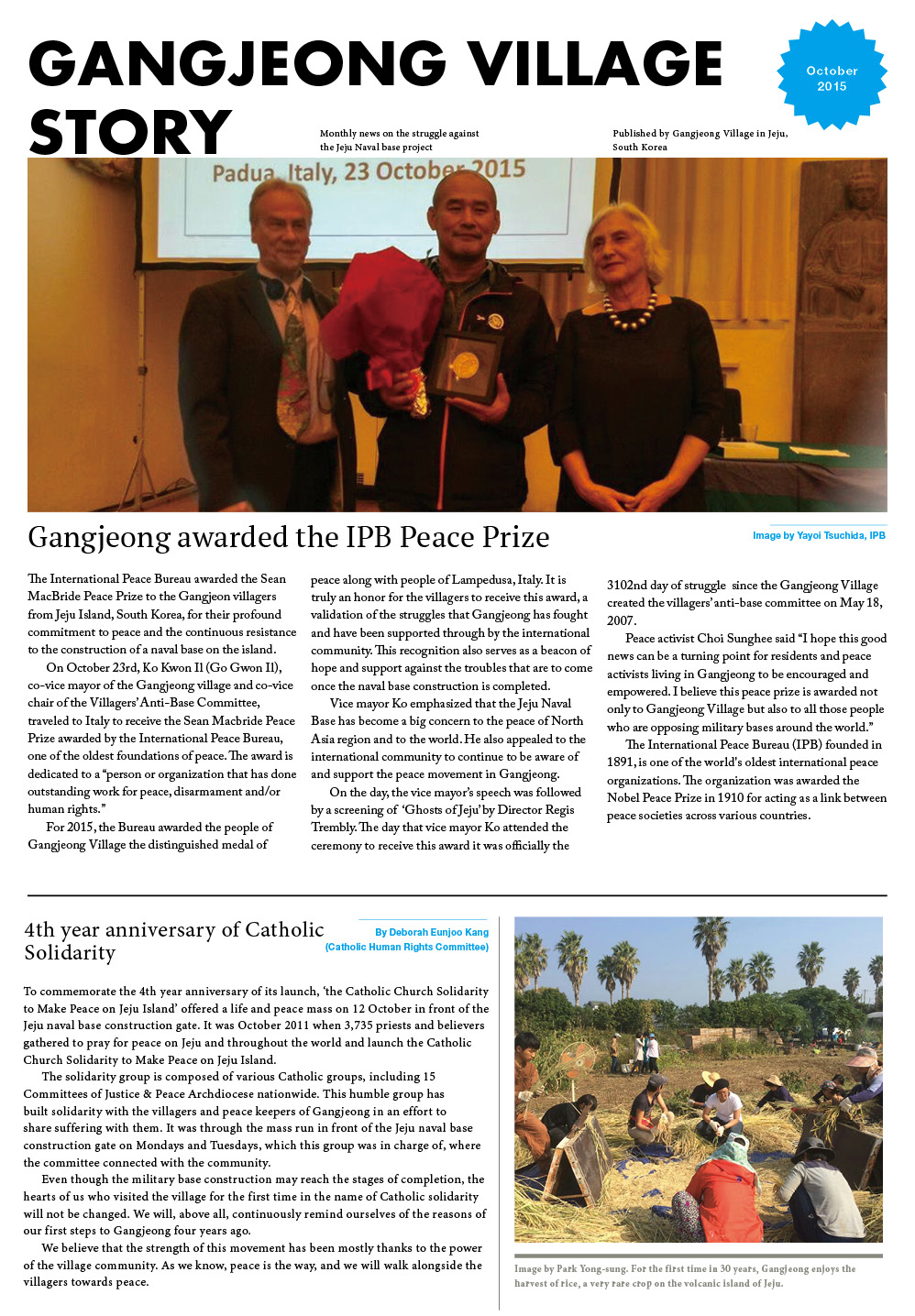
  • Gangjeong Village Story: Monthly Newsletter | October 2015 Issue


    October 2015 Final Page 1In this October Edition:

    Gangjeong awarded the IPB Peace Prize, 4th year anniversary of Catholic Solidarity,  rice harvest in Gangjeong, Palestinian activist visits Gangjeong, Buried cultural relics are discovered again,  Village association bldg. at the risk to be sold to pay for the payment for crackdown, Trial update,  Anti ROK-Australia drill,  Keep Space for Peace week and more.

    Download PDF


    November 9, 2015

  • Islanders Unite to Resist a New Pacific War

    militarization-of-pacific
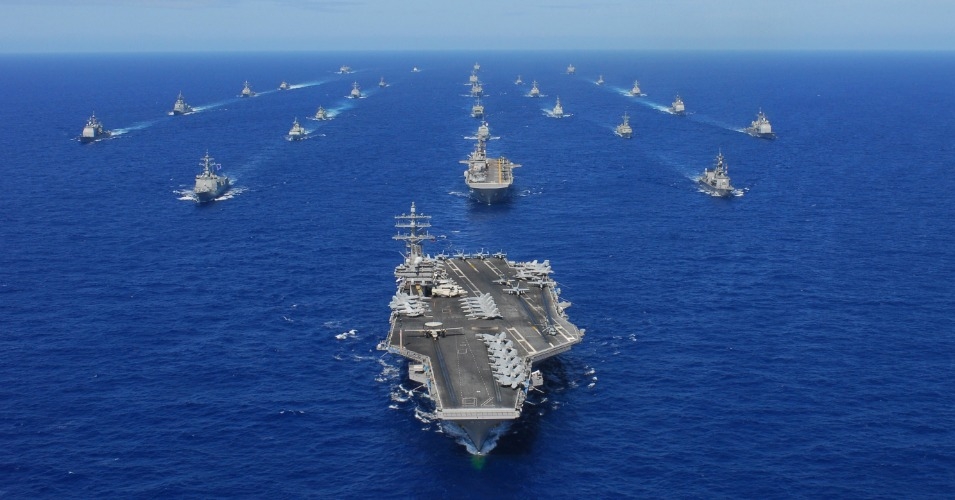
    The U.S. military expansion in the Asia-Pacific is destroying peaceful communities, local democracy, and nature. (Photo: US Navy)

    Reblogged from here.  Related article and photos

    by Koohan Paik

    Last September, I attended a remarkable gathering in Okinawa of impassioned young people from all over the Asia-Pacific. They convened at a critical moment to urgently discuss ramped-up militarism in their region. Thousands of hectares of exquisitely wild marine environments, peaceful communities and local democracy are now under extreme threat. Participants hailed from: Taiwan; Jeju (South Korea); the Japanese Ryukyu islands; Indonesia; New Zealand; and the Japanese Ogasawara islands. I was invited to represent Hawaii, where the headquarters for the U.S. Pacific Command (PACCOM) are located, and where decisions are made that have profound consequences for these young activists, and the rest of the world. These include missile base-building on pristine islands, rampant navy war games that destroy coastlines, reefs and other vital ecosystems, not to mention adding to climate change, pursued with no regard for local opinion.

    It’s all a result of the “Pacific Pivot,” announced by President Obama in 2011, to move 60% of U.S. Navy and Air Force resources from the Middle East to the Asia-Pacific. The stated goal is to maintain “balance” in the ongoing battle with China for regional military and economic hegemony. A particularly dangerous expression‍ in this effort came a few weeks ago, when a U.S. missile-carrying warship challenged China by passing through disputed waters surrounding China’s artificial island bases in the South China Sea. It is the latest example of brinkmanship after years of provocative moves by the U.S. in the so-called interest of balance. But, the grim fact is there is no balance in the Pacific. The little publicized reality is that the United States, located thousands of miles from China’s coast, already maintains over 400 military installations and 155,000 troops in that part of the world. Meanwhile China, even with its newest artificial island-bases in the South China Sea, will have a grand total fewer than ten.

    At the conference, entitled “Peace for the Sea Camp” it was noted that one of the most destructive developments has been Defense Secretary Ashton Carter’s 2015 campaign to forge a new network of aggressive bilateral agreements with militaries from other countries such as South Korea, the Philippines, Australia — and most insidiously, Japan — to augment American dominance. These alliances are reinforced economically by the Trans-Pacific Partnership (TPP), an essential component of the fool’s endeavor to contain China within its own hemisphere. However, no one at the conference took sides with one hegemon or the other. China was also criticized for having smothered thousands of acres of healthy reef with concrete and crushed coral, to build its artificial islands. To be sure, one of the primary purposes of the gathering was to establish a global voice against all military desecration of islands and the seas. Here’s the full story on the crisis and resistance.

    Outsourcing Military Force

    A seismic event took place on the first day of the conference that underscored the gathering with new urgency. Prime Minister Shinzo Abe had managed to push through highly unpopular legislation to disempower Japan’s “peace constitution,” implemented in 1947 by General Douglas MacArthur. Abe acheiieved this despite 100,000 protestors shouting “NO WAR” for weeks in front of the Japanese Diet. The following day, Abe’s public approval rating plummeted to 38.9 percent. Now, Japan’s military is permitted to act offensively, no longer only in self-defense mode. It can also surveil other countries for the first time in modern history, and establish a global arms industry (imagine, Honda-quality drones and tanks). According to a Pentagon official, this will give Japan “greater global presence.” According to The Nation’s Tim Shorrock, it will turn Japan into America’s proxy army in Asia.

    China is correct to view the watered-down constitution as yet another provocation, especially since it has cleared the way for a turbo-charged reworking of the 64-year-old U.S.-Japan Security Treaty to take effect. The revised treaty essentially encourages Japanese aggression toward its neighbors — a 20th century scenario that Asia-Pacific people do not want to relive. For them, Abe’s politics are like a zombie risen from the dead. Since taking office in 2012, Abe has boosted the military budget, taken an aggressive stance toward China and has also denied Japan’s role in forcing hundreds of thousands of women into sexual slavery for its troops during World War II. He is the perfect, barbaric accomplice to carry out the Pentagon’s audacious designs on Asia.

    For islanders like those at the Okinawa conference who live on the front lines of this new world, the new treaty poses immediate threat. It allows four lovely islands in the Ryukyu archipelago to be transformed into state-of-the-art military bases — with missiles pointed at China. It’s a way the U.S. can “outsource” base-building to client states like, in this case, Japan.

    Outsourcing base-building is a fairly new Pentagon strategy. It came about partially due to the U.S. wearying of growing global disgust with its foreign basing. For example, the routine protests of tens of thousands of intractable Okinawans has already succeeded in stalling new base construction there for the past 20 years — a big headache for the Pentagon. The solution, surrogate base-building, is also an enormous cost-saving measure. For example, the construction of the Jeju naval base is South Korean in name, but it fulfills the Pentagon’s directive to contain China. It will also port U.S. aircraft carriers, attack submarines and Aegis-missile carrying destroyers. Because the base is “officially” South Korean, costs are externalized — of construction, of environmental responsibility, and of policing eight years of still ongoing protests. Now four Japanese Ryukyu islands will also be put to service to menace China — at no direct expense to the U.S.

    The Ryukyu basing project, now under construction, would not have been able to move forward without the culmination of a longstanding collaboration between the U.S. and Japan to finalize three milestones during 2015. The milestones, which work together symbiotically, are: 1) Disabling Japan’s pacifist Constitution; 2) Beefing up of the U.S.-Japan Security Treaty; and 3) Reaching a TPP agreement which would work hand-in-glove with military force to pair economic dominance with military hegemony. More on this later.

    Environmental Impacts

    The Ryukyu Islands stretch like a strand of emeralds 900 miles south from mainland Japan to Taiwan. They are rich with crystalline rivers, vital reefs, and endemic flora and fauna. The Japanese people, still coping with the post-apocalyptic effects of a triple-reactor meltdown at Fukushima, understandably celebrate the Ryukus (those which are still pristine) as priceless natural treasures. But alas, Japan’s government has begun carving up mountains, dredging coral and bulldozing forests in order to rapidly build the massive, multi-island military infrastructure. To witness the lush habitats of hundreds of remarkable species ripped off the face of the Earth is a sobering spectacle, equivalent to the Taliban blasting away the 1,700-year-old Buddha statues carved into Afghan cliffs.

    Though the bases would be Japanese in jurisdiction, their function would be essentially American. They are intended to extend the encirclement of China started by South Korea’s Jeju base and those on Okinawa. Three lush, wondrous islands — Amami-Oshima, Miyakojima, and Ishigaki — are now slated for missile-launching capability and live-fire training ranges. On Yonaguni, so far south it is only 69 miles from Taiwan, the plan is to build microwave radar antennas to spy on China — an activity that would have been illegal before the implementation of the new constitution. Yonaguni residents are not happy. “There’s a lot of worry that the island could become a target for attack if a base is built there,” a Japanese defense ministry official told the Mainichi Shimbun.

    Oddly, the defense ministry first revealed the base construction plans directly to the national media, but not to the island residents. Mayumi Arata, a respected elder of Amami-Oshima, the most northerly island slated for construction, said the only information that people were given was a 15-minute talk by a government official in July 2014. The bureaucrat said troops would be stationed on the island. Nothing was ever mentioned of the missile base, the radar station, the firing range, the heliport, or any accoutrements. It wasn’t until newspapers published the plans that the people learned they were to be heavily militarized. Anti-base groups quickly formed on all the affected islands, but not without blowback from the draconian Abe regime. On Miyakojima, a lawsuit was filed against the government for blacklisting protestors from employment.

    The 275-square-mile island of Amami-Oshima is a place so teeming with biodiversity that it has been nominated for UNESCO World Heritage status. Seventy-three thousand people live on 30 percent of the island. The other 70 percent is comprised of rolling hills that are entirely wild and carpeted with a thick green tangle of endemic, original forest. A crab-filled mangrove swamp is set inland. Ringing the island is a coral reef with adorable pufferfish noted for sculpting astonishing undersea sand mandalas, and loads of calico-shelled cone snails. Drinkable water bleeds from cracks in fern-covered cliffs. The island is home to 300 species of birds, butterflies as big as your hand, jade and gold frogs, salamanders, sea and freshwater turtles, the unique Ryukyu ayu fish, endemic orchids and rare ficus trees. The small-eared Amami rabbit, one of many species found only here, is sometimes called a “living fossil” because it represents an ancient Asian lineage that has elsewhere disappeared. There has even been a sighting off the coast of the extremely rare North Pacific right whale, a species of which it is believed only 30 remain.

    Needless to say, a firing range in the forest and state-of-the-art missile base will decimate Amami-Oshima’s natural wonders. Mamoru Tsuneda, a natural park counselor of the Environmental Ministry, laments, “There are no laws to protect the nature on this island.”

    Residents have economic concerns as well. Kyoko Satake, an artist and boutique owner, observed, “We see how the United States has only the very rich or the very poor. That’s because you spend all your money on war. We don’t want to be like that. We want to keep our middle class.”

    The most southerly island to be militarized is the 11-square-mile island of Yonaguni. It is strategically positioned less than 100 miles from the uninhabited Senkaku islands, a piece of geography being hotly contested with China. When I visited Yonaguni before the activist gathering began, I saw herds of wild, endemic ponies roaming freely on fenceless pastures and even on streets. But now their main watering hole has been replaced by bulldozers churning out a radar surveillance station, scheduled for completion in 2017. Entomologists are alarmed that the radar will kill many of the island’s celebrated, but fragile, butterfly species.

    As on Amami-Oshima, there has been no transparency in its construction, let alone any kind of Environmental Impact Statement. Residents were told that such information is “top secret.” It wasn’t until the bulldozers began that they saw that the high-intensity microwave antennas were to be only about 600 feet from neighborhoods, including an elementary school. Several mothers with young children decided to move off the island forever.

    At a certain point, all this preparation for war becomes indistinguishable from war itself. The fight against terror becomes terror itself. No one knows that better than the Jeju islanders of South Korea, whose farms, fisheries and freshwater springs were destroyed to build a base. The Okinawans also know it. They live daily with military jets and helicopters searing through the skies. It seems the same hellish fate is in store for all people and creatures of the islands targeted for militarization. A high school science teacher and Amami-Oshima native, Hirohumi Hoshimura, observed, “Tokyo says my island is for defense. But to me, this is my home.”

    Meanwhile, defense industries on both sides of the Pacific are salivating. Japan’s Ministry of Defense has a proposed a record-high budget, to equip the new bases with 17 Mitsubishi anti-submarine warfare helicopters, 12 Boeing V-22 Osprey tilt-rotor aircraft, three Northrop Grumman Global Hawk drones, six F-35 fighter planes and Aegis destroyers (both manufactured by Lockheed Martin), one Kawasaki military transport aircraft, three Boeing Pegasus tanker aircraft, and 36 maneuver combat vehicles. Other purchases include BAE Systems amphibious assault vehicles and mobile missile batteries. And Japanese arms manufacturers have begun – for the first time ever — producing armaments for export. It’s a merger between militarism and corporate capitalism.

    Butter, Guns and the TPP

    From a strictly trade perspective, the TPP is confounding. From a geopolitical perspective, it makes a lot of sense. Jean-Pierre Lehmann elaborates in Forbes:

    “TPP is a really strange mélange of 12 members, including five from the Americas (Canada, Chile, Mexico, Peru and the US), five from Asia (Brunei, Japan, Malaysia, Singapore and Vietnam), along with Australia and New Zealand. … Missing are large Asian economies, notably South Korea, India and Indonesia, all three members of the G20. Also missing of course is China; but that would seem to be deliberate … to contain China. Thus TPP is above all a geopolitical ploy with trade as a decoy.”

    Given the dearth of economically significant Asian member nations in the pact, it is not perplexing why many analysts were predicting early on that the whole deal would collapse if Japan never signed on. It finally did in 2013. But as recently as April 19, 2015, gridlock prevailed at a Tokyo meeting between U.S. Trade Representative Michael Froman and Japan’s Economic Minister Akira Amari. The U.S. wanted Japan to eliminate its extremely high tariffs on agriculture — hundreds of a percent on rice and beef. Japan wanted to sell more cars in the U.S. but wasn’t keen to reciprocate by buying American cars.

    It took the perceived threat of China establishing the Asian Infrastructure Investment Bank and other international deals to loosen the logjam. “The growing Chinese presence in the region has prompted Japan and the United States to speed up talks,” Masayuki Kubota, chief strategist at Rakuten Securities in Tokyo, told Agence France-Presse at the time. “Japan and the United States are feeling pressed to take the initiative before China crafts its own rules.”

    So, only eight days after the Tokyo trade meeting flopped in April, Shinzo Abe arrived for a much-regaled week-long visit to Washington. He landed the same day that his Defense Minister Nakatani and Foreign Minister Kishida met in New York with Secretary of State John Kerry and Ashton Carter. There, the four cabinet members settled on a new set of defense guidelines that would expand Japan’s military.

    The new guidelines articulated that Japan would now be permitted to take part in “an armed attack against a country other than Japan,” a radical departure from the original treaty. Other new activities included minesweeping to keep sea lanes open, intercepting and shooting down ballistic missiles, and disrupting shipping activities providing support to hostile forces – all responsibilities that the Ryukyu missile bases would be perfectly positioned to execute.

    Apparently, granting Japan military powers was what it took to secure the TPP concessions. The next day, Abe and Obama were all smiles and waves in the Rose Garden, boasting about their new defense treaty in the same breath that they stressed they were committed to reaching a “swift and successful conclusion” to the TPP. And the very next day, Abe promised Congress he would have “his” legislature dismantle the peace Constitution by summer, so the new defense guidelines could take effect. He got a standing ovation.

    It was not the following summer, but rather in autumn, that Abe made good on his word, managing to push through his aggressive interpretation of the constitution, much to the sorrow of the Japanese people. Sixteen days later, like clockwork, the TPP was reached.

    TPP: It’s Not Just about Tariffs and Toyotas

    When Defense Secretary Ashton Carter said in April, “The TPP is as important to me as an aircraft carrier,” he revealed the inextricable connection between the Trans-Pacific Partnership and militarism. Until that statement, the TPP had been treated as nothing other than the biggest, baddest free trade agreement to come along since NAFTA, CAFTA, TTIP and the rest. However, unlike the TPP, none of these other global trade deals were implemented to thwart a rival world power. President Obama summed things up last spring when he said of the TPP, “If we don’t write the rules, China will write the rules in that region.” So, TPP provides the rules; the Pentagon enforces them.

    A look at the map clarifies how forces at play in the Asia-Pacific give a geopolitik context to the TPP. Off the southeast coast of China lies the South China Sea, through which over $5 trillion worth of trade passes annually, after squeezing through the Strait of Malacca. This is also the gateway through which all oil from the middle-east passes before it reaches China, Japan, and South Korea. Whoever controls the Strait of Malacca and South China Sea controls Asia’s economy, which, in turn, drives the world economy. In order for the U.S. to maintain authority over these far-flung hotspots, it must project military might – the most resented and costly form of power. That’s why Ashton Carter needs the TPP so bad: to justify mega-militarizing Pacific trade routes.

    Is it any coincidence that all the Asia-Pacific TPP signatories, with the exception of Japan, Australia and New Zealand, can be found surrounding the South China Sea? Those nations are Malaysia, Singapore, Brunei, and Vietnam. For years, they, along with the Philippines and Taiwan, have been in heated disagreement with China over territory that includes critical sea lanes. China is claiming most of the sea for itself, a move which would castrate the TPP. (What good is a trade agreement without access to trade routes?) The stakes are so high that China went so far as to build seven artificial islands, totaling 2,000 acres, in the middle of the disputed Spratly Islands. China claims sovereignty over the new islands, as well as the surrounding sea within twelve nautical miles.

    In such unpredictable circumstances, solid alliances with the China-vulnerable countries are indispensable to the Pentagon. Their membership in the TPP exacts deference to U.S. hegemony. In exchange, they get the American muscle they need to stake out their own territorial claims, such as the warship that Carter sent directly into the contentious waters surrounding the artificial islands. This military excess is shaping 21st-century Asia, warping cultures, destroying countless ecosystems, and costing billions of dollars. Other examples: four Littoral Combat Ships (at about $700 million apiece) have been ported in Singapore; Marines have begun rotating between bases in Australia, Okinawa, Guam and Hawaii. Most ecologically destructive are the unprecedented number of joint naval exercises taking place in the western Pacific with tens of thousands of troops at a time. Participating militaries come from Malaysia, Singapore, Brunei, Vietnam, the Philippines, Indonesia, Australia, New Zealand, South Korea, Japan, Bangladesh, Cambodia, Thailand, and Timor Leste. Across both northern and southern hemispheres, the fury of torpedoes, sonar and bombs blasts through reefs and marine habitats almost year-round with no meaningful environmental regulation whatsoever.

    To put it bluntly, the TPP is not merely a set of rules; it locks in and justifies a defense empire to counter China.

    But many U.S. lawmakers need more incentive to sign onto any trade deal. “When the administration sells me on this, it’s all geopolitics, not economics: We want to keep these countries in our orbit, not China’s,” said Sen. Charles E. Schumer, D-N.Y. “I agree with that. But I need to be sold on the economics.”

    Teens Stand Up to Oppose War Law

    In Japan, those who remember the horrors of war have always been stalwart pacifists. So it came as an enormous surprise when legions of the younger generation camped out for a month in front of the Diet, chanting and beating drums, as Abe forced through his despised militaristic legislation. Spearheading the movement has been Students’ Emergency Action for Liberal Democracy (SEALDs), a group that skyrocketed to popularity by incorporating a hip-hop aesthetic into its political messaging. Other organizations sporting their own acronyms have popped up like mushrooms: Teens Stand Up to Oppose War Law (T-ns SOWL), MIDDLEs and even OLDs. Regardless of age, though, they all brandish signs with the same message, such as “War is Over,” “Change the Prime Minister” and “TPP – NO! People’s Pacific Partnership – YES!”

    Equally significant is the wide-sweeping, movement of young Asia-Pacific visionaries that seemingly came out of nowhere to organize Peace for the Sea Camp. Its very trans-national quality flies in the face of what a Pentagon official on Guam once told me: “Unlike European countries, Asian countries will never be able to get along – that’s why we’re there, in Asia.”

    But they didn’t come out of nowhere; they had emerged from the highly organized Christian movement opposed to base construction on Jeju Island, South Korea. The ferociously peaceful opposition had attracted pilgrim pacifists from across Asia, and every other peopled continent. They had come to take part in daily religious services that blocked traffic at the gates of the construction site for the past eight years. It was a tearful irony that it was during the Peace for the Sea Camp when the first Aegis-missile destroyer ported at the Jeju base.

    One evening of Peace for the Sea Camp was devoted to screening a 2014 Irish documentary about the Jeju navy base protests. The announcer voice-over posited that the completion of the base will herald the beginning of the Cold War in the 21st century, between the U.S. and China. Hindsight has proven him correct; in only one year, tension has increased with the U.S. race to solidify an anti-China political bloc through Japan’s shady new legislation, trade, and epidemic joint military exercises. Not to mention the inflammatory plan to lasso China with a string of new missile bases in the Ryukyu Islands.

    Shortly after the conference, the activists produced a manifesto to articulate the voices of those impacted by the Pacific Pivot. Here is an excerpt:

    “We fully understand that this shift will not bring about greater human security but will instead yield the conditions for a far greater risk of war and tremendous environmental destruction. We further recognize that these changes have been fueled by the global weapons industry, which reaps enormous profits from increased military tension and conflict, while ordinary people and the wider ecosystem suffer the inevitable consequences.

    We cannot leave this work to political leaders and governments, which largely answer to corporate interests and the military-industrial complex. We challenge the prevailing assumptions behind the current configuration of geopolitics that takes for granted the precedence of nation-states, military interests, and capitalist accumulation.

    We will instead create another kind of geography. Through our Peace for the Sea Camp and similar projects, we are already creating alternative political communities based on a sustainable economy, the ethics of coexistence, and our shared responsibility to preserve peace.”

    Apparently, the Pentagon official’s belief that Asian countries are incapable of getting along, is wrong.
    This work is licensed under a Creative Commons Attribution-Share Alike 3.0 License

    Koohan Paik is a journalist, media educator, and Campaign Director of the Asia-Pacific program at the International Forum on Globalizati

    November 8, 2015

  • Declaration of Catholic Priests and Monks for peace on Jeju Island

    3
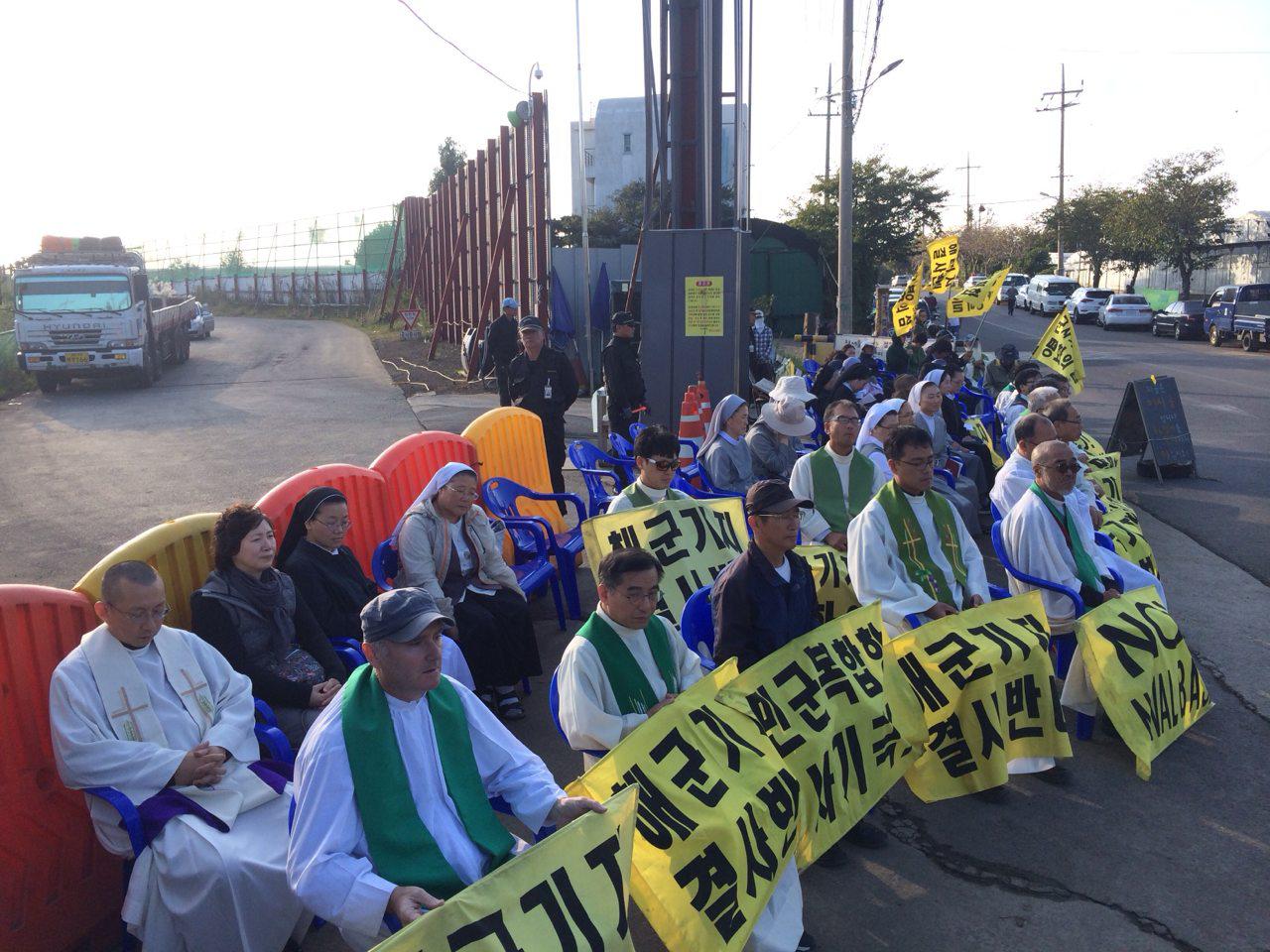
    Photo by Pang Eunmi/ The 4th year anniversary of the launch of the Catholic Church Solidarity to Make Peace On Jeju, Oct. 12, 2015


    7
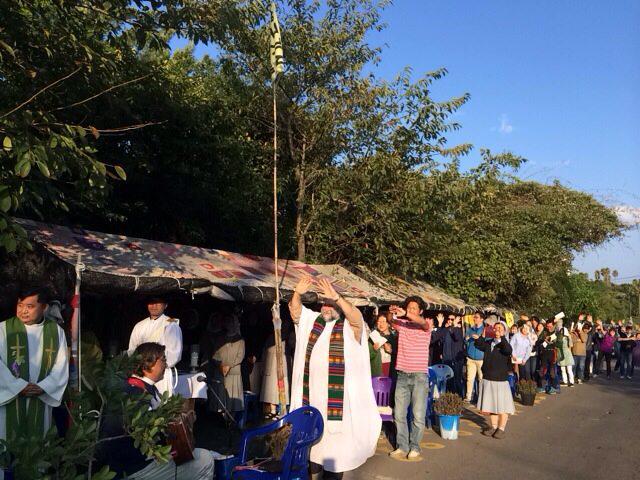
    Photo by Pang Eunmi/ The 4th year anniversary of the launch of the Catholic Church Solidarity to Make Peace On Jeju, Oct. 12, 2015
    2
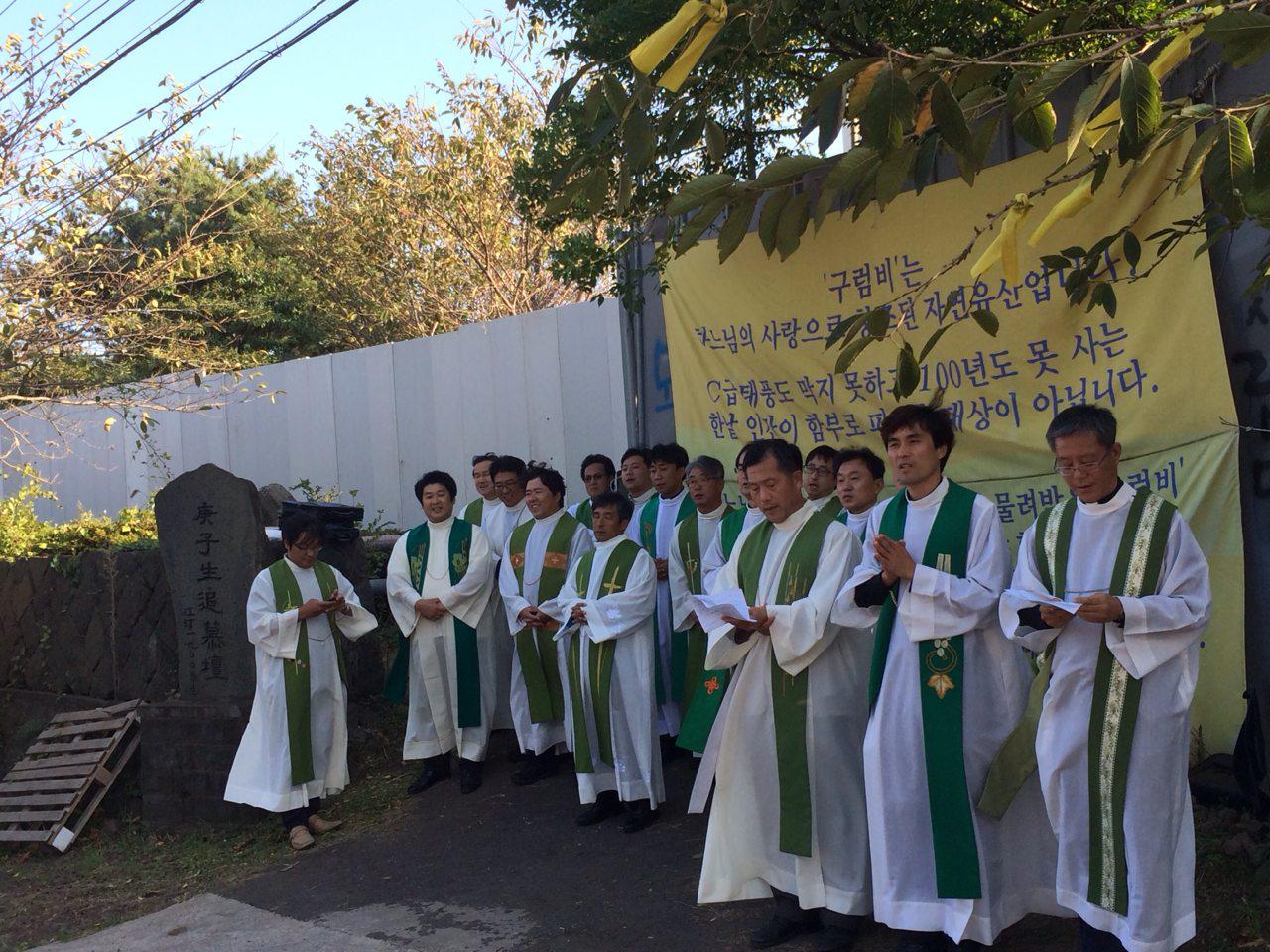
    Photo by Pang Eunmi/ The 4th year anniversary of the launch of the Catholic Church Solidarity to Make Peace On Jeju, Oct. 12, 2015


    (Fwd by  Deborah Kang Eunjoo/ the Catholic Solidarity to Make Peace on Jeju)

    Revoke the Naval Base in Jeju! Stop the construction immediately!

    Declaration of Catholic Priests and Monks for peace on Jeju Island


    1. Under the instruction of the God of Life and of the Prince of Peace, Jesus Christ, we oppose the construction of the Naval Base in Jeju. This is the desperate desire of the residents of Gangjeong Village, who have lost their livelihoods, the decision of the Catholic Bishops’ Conference of Korea, and the unchanging wish of those citizens of Korea who love life and peace on earth.
    2. First of all, we want to know why the Naval Base has be constructed by destroying Korea’s cleanest and clearest ocean, around Jeju Island, while advertising the intent to protect the natural heritage of Jeju. While they boast of Jeju’s status as a preservation area, world natural heritage, and GEO park designated by UNESCO, and even they are internationally advertising that it be selected as one of the New 7 Wonders of Nature, they have blasted Gureombi Rock, a gift of nature, with explosives to construct a large-scale port for navy ships, and are attempting to build a concrete bank. This is the result of punishment incurred from uncontrolled greed and ignorance.
    3. The reason why we are against the construction of Naval Base starts from the illegality and non-democracy. The Government announced that they will respect opinions of residents, but this is not true. 725 residents participated in a survey on ‘Voting For or Against the Naval Base,’ and 680 (or 94%) of the total village residents are opposed to the construction of the Naval Base. Nevertheless, the Navy and Jeju government continued the construction and have suppressed the opposition of the residents with physical force.
    4. The Government insists that the Naval Base is necessary to deter North Korea’s provocations, protect our marine territory, and secure the ocean route and underwater resources. However, the substantial power to reduce conflicts between countries and maintain peace comes from neither military bases nor weapons, but from wise diplomacy pursuing co-existence and the level of policy and economy. This has been continuously proved throughout the history of the world.

    Many experts say that the Naval Base in Jeju will become a US base to maintain the supremacy in Northeast Asia, unlike our expectations, and it even provokes tension around the Korean peninsula. This consideration is very practical. The conflict between China and Japan in the South China Sea and the Senkaku Islands predicted the unfortunate future of Jeju.

    1. The moment the construction began, artifacts from the Bronze Age were excavated. So the National Assembly and the Cultural Heritage Administration suggested that the Navy stop the construction. However, the Navy disregarded the suggestion and continued with the blasting. We cannot understand why they are in a hurry, although this is not urgent matter. In particular, the violent power exercised by the Police reminds us of that terrible historical event, ‘The 4.3 Massacre.’ We declare that if these acts of violent suppression, arrests, and captivity are repeated, then we will rise against it with an even more powerful disobedience movement.
    2. Today we established the ‘Catholic Church Solidarity to Make Peace on Jeju Island’ according to the Gospels of Christ, which requests that we defend lives and peace, and we declare and require the following in the names of 4,567 Catholic priests and monks.

    Declaration and Requests

    1. We oppose the construction of the Naval Base which threatens the peace of the Korean peninsula and Northeast Asia.
    2. The Government must fully revoke the plans to construct a Naval Base on Jeju, and politely apologize to the residents of Gangjeong Village and Jeju Island for the illegal means by which the location of the Naval Base was selected!
    3. The navy must immediately stop the construction according to the advice of the Cultural Heritage Administration, and actively cooperate in the excavation of cultural heritages.
    4. The National Assembly must cut the budget for the construction of the Naval Base on Jeju Island.
    5. The Government must consider the wounds of the residents of Jeju, worry about repeating the 4.3 massacre, and apologize for the misuse of the state power!
    6. The Government must make full efforts to restore the natural environment which was been seriously damaged by the construction!

    October. 31. 2011

    The Committee of Justice & Peace Archdiocese of SEOUL / The Committee of Justice & Peace Archdiocese of DAEGU / The Committee of Justice & Peace Archdiocese of GWANGJU / The Committee of Justice & Peace Diocese of ANDONG / Justice & Peace Committee of BUSAN Diocese / The Committee of Justice & Peace Diocese CHEONGJU / The Committee of Justice & Peace Diocese of CHUNCHEON / The Committee of Justice & Peace Diocese of DAEJEON / The Committee of Justice & Peace Diocese of INCHEON / The Committee of Justice & Peace Diocese of JEJU / The Committee of Justice & Peace Diocese JEONJU / The Committee of Justice & Peace Diocese of MASAN / The Committee of Justice & Peace Diocese SUWON / The Committee of Justice & Peace Diocese of WONJU / The Solidarity of priest Diocese of UIJEONGBU / Association of Major Superiors of Women Religious in Korea / Korean Conference of Major Superiors of Men’s Religious Institutes and Societies of Apostilic Life


    November 8, 2015

  • Peace for the Sea Camp at Okinawa, Finished!

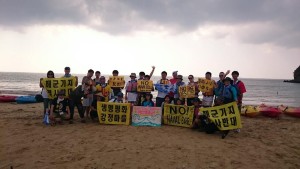
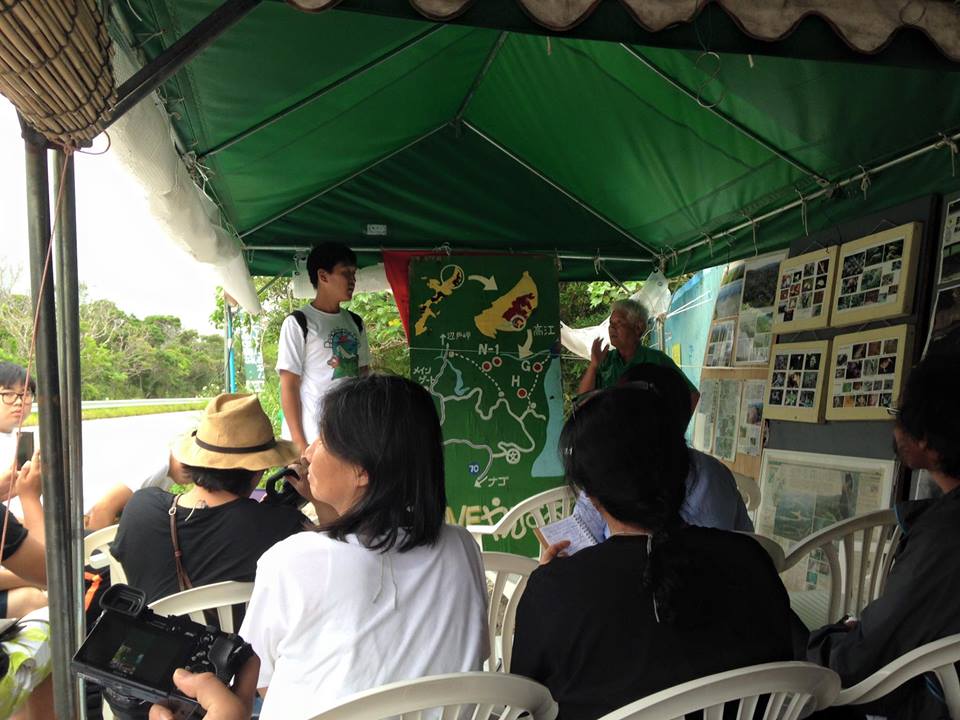
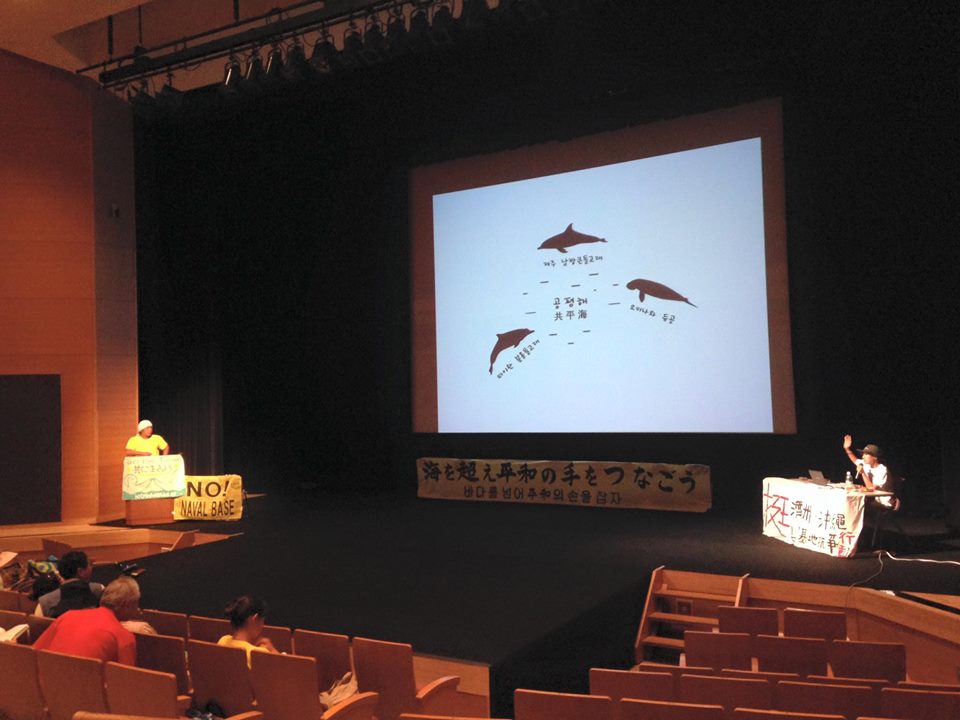
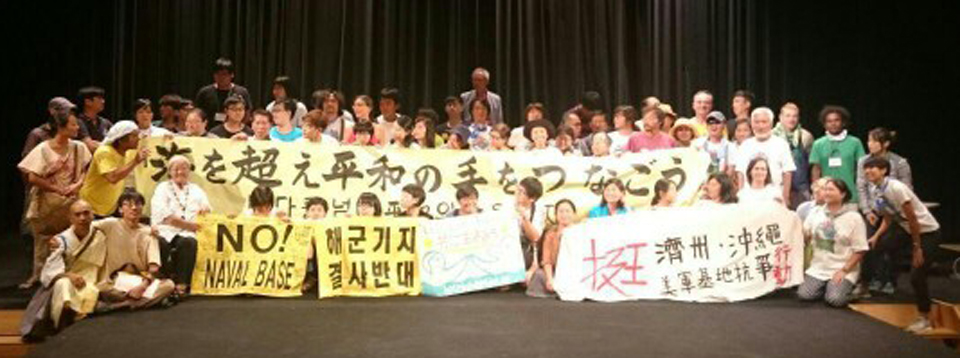
    On September 19th, there was a four day international peace camp held at Okinawa. This gathering succeeded the previous one held in Gangjeong of Jeju last year, and we anticipate the next one to be established in Taiwan.

    12011257_10208011440663349_3640002437944346318_n

    These meetings are conducted with the overall intention of solidifying the triangular line of peace among the three mentioned islands (Taiwan, Jeju, Okinawa). This act seems urgent and timely, given the current global politics that has jeopardized marine life and imperiled communities nearby the Asian seas. To protect these fragile ecosystems, over 70 concerned individuals from the three islands have gathered in Okinawa to share stories about their respective struggles, learn about current military situation in Camp Schwab, and canoe in the Henoko sea. I believe that each 70 personnels have come out of the camp with wider knowledge over the matters in Okinawa and a deeper appreciation of the Asian waters that connects all us despite the geographical divide.

    12049626_10208011440583347_7265187077371611020_n

    12002167_10156089393400434_8008753388960262305_n

    12033049_10156089394015434_4976739527299591999_n


    September 27, 2015

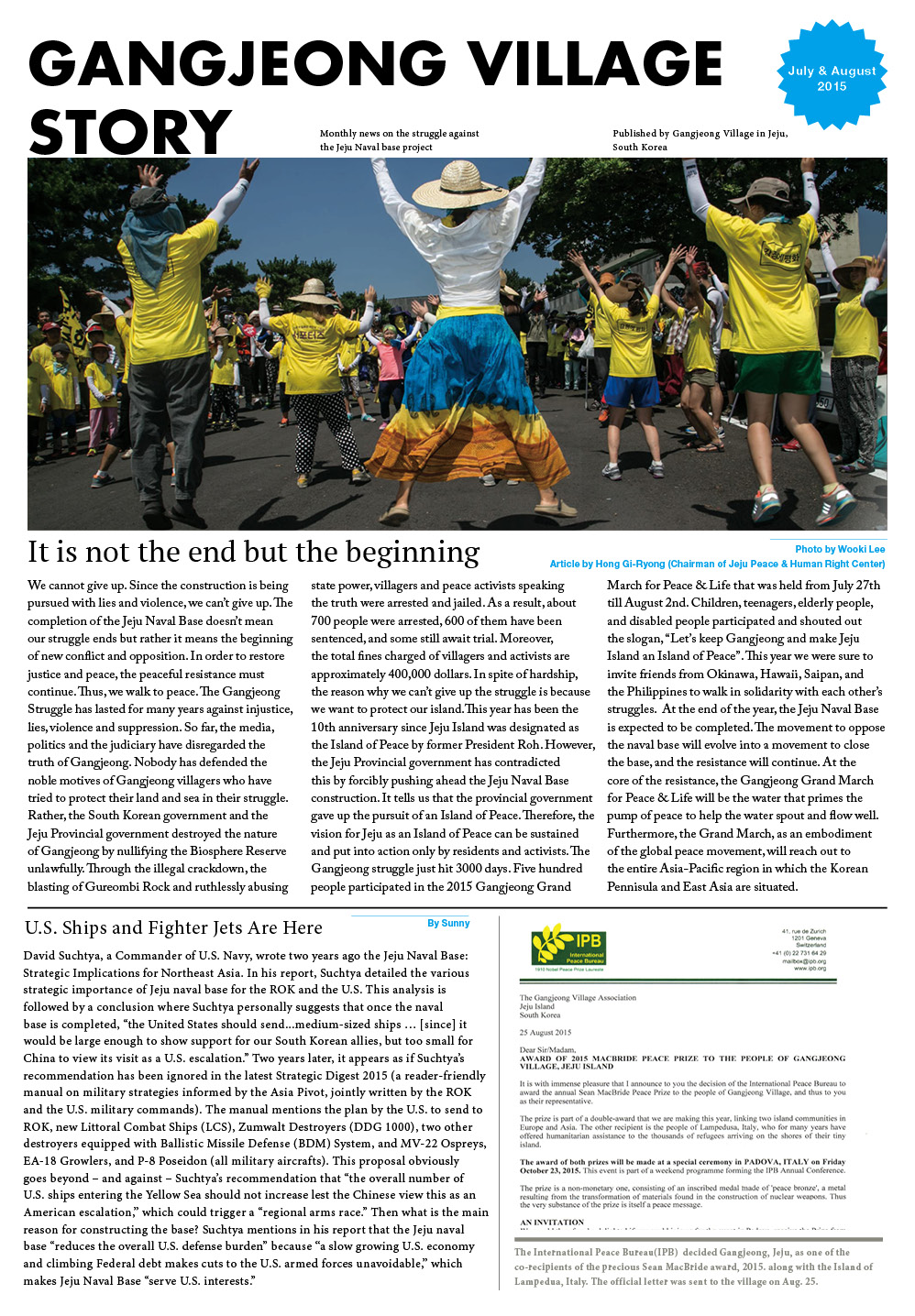
  • Gangjeong Village Story: Monthly Newsletter | July and August 2015 Double Issue

    July August first section_Page 1In this this July and August Special Edition:
    Reflections on 2015 Gangjeong March (domestic and international/ writings and photos),  Gangjeong as the co-recipients of the IPB award, U.S. Ships and Fighter Jets are are here, the 23rd Global Network conference in Kyoto,  Connecting Bath and Jeju,  Returning to Jeju, Taiwan anti-nuclear activist’s solidarity with Gangjeong, The Ghost of Yasukuni Cancelled by Jeju City,  a miracle in relation to the Sewol Ferry incident, trial updates, anti-naval base struggle shown in numbers,  Peace for the Sea international Sea Camp in Okinawa, 2015 , navy’s outrageous move, Captive dolphins return to Jeju Sea, Jeju’s soft coral suffering from damage, ‘Black Eagle’ Airshow invades village,  international solidarity, and more!


    Download PDF


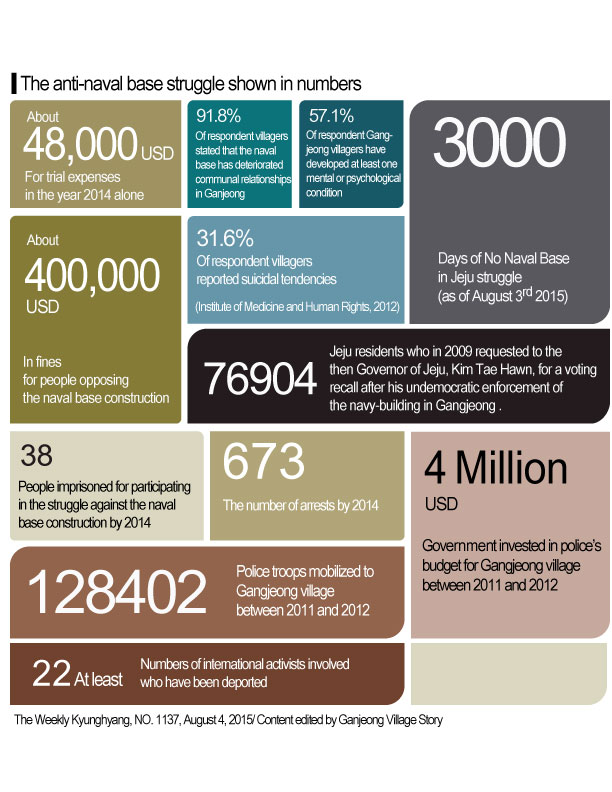
    Here is a clear view of the table in the page 7.

    Shown in numbers


    September 12, 2015

  • Gangjeong, One of the Co-Recipients of the Sean MacBride Award!

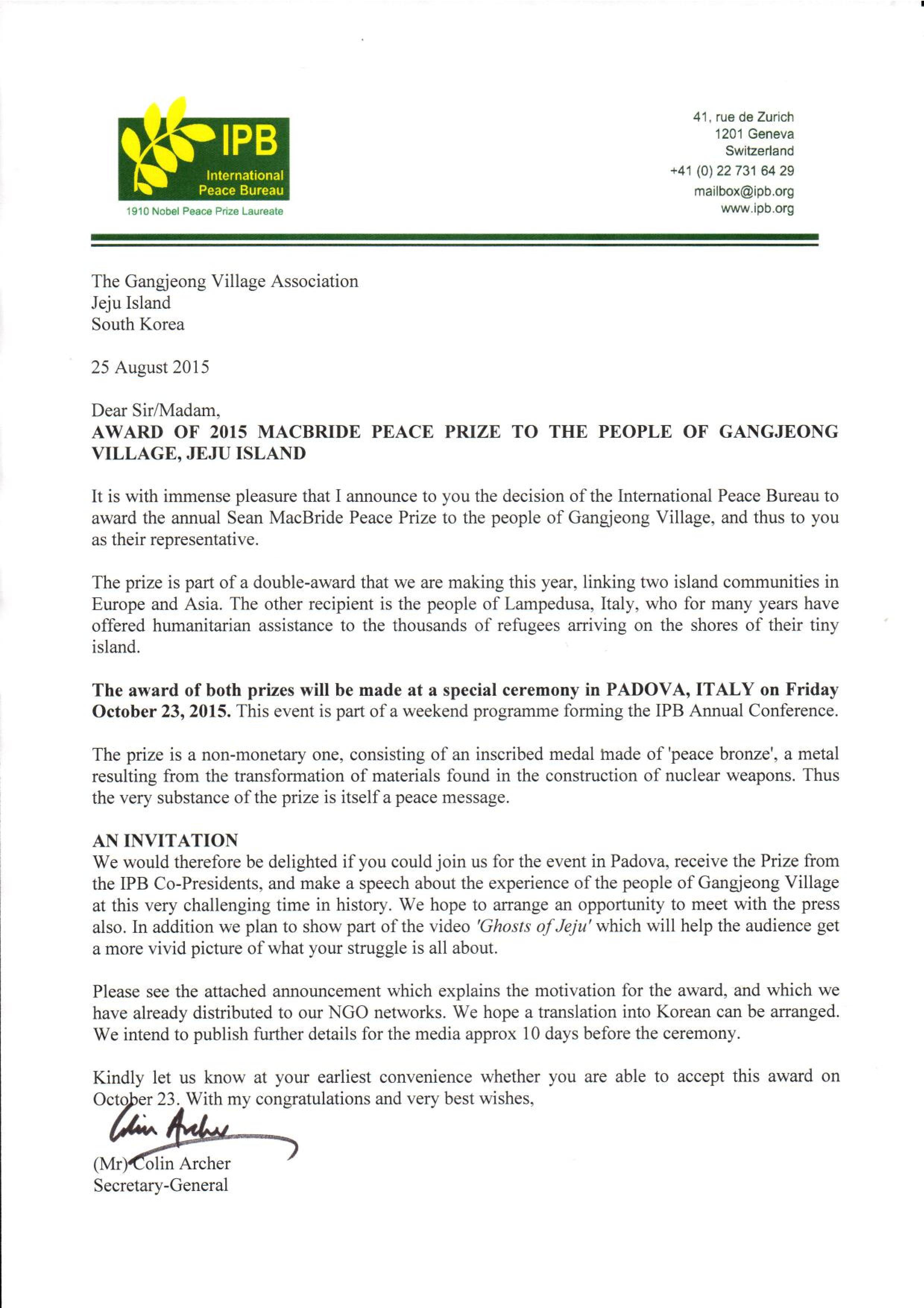
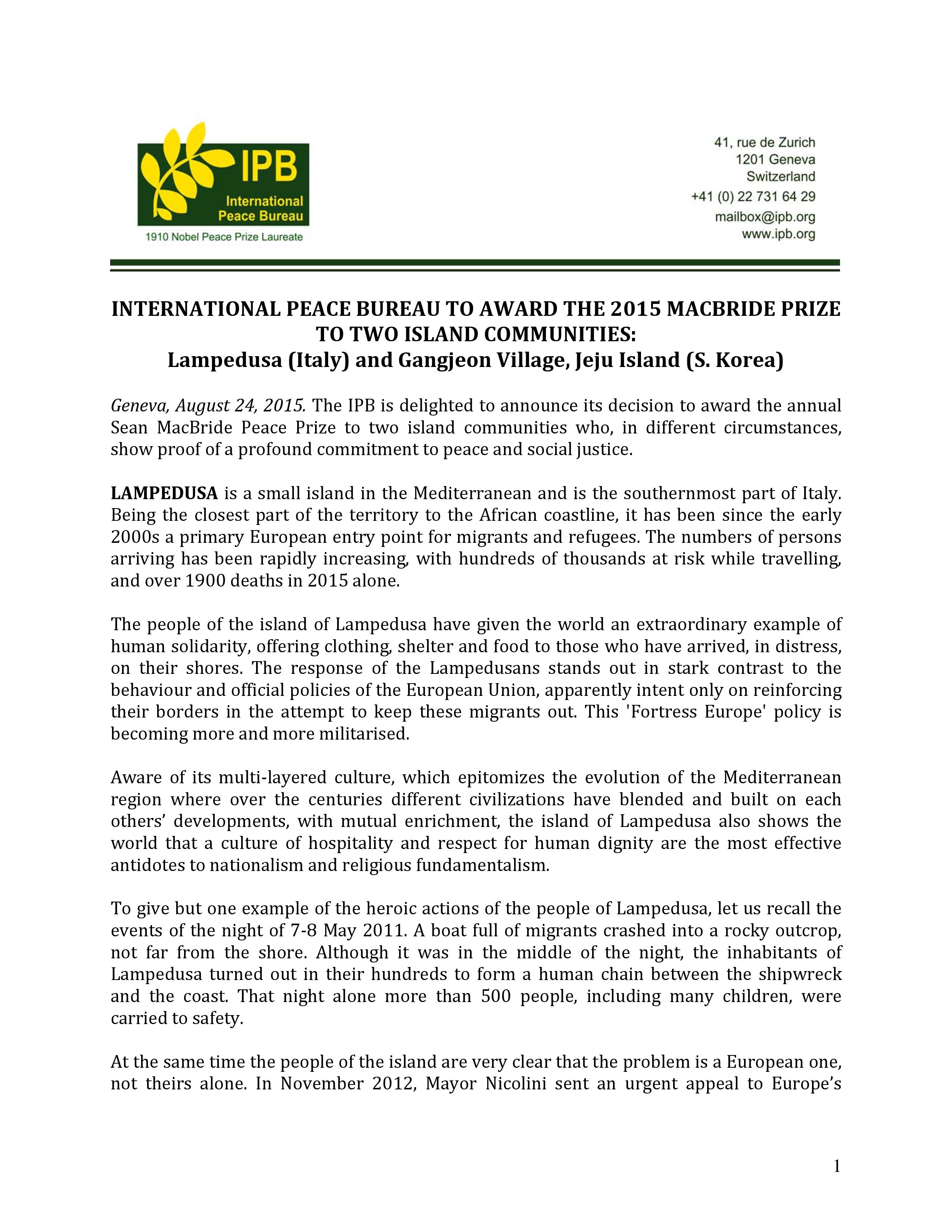
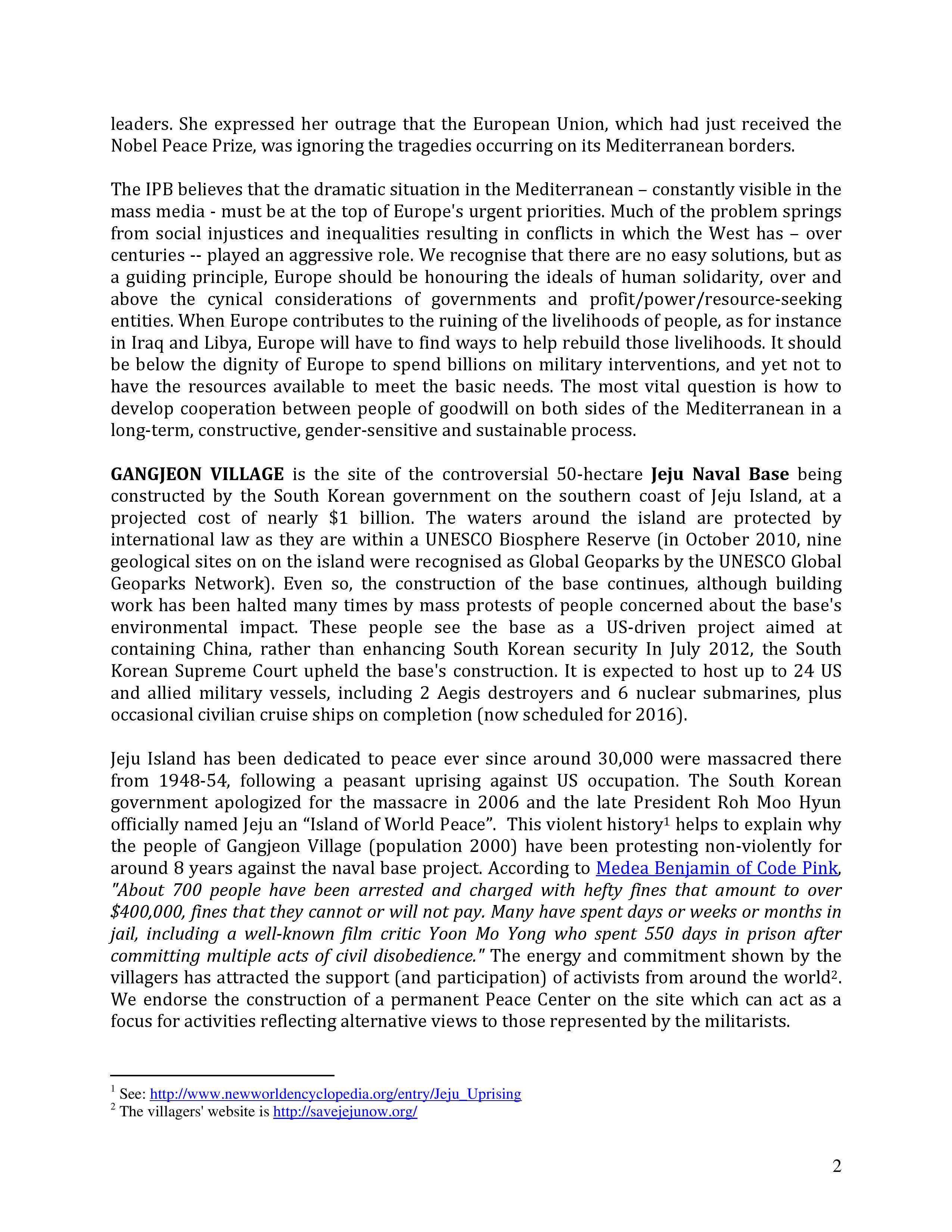
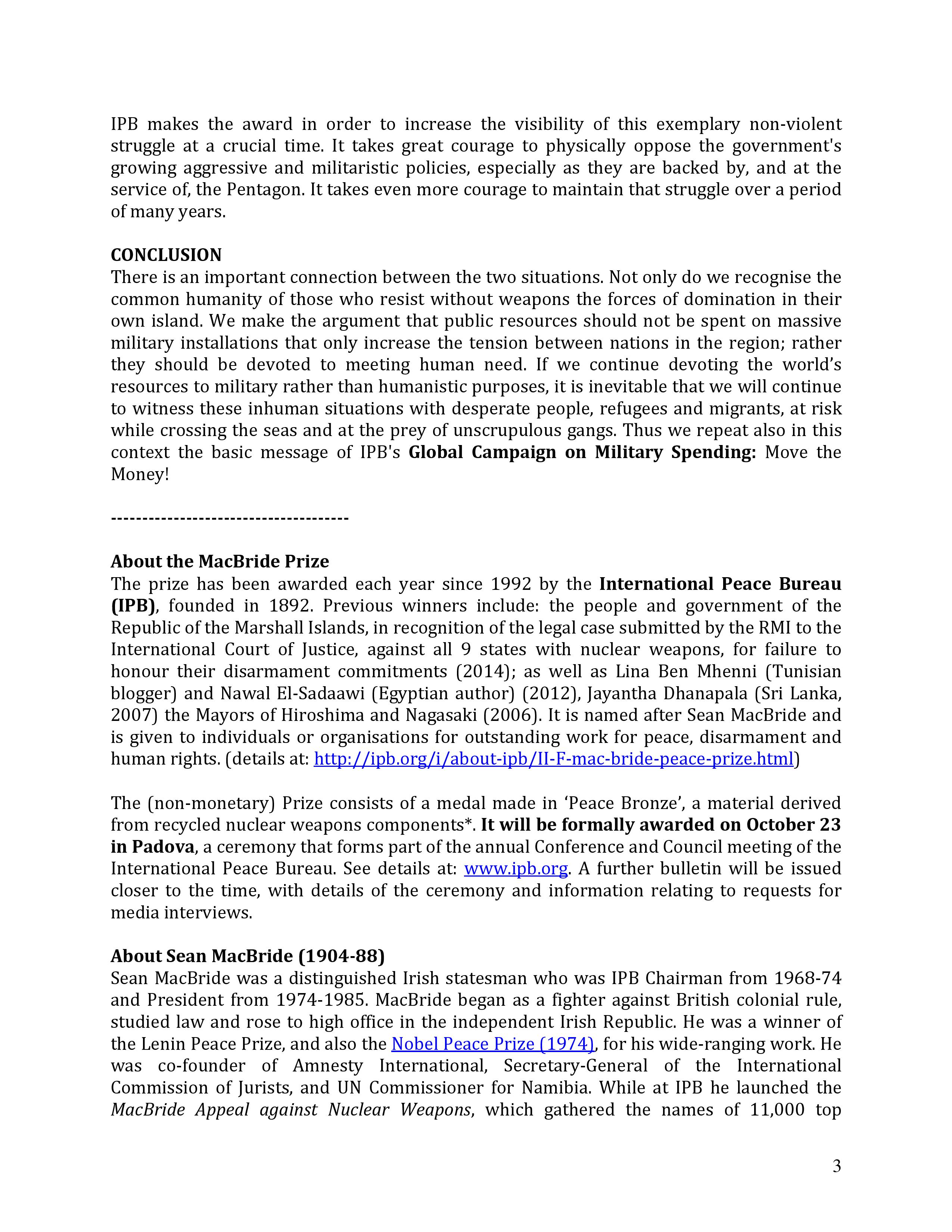
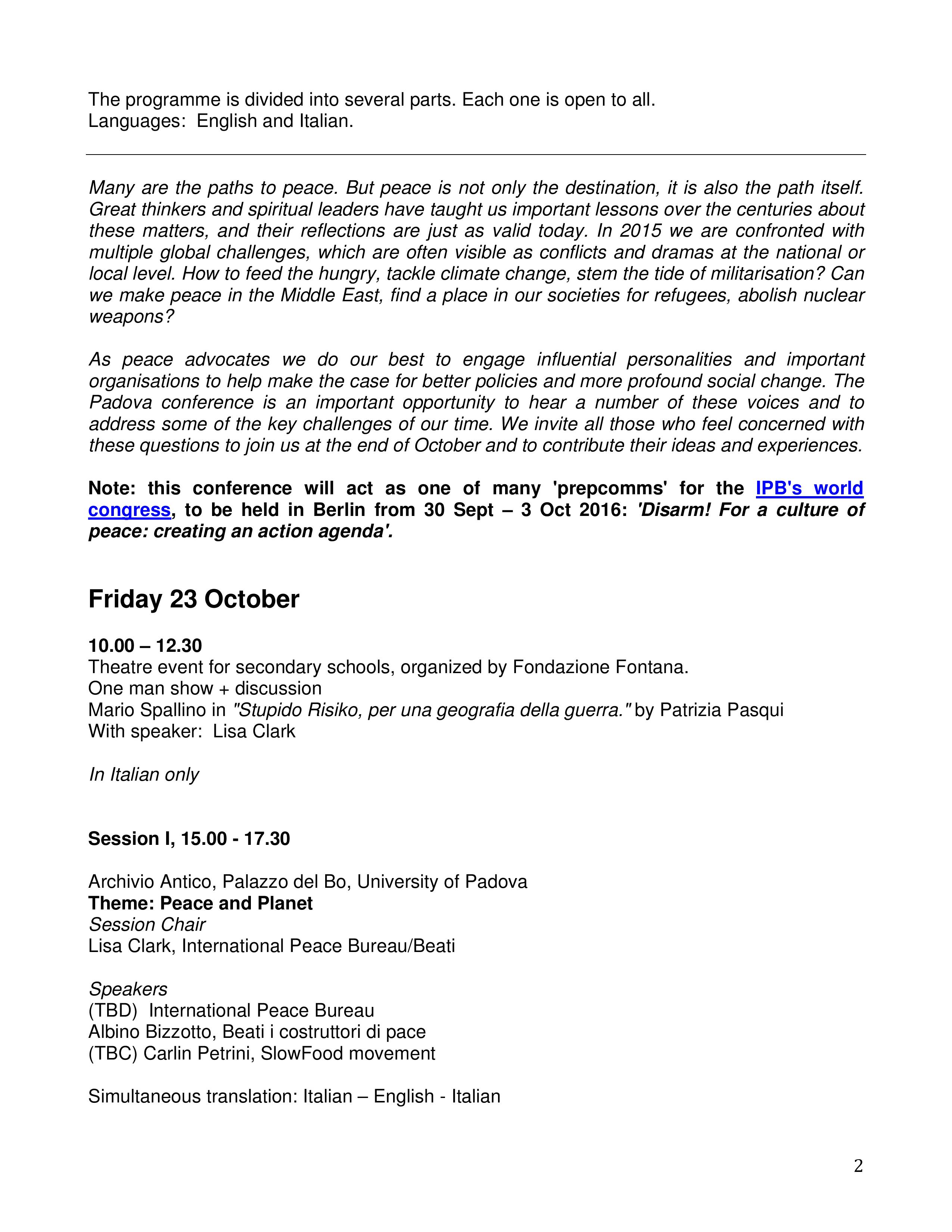
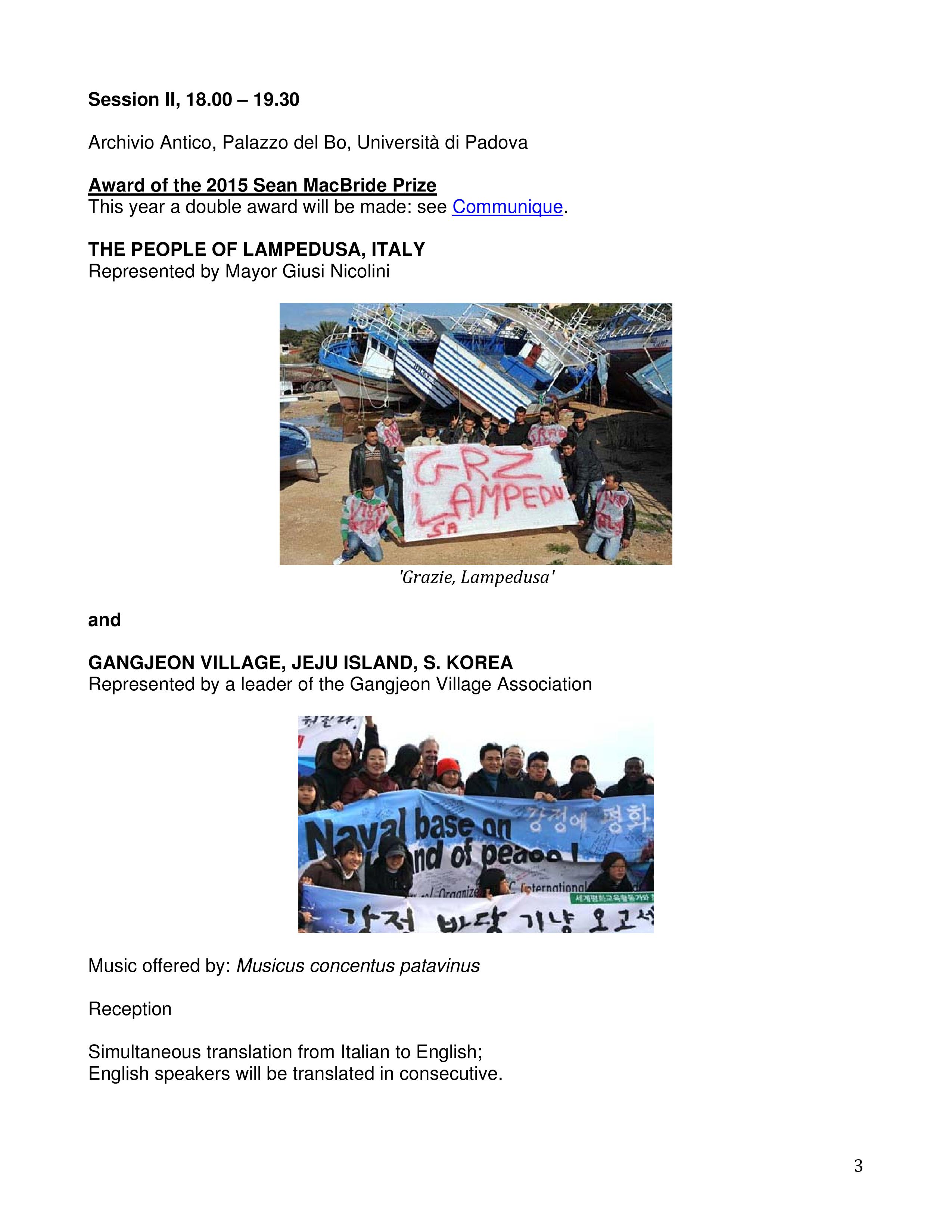
    What a wonderful news!  The International Peace Bureau(IPB) decided to have Gangjeong, Jeju, and Lampedusa, Italy, as  the co-recipients of the precious Sean MacBride award for 2015. On Aug. 25,   1 page official letter was sent to the village,  along with  other two related documents as the below. Please look at those for further details. It is truly the honor of the village to receive this award and to stand firm with the people in the world on the path for peace, justice, and democracy.

    1. An official IPB letter to the Gangjeong village on Aug. 25, 2015

    Peace award letter-page-large


    2. IPB documents on the two Island communities: Lampedusa and Gangjeong, Jeju

    AWARD 2015 MACBRIDE PRIZE TO TWO ISLAND COMMUNITIES final2-page-001 AWARD 2015 MACBRIDE PRIZE TO TWO ISLAND COMMUNITIES final2-page-002 AWARD 2015 MACBRIDE PRIZE TO TWO ISLAND COMMUNITIES final2-page-003 AWARD 2015 MACBRIDE PRIZE TO TWO ISLAND COMMUNITIES final2-page-004


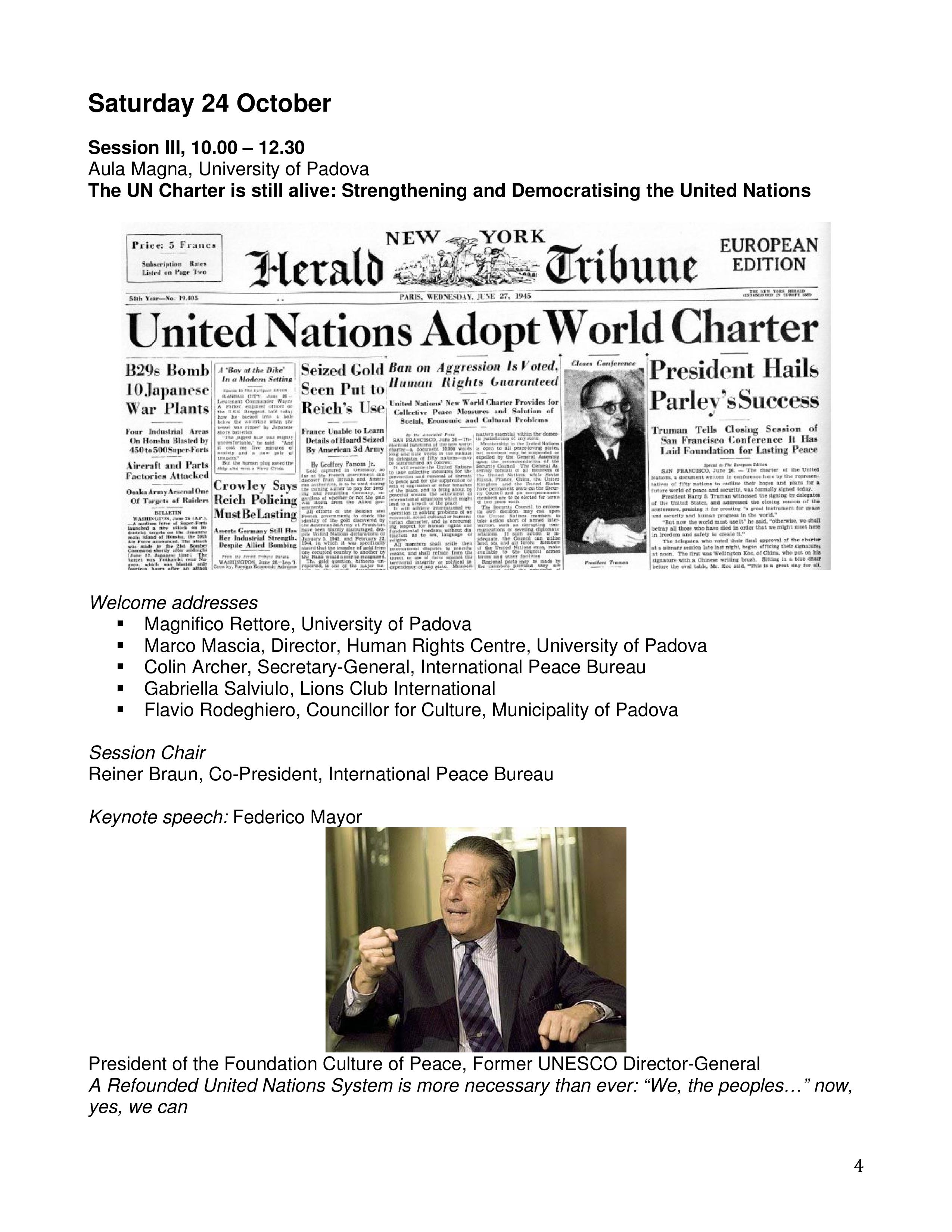
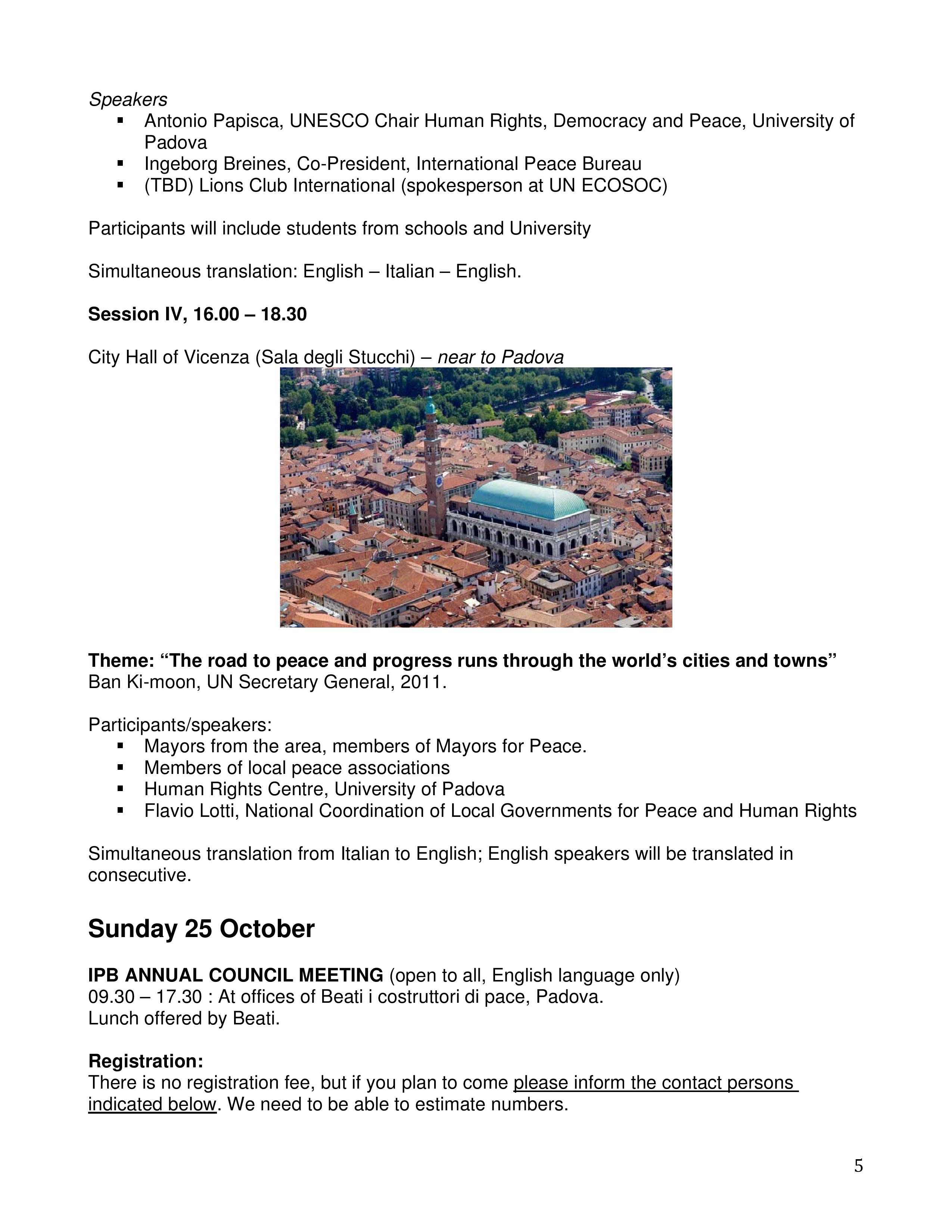
    3. Peace Paths: Annual IPB Conference program_On the 70th anniversary of the entry into force of the United Nations Charter

    Peace Paths brochure 1st edition 24.8.15-page-001 Peace Paths brochure 1st edition 24.8.15-page-002 Peace Paths brochure 1st edition 24.8.15-page-003 Peace Paths brochure 1st edition 24.8.15-page-004 Peace Paths brochure 1st edition 24.8.15-page-005 Peace Paths brochure 1st edition 24.8.15-page-006

    August 30, 2015

  • Navy Trying to Kill Gangjeong Village

    Re-blogged from here
    By Bruce Gagnon
    jejuhuman
    blue2

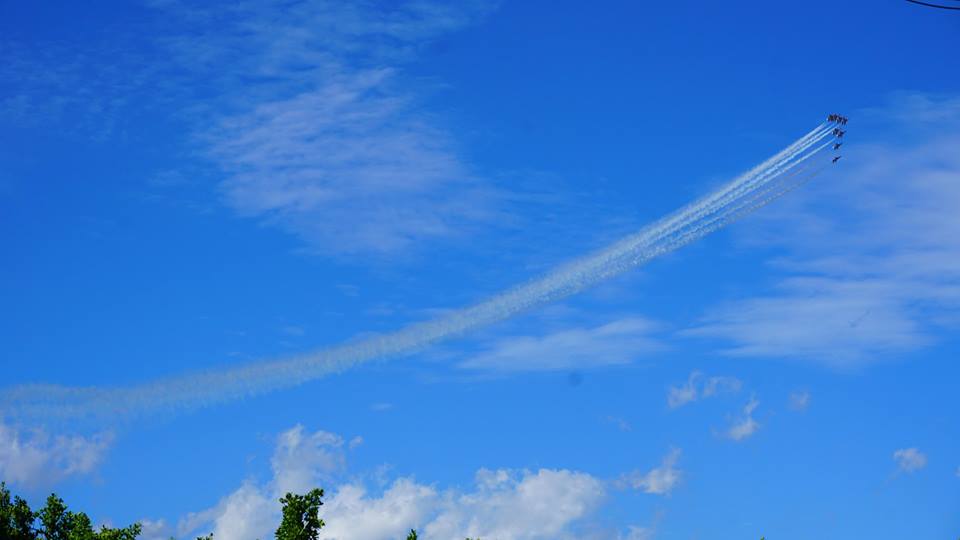
    I was invited to come to Jeju City today to appear on live radio show for 20 minutes at 6:00 pm.  As we were preparing to leave Gangjeong village we looked into the sky as a formation of Navy Blue Angel war planes came screaming over the village.  For the next 15 or so minutes they went back and forth directly over Gangjeong doing various stunts.  One of the stunts brought the planes very low in an ear splitting maneuver.

    The Navy was sending a message to Gangjeong village.  The message was loud and clear. “We own you now.  Your village will become a war base.  There is nothing you can do.  We will project power against China from Jeju Island.  You’d better get used to the idea.”  This is the way the US military empire thinks and the way they treat people who stand in their way.

    Just before we went on the air for the radio interview we learned that the Navy is planning to demand that Gangjeong villagers pay $20 million (USD) in fines for disruption of construction operations on the base now nearing completion.  Some activists believe that the Ministry of Defense in Seoul is actually controlled by the Samsung corporation which is the lead contractor for the Navy base construction operation.  Just as in the US, where Lockheed Martin, Boeing, Raytheon and General Dynamics control our government, the Park administration inside the Blue House in Seoul is actually the pawn of corporate interests.

    By demanding this outrageous amount of funds from a small fishing and farming community the South Korean puppet government is saying that democracy does not actually exist anymore.  In a true democratic nation people who protest oppressive government policies are not fined and driven into poverty – especially an entire village.  What was the crime of Gangjeong?  They wanted to protect the environment, sacred Gureombi rock, the offshore endangered soft coral forests, the water, the sea life and more.  The villagers wanted to protect their way of life – their 500-year old culture.

    I’ve learned that only South Korea and Japan have this kind of punishing policy that obviously smacks of fascism.  The government of South Korea is controlled by corporations and Washington.  How can they claim in Seoul to be a democracy and then turn around and treat citizens this way?  How can the government claim they need a Navy base to defend the people and then attack the people who use non-violent protest to challenge the destruction of their village?

    This will have to go to court but the courts are ultimately under the control the the same corrupt corporate state.  When the Navy demands that the village must pay $20 million in fines that means every man, woman and child owes that debt.  It means they would be naked without any land after the court would take all they owned.  This is nothing more than an illegal and immoral attempt to finish off Gangjeong village.  Every living and breathing human being on this planet should be outraged at this crime against the human rights of the people in Gangjeong village.

    After the US directed April 3 massacre on Jeju Island soon after WW II was over a new program was put into place called the ‘Involvement System’.  This meant that anyone who was labeled a communist by the US run puppet government could get no job and would have no future.  It also meant that any family member would suffer the same fate.  This demand for $20 million by the Navy is an attempt to reinstate this ‘Involvement System’ once again.  The only way out for a person is to commit suicide.

    I am told that the South Korean regime is using this same punitive program to go after striking auto workers on the mainland and other activists around the nation.  The decision has been made to kill democracy in South Korea.  We are seeing the same method of operation in Japan today as the right-wing government kills their peaceful constitution against popular will.  We see the same system in Okinawa as the people demand US bases there be closed.  We see the same system underway inside Ukraine where Washington has installed a puppet government.

    For those out there sitting on the fence this is the time to wake up and see the writing on the wall.  Democracy is being drowned globally by corporate capitalism.  Who will be next?

    Take Action:  Call the South Korean Embassy in Washington DC and demand that they leave Gangjeong village on Jeju Island alone.  Call  (202) 939-5654.

    August 28, 2015

  • Farewell Sermon


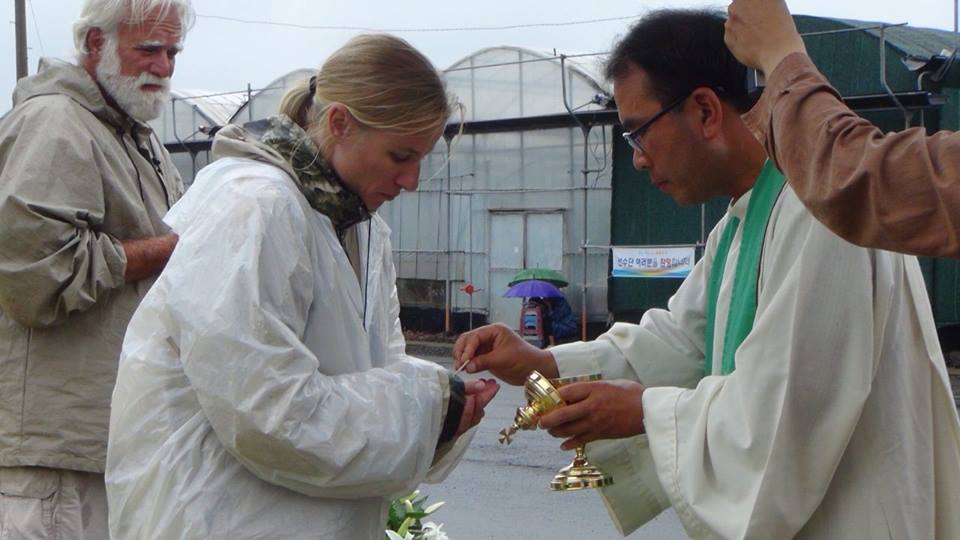
    The writer Frank Cordaro and his companion Jessica Reznicek have lately stayed in Gangjeong for two months, joining every day’s 100 bows and mass in front of gate. Their reports on Gangjeong can be much found here.

    eucharist
    Photo by Pang Eunmi/ Fr. Kim Sung-Hwan gives the Eucharist to Frank Cordaro and Jessica Reznicek in a daily mass in front of the naval base construction gate.

    by Frank Cordaro – Mass at Jeju Navy Base entrance, June 27, 2015

    Dear friends,

    I wish to thank Father Kim for allowing me to talk to you today, as a farewell message after my two month stay with you.

    I want you to know that your daily presence here at the main entrance of this U.S. /South Korean Navy Base, doing the 100 Bow Prayer at 7 a.m. and the Mass, rosary, singing and dancing at 11 a.m. has been one of the most powerful and spiritual experiences of my entire adult life as a Catholic peace and justice activist.

    As a U.S. Catholic Christian I must confess the U.S. Catholic Church lives in a great spiritual darkness under the influence of the American Imperial culture and the great wealth and properties the Institutional Church owns and our bishops manage. Proof of this spiritual darkness can be seen in all the immoral, unjust, and illegal wars and military interventions the U.S. has inflicted on millions of peoples all over the world, including Korea, in my lifetime, with an almost complete capitulation and cooperation from our bishops and Catholic institutions.

    In a country where Catholics have confused the modern crucifiers of Jesus with the Crucified Lord, our sacred liturgies are greatly compromised. We are missing some basic Gospel elements that go beyond the bread and wine, the official spoken words and the ordained priest. I have experienced those missing elements every day, here when we celebrate Mass at the entrance of this Navy Base.

    In all four Gospels, the location of where the story of the Pascal Mystery takes place is central to its meaning. In the Gospels the Jesus story takes place in 1st century occupied Palestine. Here in Gangjeong Village, your Mass, the rosary, singing and dancing take place in an occupied country too — Korea.

    In all four Gospels the city of Jerusalem and its Temple are made contested space when Jesus and his disciples organize a street demonstration – what we call ‘Palm Sunday’ – and Jesus does his direct action witness in the Temple, what we call the ‘Cleansing of the Temple’. Here in Gangjeong Village, you make this Navy Base contested space every time you celebrate Mass, pray the rosary, sing and dance here at the gate.

    In all four Gospels, there is a measure of risk that Jesus and his disciple take for confronting the Imperial culture of their times. This accounts for the secrecy that took place with the Holy Thursday gathering in the upper room that ended with Jesus’ arrest, trial and crucifixion.

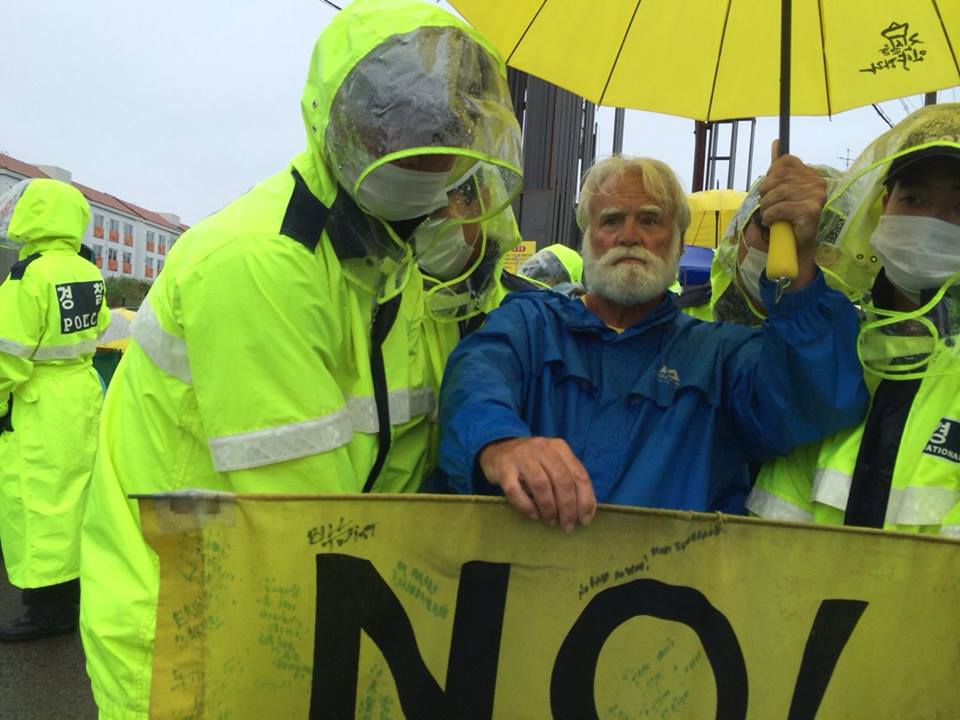
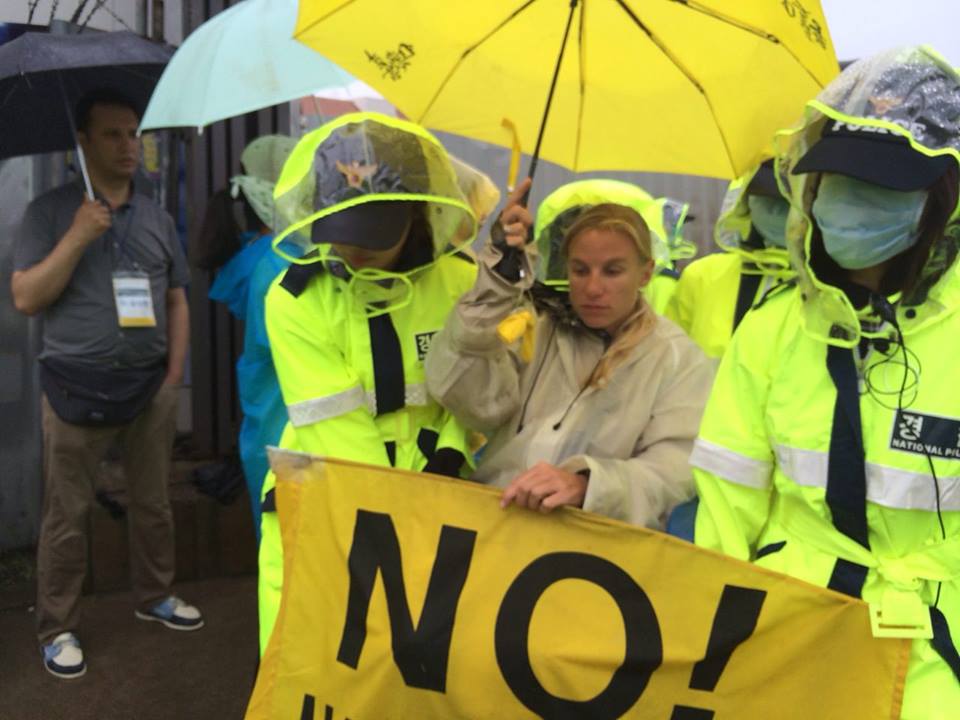
    Every time the police carry us off this drive way, they tell us to move voluntarily. They tell us we are breaking the law and that we can be arrested. And this is no empty threat. Over the years of your resisting the building of this Navy Base, many of you have been arrested, some of you have done jail time, sometimes for months, even years.

    When speaking of the real presence of Christ in our Catholic Mass the elements of location, contested space and risk taking are just as important as the bread and wine, the words spoken and an ordained priest. You have all these essential elements every day at the gate and I sense the real presence of Jesus here more than any Mass I have attended in a U.S. parish or Cathedral.

    In today’s first reading from the book of Genesis (Gn 18:1-15), Abraham and Sarah offer hospitality to three strangers. And in act of offering hospitality, they are told something about themselves they did not know, that within a year Sarah will give birth to a son. May I be so bold as one who has enjoyed your hospitality to share with you what I see happening in your ‘Save Jeju Now’ community.

    Your beloved Gureombi Rock that Father Mun and many of you sing so lovingly and longingly about at the gate every day is destroyed, ripped apart under tons and tons of cement. And despite your best efforts, this Navy Base is being built. In fact it is close to completion.

    Your Bishop, Peter Kang said it best, “The destruction of Gureombi Rock is a challenge to the human Civilization and the Creation of God”. And I say, the Navy Base that sits on its broken body is an abomination!

    These days, your community is in deep grief for your loss of the Gureombi Rock and the inevitable completion of the Navy Base and the changes it will bring in its wake.

    Know that grief is the basis for the Prophets’ prophetic imagination found in our scriptures. And it was from the grief of disciples’ loss of Jesus on the cross that their eyes and hearts were open to the resurrection of Jesus and their Easter experience that followed.

    Know also that your struggle is known to many around the world and though you did not save the Gureombi Rock and stop the building of this Navy Base, your continued faithful nonviolent resistance to this god-awful base inspires many peace and justice activists around the world.

    You should know the death of Gureombi Rock need not mean its end, any more than the death of Jesus was the end of his story. You can find a new beginning of what Gureombi Rock means through your continued nonviolent Faithful resistance to this Navy Base.

    My prayer for you is that through the grief you are suffering today, you will move from a community that failed to stop the building of this god-awful Navy Base to a community determined to continue your nonviolent resistance to this Navy Base with the goal of converting the culture of death and Empire that sustains this Navy Base and all the military bases that occupy your country. That you will not stop until all US military bases are gone from your lands and the divide that separates South Korea and North Korea will no longer exist.

    In today’s Gospel reading from Mathew (Mt 8:5-17), a Roman centurion comes to Jesus asking that his servant be healed of a paralyzing, dreadful illness. Today with you, in these last two months I am that Roman centurion asking Jesus to heal my fellow U.S. Christians back home of a paralyzing, dreadful illness!

    I come from the belly of the Beast. The U.S. Empire spends on its military almost as much as the total amount of money all other countries in the world spends on a yearly bases. We have over 600 military bases in over 100 counties in the world. In 1968, Martin Luther King said, “The U.S. is the greatest purveyor of violence in the World”. Since then, it has only gotten worse. This violent and destructive way of living is built on the legacy of the genocide of our Native American peoples and the enslavement of African Americans.

    In my lifetime we have destroyed hundreds of “Gureombi Rocks” beginning with the ongoing pollution of our own lands, air and waters. We are the leading force behind a destructive way of living on the planet that is putting all life at risk. We need to be stopped!

    You can help us heal the paralyzing, dreadful illness that we U.S. Christians suffer by continuing your nonviolent Faithful resistance to this Navy Base and help lead the world in the needed task of disarmament and peace making.

    I assure you, when I return home to the U.S. I will sing of your praises and urge my Catholic Worker and peace activist friends to come to Jeju Island and witness with you, here at the entrance of this god awful Navy Base where the real presence of Jesus can be found and the hope for a disarmed world is made possible.

    (The writing above was a little edited by sunny, a member of village international team)

    Frank
    Photo by Pang Eunmi
    Jesse
    Photo by Pang Eunmi


    July 7, 2015

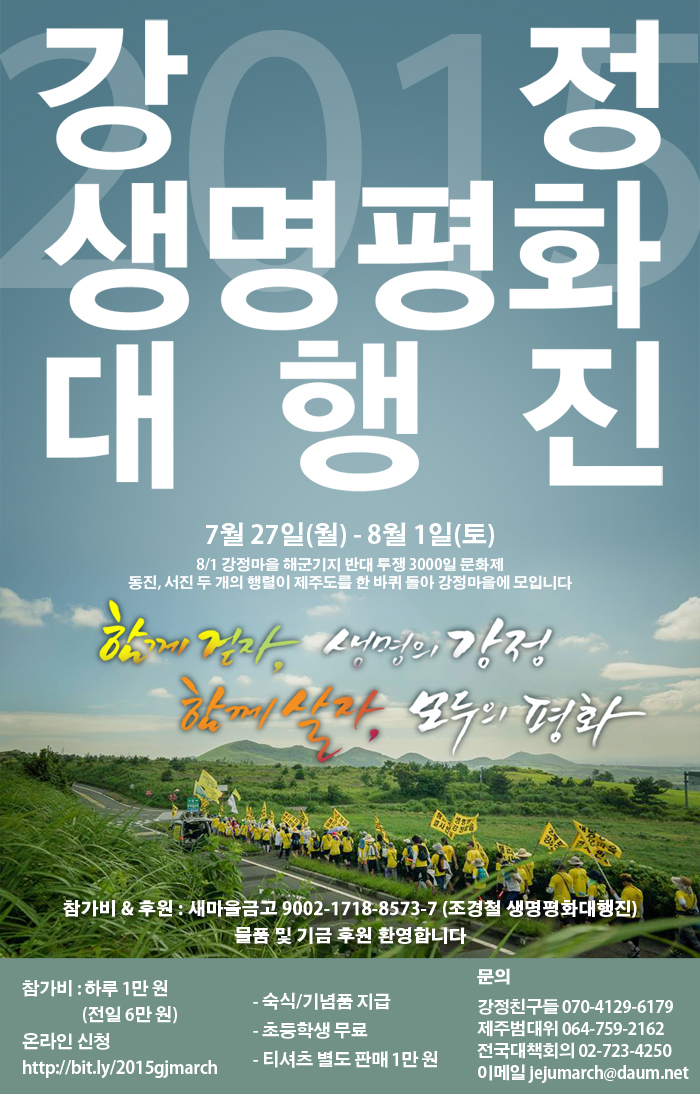
  • Join 2015 Gangjeong Grand March for Life and Peace

    IMG_3070

    (English translation is thanks to People’s Solidarity for Participatory Democracy)

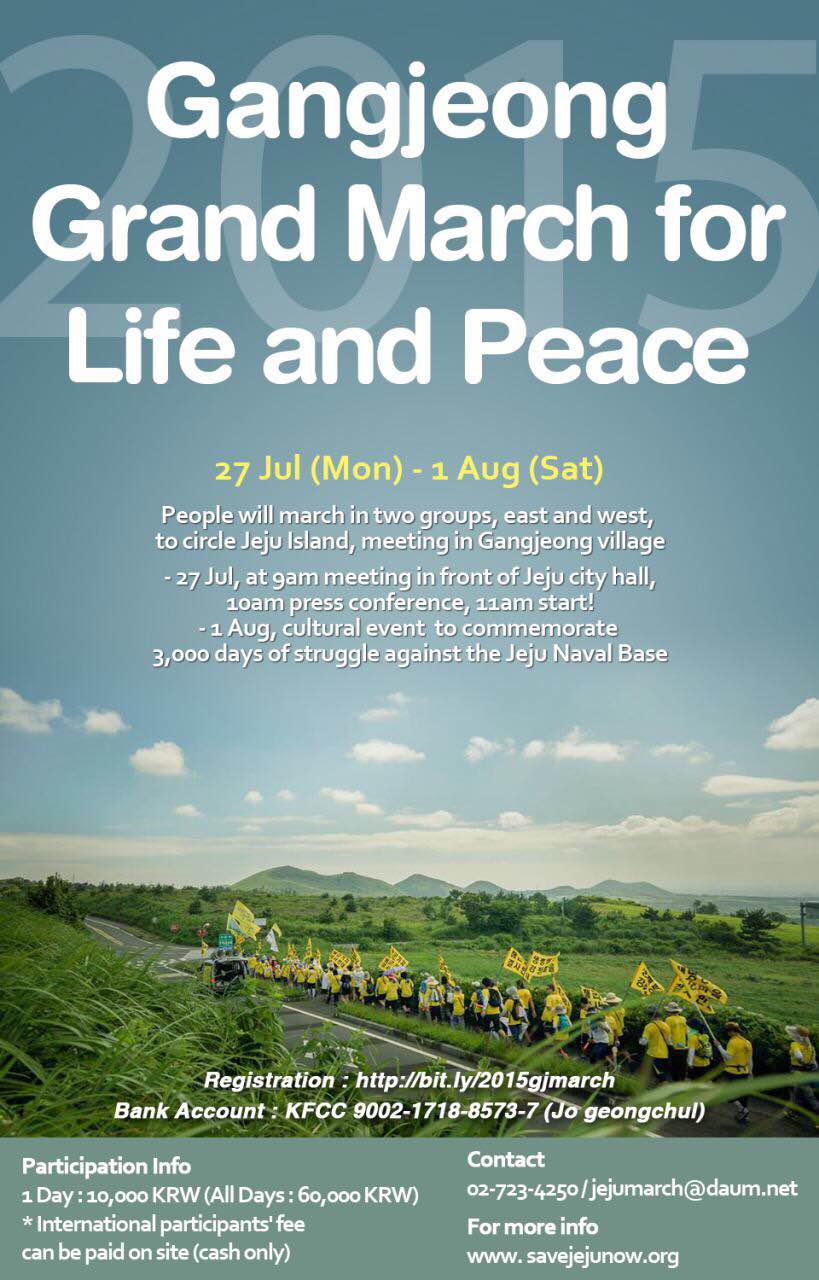
    Let’s Walk Together Again! 2015 Gangjeong Grand March for Life and Peace! A Cultural Event to commemorate 3,000 days of struggle against Jeju Naval Base!

    The Grand March starts from Jeju City Hall on 27 July. The group will be divided into two groups, one marches towards east coast of Jeju Island, while the other group marches towards west coast of Jeju Island. Two groups will meet together at Gangjeong village on 1 August. On 1 August, villagers and participants will commemorate 3,000 days of struggle against the Jeju Naval Base. We will cheer each other up who tirelessly worked to maintain peace in the village. We will continue to work on maintaining peace in East Asia by opposing Jeju Naval Base!

    Participation Info
    – Participants fee: 10,000 KRW per person per day (Full participation will be 60,000 KRW). For foreign participants, it can be paid on the site. (Cash only)
    – International participants’ fee (cash only) can be paid on site
    – Food, accommodation, souvenir will be provided. No participation fee for elementary school children and younger.
    – T-shirt is 10,000 KRW and you can buy it on the site with cash.
    – Please bring your own cup and toiletories.

    Grand March Course
    27 July 9am Meeting in front of Jeju City Hall, 10am Press Conference, 11am Start!
    East coast: Hamduk beach – Gimnyung beach – Jongdal-ri – Pyosun beach – Haryeh primary school – Gangjeong Village (1 Aug)
    West coast : Jeju province government building – Hypjae beach – Sanbang Mt. – Hwasun beach – Yakchun temple – Gangjeong Village (1 Aug)

    More information available here

    Korean

    June 13, 2015

  • Dangerous Military Buildup in Asia and Pacific

    Re-blogged from here and here

    South Korea constructs new Naval Base on Jeju Island, U.S. Plans to Expand Military Base on Okinawa and China Builds on South China Sea Atolls

    By Ann Wright

    The international community is extraordinarily concerned about the Chinese construction on small islands and atolls in disputed waters off China, Vietnam, Taiwan and Japan.  Over the past 18 months, the Chinese government has created islands out of atolls and larger islands out of small ones.

    With the Obama administration’s “pivot” of the United States military and economic strategy to Asia and the Pacific, the Chinese have seen military construction in their front yard.

    I’ve just returned from my third trip to Jeju Island, South Korea. Jeju is called the Island of Peace.  However, its where the South Korean military has almost finished construction of a new naval base, the first military base on this strategically located island south of the mainland of Korea that is littered with U.S. and South Korean military bases, leftover from the Korean war and that are a part of the U.S. “defense” of South Korea from  “aggression” from North Korea.

    The Jeju Island naval base will be the homeport for ships that carry the U.S. Aegis missiles.  Many on the island call it a U.S. naval base since it will be a key part of the U.S. “pivot” to Asia and the worldwide U.S. missile defense system. They believe that the naval base will be used as frequently by U.S. warships as by South Korean ships and submarines.  With a naval base on Jeju Island, they believe that Jeju Island  becomes a target should military hostilities breakout in Asia and the Pacific.

    The naval base was built in the pristine waters off Gangjeong Village midst seven years of intense civic outrage.    The destruction of the marine environment off the village where the famous women divers for decades have harvested by hand the “fruits of the sea” is one of the cultural and economic losses the construction of the naval base has caused.

    The destruction by huge dynamite explosions of a unique geologic rock formation called  “Gureombi” is a cultural and spiritual loss to the islanders.  Its tide pools, crystal clear springs and lava rock formations made “Guremobi” a favorite area for villagers and visitors to the island.
    rocks

    Photo by Ann Wright.  Only section of Gurombi rocks left.

    The construction of the naval base in spite of strong local opposition is a part of the history of oppression of the people of Jeju Island from the mainland government. After the Korean War, South Korean and United States military forces which conducted the infamous April 3 massacres of over 30,000 islanders who were believed to be opposed to the right wing Syngman Rhee government, dissidents and sympathizers for reunification of Korea.  The April 3 “incident” left a deep scar on the people of Jeju Island and made them very sensitive to mainland government policies, particularly those which “target” them again.

    The South Korean government has built the naval base in one of the most inhospitable areas of Jeju Island.  The naval base faces the open ocean and has already been battered by two typhoons which have displaced huge concrete caissons which form the foundation of the quarter mile breakwater created to protect the base from the sea.  The government attempted to put the base at two more favorable geographic locations on Jeju Island but were deterred by citizens who successfully refused to allow the base to be constructed in their part of the island.

    Despite large and continuing protests in Gangjeong village against the construction of the naval base, the South Korean national government reportedly with intense pressure from the United States decided that they had to begin construction somewhere on the island and chose to ignore the strong local opposition.

    However, the decision has come at a great cost to the national government.  Daily demonstrations and frequent large demonstrations with planeloads of mainlanders flying into help islanders, have resulted in the government having to deploy hundreds of police from the mainland to counter the demonstrations.  Local police on Jeju Island are felt to have too much sympathy for the demonstrations and therefore police from the mainland are needed.  Islanders see this as an historic throwback to the April 3, 1948 oppression of opposition to mainland government policies.

    Each day at Gangjeong village begins with a 7am demonstration of 100 “bows” at the front gate of the naval base.  Protesters block one lane of the base forcing a slowdown of traffic of concrete trucks and other vehicles entering the base.  For almost an hour, the demonstrators silently offer thoughts on the militarization of their island as they bow or kneel.  At 11am Catholic priests and laywomen conduct a daily mass across from the front gate as other priests and activists sit in chairs blocking both lanes into and out of the base.  Every 20 minutes, a platoon of young police men and women march into the seated protesters and carry the chair and the person sitting in it to the side of the road, opening the road for traffic for five minutes.  Then the police march back into the base and the protesters immediately move their chairs back to block the lanes into the base. After an hour of blocking the entrance, the protest ends with an energetic dance—and traffic resumes.  Long time activists recognize that the hour protest is a small delay in the construction of the base, but consider the two daily protests as extremely important actions to remind the national government of their continuing opposition to the military base.

    mairead

    Photo with Ann Wright’s camera.  Nobel Peace laureate Mairead Maguire, Ann Wright, Catholic sisters and other Gangjeong activists after having been lifted up and carried in chairs out of the road to allow steady stream of concrete trucks to enter the naval base.

    My first visit to Jeju Island was in 2011.  At that time, activists still had their camp on the  Guremobi rocks on the edge of the ocean.  The camp consisted of a long educational tent, a sleeping tent and a cook and eating tent.  Every day activists would conduct workshops and ceremonies on the rocks.

    When I returned in 2013, despite the intense efforts of the activists, the Guremobi rock formation had been blown up with dynamic and construction had begun with two huge facilities built on the remains of the rocks to create the massive concrete caissons that would be lowered into the ocean to form the quarter mile long breakwater to protect the base from the open ocean.

    Returning two years later in 2015 with eight women from the Women Cross the DMZ walk www.womencrossdmz, including Nobel Peace laureate Mairead Maguire and CODEPINK co-founder Medea Benjamin, I was devastated to see the vastness of the naval base which is nearing completion.  Although statistics on the amount of concrete that has been poured into the ocean and into the buildings on the base are unavailable, the sheer scale of the base leads one to guess that a road around the world could have been built with that volume of concrete.

    horror

    Photo by Ann Wright      Jeju Island Naval Base Huge Breakwater

    And its not just on the base itself that construction has proceeded.  As villagers suspected from the beginning, the base would expand into other parts of the community.  More land near the base is now being condemned by the government so it can be used to build housing for military personnel and their families.

    After seven years of large protests against the construction of the military base, the base has been built—and the Chinese know it as they have watched the construction—up close—as, remarkably, the South Korean government allows Chinese tourists to visit Jeju Island without a visa.  The Chinese tourist trade is large—as is the purchase of land by Chinese on Jeju Island.  A big area on Jeju Island is now a Chinese “health” vacation area with condos and other facilities for Chinese—even the road signs in the area are in Chinese!

    The Chinese are watching another construction project in the Pacific.  This time a United States military base on the southern Japanese island of Okinawa.  Despite massive Okinawan opposition, including a visit in May 2015 of the governor of Okinawa to Washington, DC, the U.S. is planning to begin expansion of Camp Schwab, a U.S. Marine Corps base and construction of an airfield runway on Okinawa.  The runway will project out into the South China Sea into pristine waters with endangered coral formations and into the habitat of the dugong, a manatee-like marine mammal.  Okinawa makes up 1% of Japan’s land mass but is the location of 74% of all U.S. military bases in Japan.

    okinawa

    Okinawans have been protesting for years the expansion of Camp Schwab, a U.S. Marine Base.  Only last month, over 35,000 Okinawans gathered to voice their opposition to their national government’s approval of the base despite the opposition of all levels of the Okinawan provincial government and island civil society.  http://rt.com/news/259373-okinawa-protest-us-base/

    In 2007, I visited the activists on Okinawa at their seaside camp where they have a daily presence to remind the U.S. military that they do not want the naval base.  The senior citizens of the village of Henoko moved their Senior Citizens center to the beach so they could participate each day in attempting to preserve their village from another military base.  (RT footage)

    The Chinese have been watching the process for the building of another U.S. base in the Pacific, as they have watched the expansion of U.S. military forces on the U.S. territory of Guam.  The projected increase in U.S. military personnel and their families is expected to increase the population of the small Micronesian island by 30 percent.

    In another interesting economic considerations versus foreign policy posturing between sparing countries, Russian tourists to Guam do not need a visa to the United States to visit the island.

    The bottom line is that the Chinese see the expansion of the United States military forces and capabilities in their front yard and are constructing their own projections of power on the tiny disputed islands and atolls off their coast.  Neither the United States nor China need any of these bases as both have more than enough air capability in the form of aircraft or missiles to initiate or counter any military move by the other.

    All of this construction is another example of the never ending, massively expensive war mindset of political leaders and their financial backers who profit from a hostile world.

    About the Author:  Ann Wright served 29 years in the U.S. Army/ Army Reserves and retired as a Colonel.  She served 16 years as a U.S. diplomat in U.S. Embassies in Nicaragua, Grenada, Somalia, Uzbekistan, Kyrgyzstan, Sierra Leone, Micronesia, Afghanistan and Mongolia.  She was on the small team that reopened the U.S. Embassy in Kabul, Afghanistan in December, 2001.  She resigned from the U.S. government in March, 2003 in opposition to the war on Iraq.

    June 13, 2015

←Previous Page
1 … 3 4 5 6 7 8 9 10 11 12 13 … 15
Next Page→

© 2025

Save Jeju Now